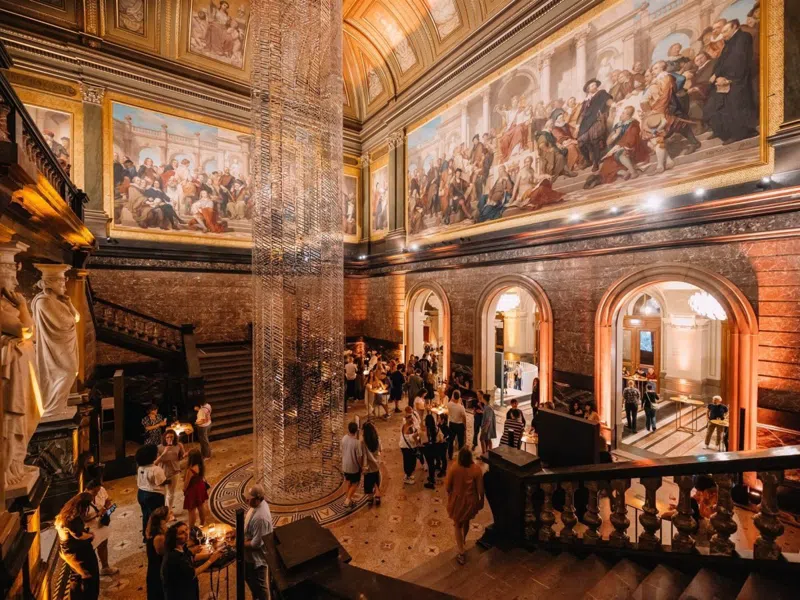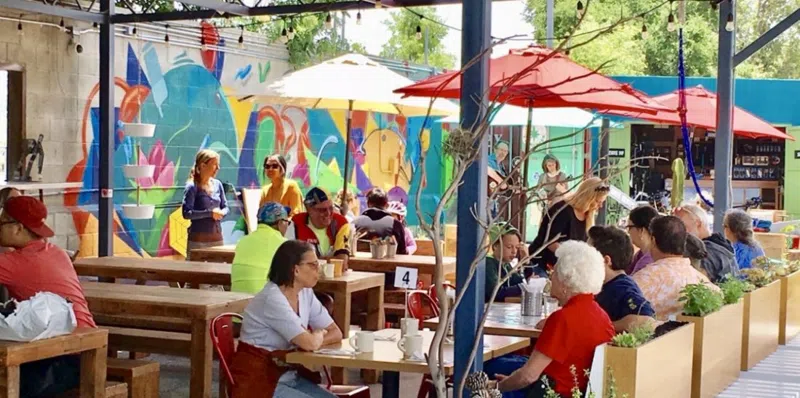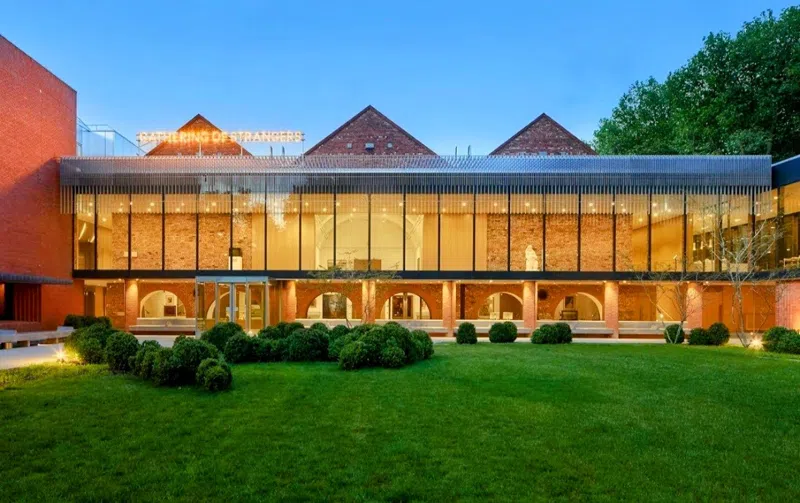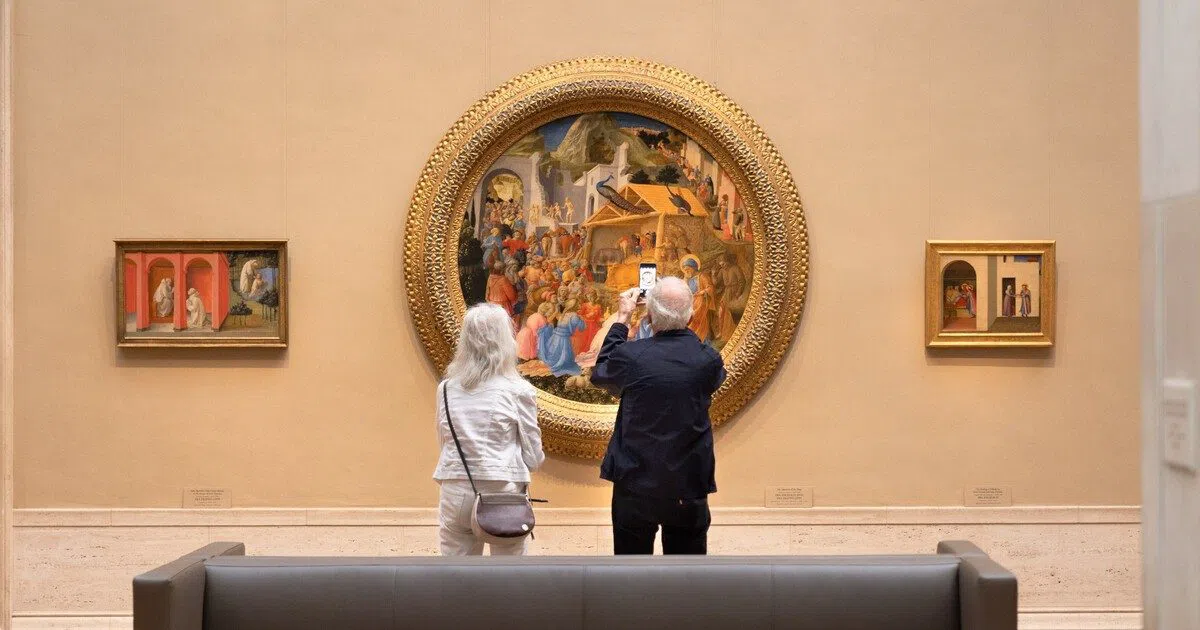

The West Building's pink Tennessee marble shifts colour through the day, grey at ten in the morning and almost rose by four, and most visitors walk straight past it towards something they have already seen on a postcard. Inside, free and unticketed, are the only Leonardo painting in the Americas, the largest holding of Vermeers outside Europe, and a tunnel of moving light running under Fourth Street. The National Gallery of Art is one of the few Washington institutions that rewards walking slowly, and it asks nothing at the door.
Two buildings, joined underground
What people call the Gallery is two separate buildings on the north side of the Mall, linked below ground. National Gallery of Art — West Building (National Mall, on Constitution Avenue between Fourth and Seventh Streets) opened in 1941 to John Russell Pope's design, a domed neoclassical block around 240 metres end to end, long enough that walking its main floor once without stopping takes the better part of eight minutes. National Gallery of Art — East Building (National Mall, at Fourth Street) followed in 1978, I. M. Pei's answer to a leftover trapezoid of land created where Pennsylvania Avenue cuts diagonally across the street grid. Pei split that trapezoid into two triangles and left a corner narrowing to roughly nineteen degrees. The stone there has been rubbed pale by decades of hands, and it is worth walking round to touch before you go in.
Neither building takes a ticket. Entry is walk-in and free at every door, at both buildings, all year, so the planning question is where to spend your attention rather than what to book. There is security screening at the entrances, and bags are carried at the front or at your side rather than on your back, which matters if you are travelling with a day pack. Free docent-led tours run daily, and organised groups of ten or more should book ahead through the museum's group services rather than arriving as a block.
How to walk the West Building without wearing yourself out
The West Building holds five centuries of European and American painting, roughly 1400 to 1900, laid out either side of a central rotunda with its dark marble columns and a fountain at the middle. The plan is symmetrical and unusually easy to read: Italian and Spanish rooms west of the rotunda, Dutch, Flemish, French and British to the east, American painting beyond that, and two garden courts you can sit in.
If you have ninety minutes, start in the rotunda, go west into the early Italian rooms, and work forward in time until you reach Leonardo's Ginevra de' Benci, the only Leonardo painting in the Americas, small, pale, hung at eye level, and usually less crowded than its reputation suggests. Then reverse through the rotunda into the Dutch galleries for the Vermeers. Finish with the American rooms if you still have legs. That is a walk of maybe a kilometre inside the building, and it is enough to say you have seen the collection's spine.
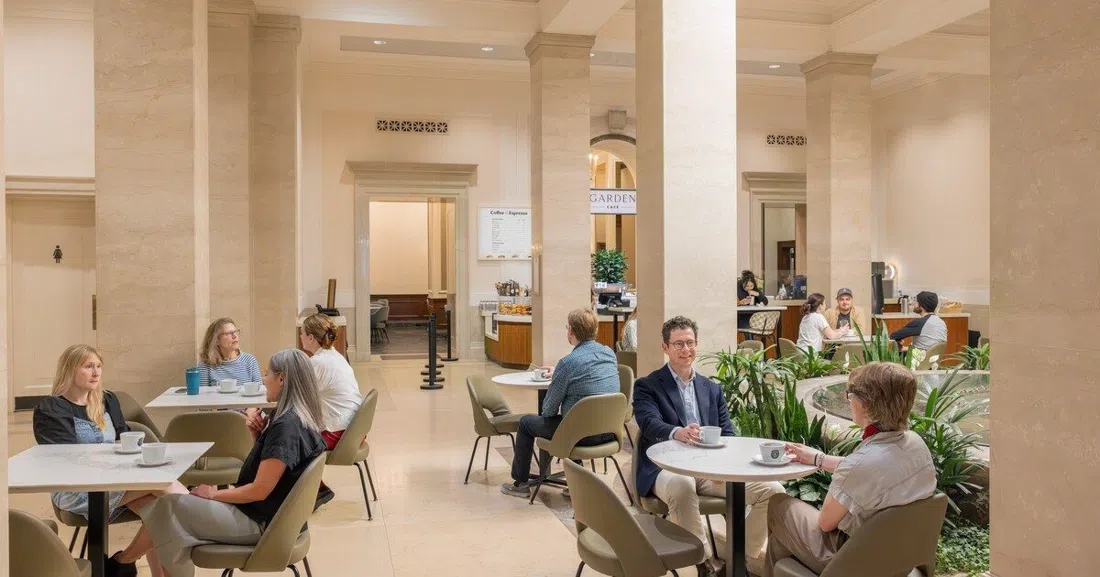
With three hours you can stop drifting and start reading wall labels, which is when the place gets good. Either way, plan a sit-down. The Garden Café (West Building, near the Sixth Street entrance) does proper table service from 11am to 4pm daily, around $20 to $30 a head, with menus often tied to whatever the big exhibition is. It fills at 1pm without fail, so arrive at 11.30 or after 2.30. Small groups are fine; larger parties should call ahead.
The light tunnel under Fourth Street
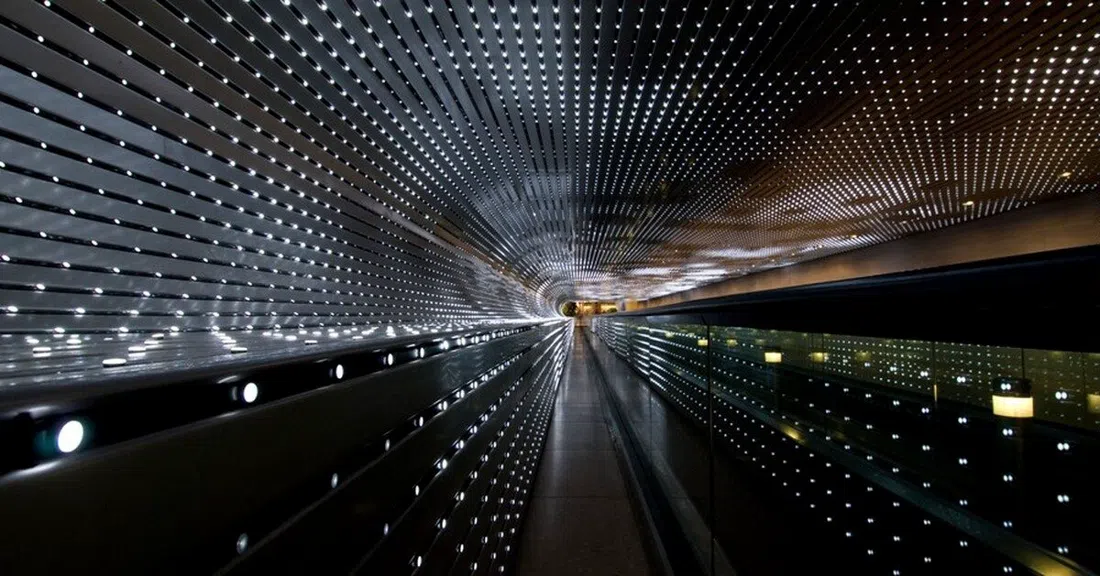
The link between the two buildings is itself an artwork, and a lot of people ruin it by rushing. Multiverse by Leo Villareal (Concourse walkway, under Fourth Street) is an LED installation lining a moving walkway; the sequence is computer-generated, so a pattern almost never repeats. It is free, with no ticket and no queue. Crossing takes about four minutes if you let the walkway do the work and stand still, which is the right way to see it: walk briskly and it is just a corridor. The one caveat is timing. It gets loud and busy with school groups around midday, and the effect works far better when the tunnel is quiet.
The East Building and the best free view in the city
Upstairs on the far side, the East Building is a different museum in temperament, with modern and contemporary galleries wrapped around a high, sharp-angled atrium, and considerably smaller to walk than the West. Allow forty-five to sixty minutes.
The reason to come, beyond the collection, is the roof terrace that opened in 2016. It is Washington's best free art-and-skyline viewpoint, and it is genuinely free, on the same walk-in entry with no separate pass. Katharina Fritsch's Hahn/Cock, a fifteen-foot cobalt-blue cockerel that has belonged to the Gallery permanently since 2021, stands looking out over Pennsylvania Avenue towards the Capitol. Most visitors photograph the bird and leave within five minutes. Stay ten: from up there the geometry of Pei's building and the diagonal street plan beneath it finally make sense.
The Sculpture Garden and the easiest stop for a group
The National Gallery of Art Sculpture Garden (National Mall, at Seventh Street and Constitution Avenue) is the obvious place to begin or end. It is open-air, free and walk-in, with gravel paths, shade trees and a central fountain, and it is the one part of the Gallery that changes with the calendar. The fountain becomes an ice rink from late November to around the start of March (rink admission plus skate hire, the only thing here you pay for), and the free Jazz in the Garden series runs on Friday evenings from late May to mid-August, allocated by a weekly online lottery rather than by turning up. Free guided garden tours run on the published schedule, and self-led groups can wander freely, which makes it the simplest place on this route to hold a dozen people without booking anything.
The Pavilion Café (inside the Sculpture Garden) is the only sit-down spot in the garden itself: counter service, roughly $12 to $20 a head, and it copes well with walking-tour-sized groups, with group dining arranged through the Gallery's catering line. In ice-rink season its hours stretch to 6pm Friday to Sunday, which makes it the natural warm-up stop when everything else on the Mall has shut at five.

Across Seventh Street and along the Mall
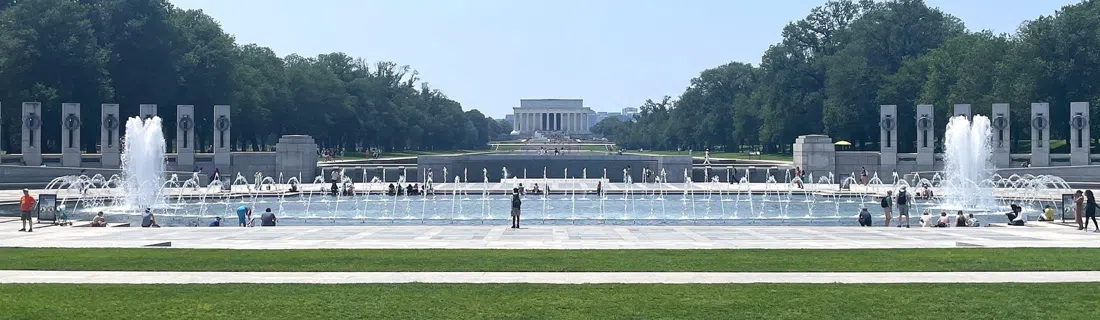
The National Mall (the 3rd to 7th Street stretch) is the spine every walking route here uses, and it works because the Gallery's two buildings sit on the north side, so you can string four or five major museums together across a few hundred metres without crossing a busy road.
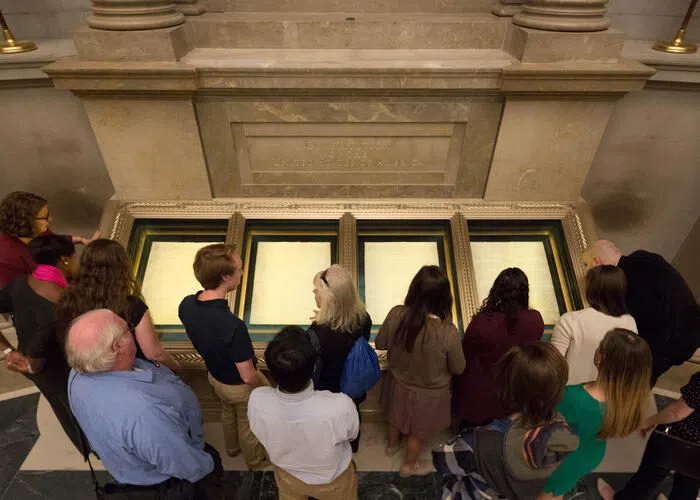
Directly across Seventh Street from the Sculpture Garden, the National Archives Museum (Penn Quarter) is the single best pairing with the Gallery: another Pope building, also free, and the one nearby attraction with a genuine queue. Entry runs on timed slots every fifteen minutes from 10am to 5pm. Reserving online is free, or $1 for a guaranteed slot, and it is strongly advised for groups. Book it rather than turning up on spec.
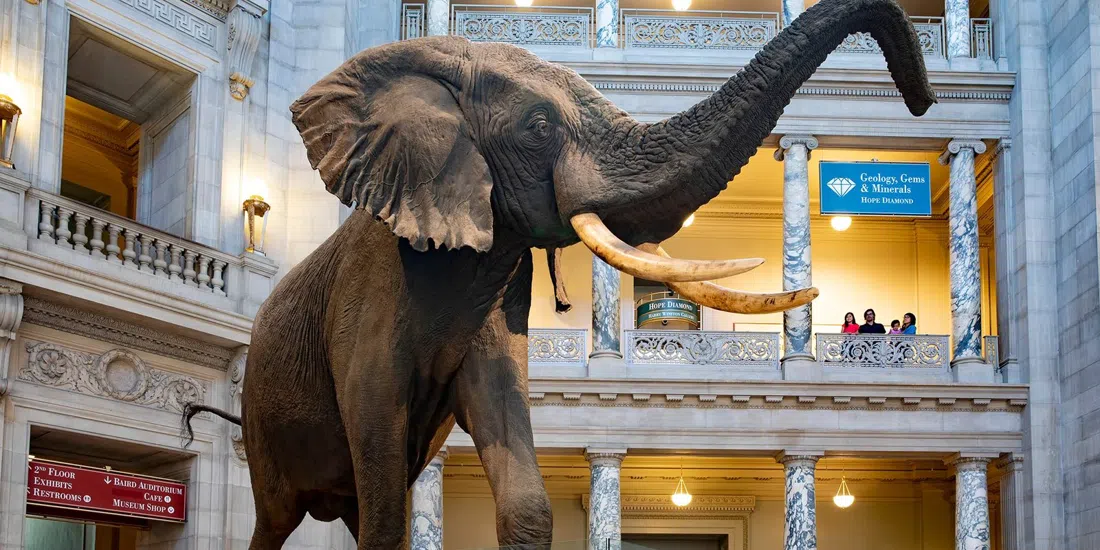
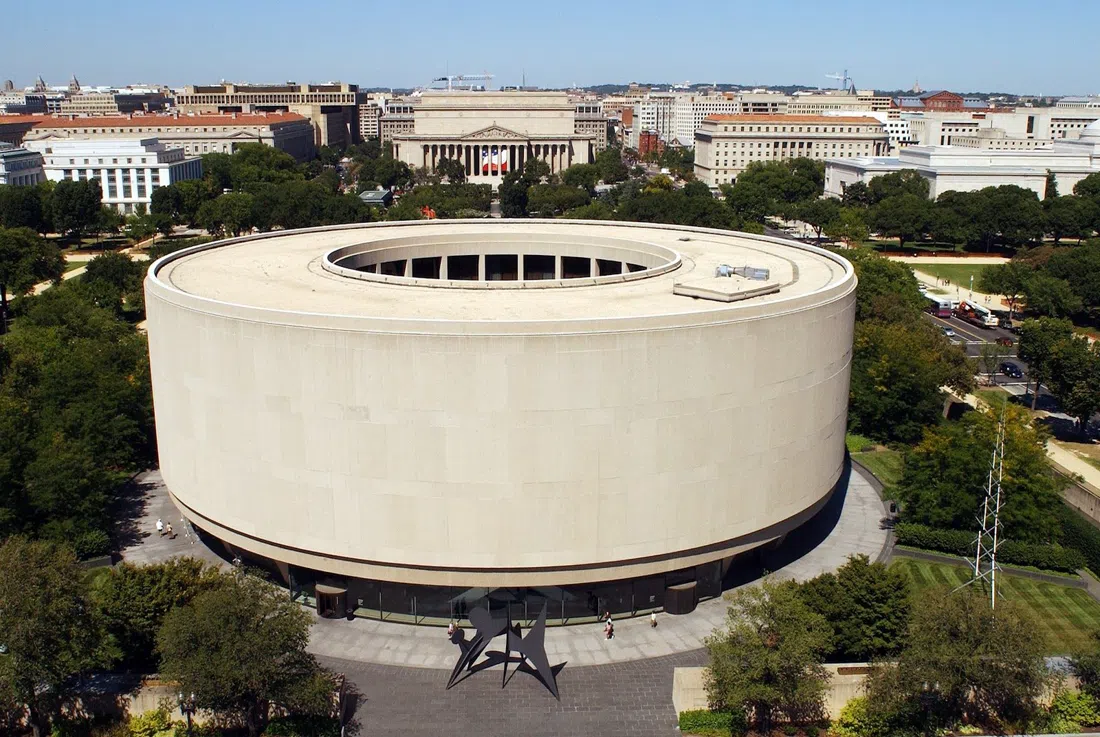
South across the Mall, five minutes on foot, the Hirshhorn Museum and Sculpture Garden (National Mall, south side) is the contemporary counterweight to the Gallery: free, with no tickets for general entry, though big-ticket immersive installations sometimes use same-day passes. Its own sculpture garden reopens on 31 October 2026 after a four-year rebuild led by Hiroshi Sugimoto, putting around sixty works outdoors, half again as many as before. Immediately west of the West Building, the Smithsonian National Museum of Natural History (National Mall, north side) is the easiest add-on and also the busiest building on the Mall. Go first thing or leave it until after 3pm, when the coach groups have cleared.
The quiet end, and the two places you must book
If the Mall is heaving, walk ten minutes west to the Smithsonian National Museum of Asian Art (National Mall, near the Castle): free walk-in, 10am to 5.30pm daily, rarely crowded, and home to the Peacock Room, one of the most extraordinary single rooms in the city. It is small, so very large groups should split. The Smithsonian National Air and Space Museum (National Mall, south side) is worth including now that it is finally finished; the last renovated galleries opened in autumn 2026, completing a phased rebuild of all twenty exhibition spaces begun in 2018. It is free, but free timed-entry passes are used at peak periods, so check before bringing a group.
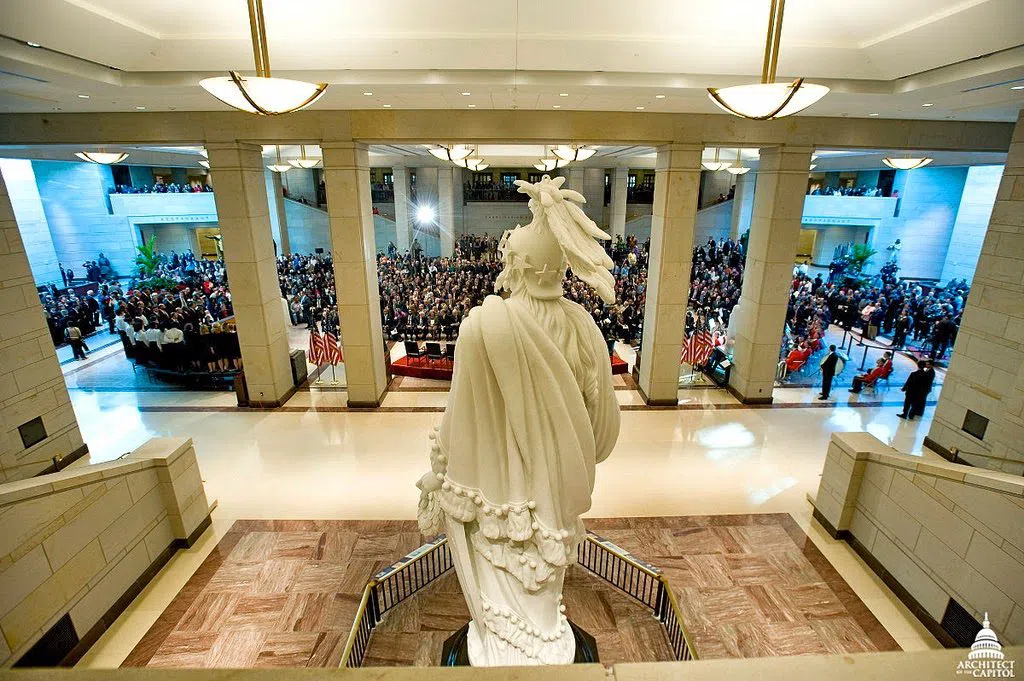
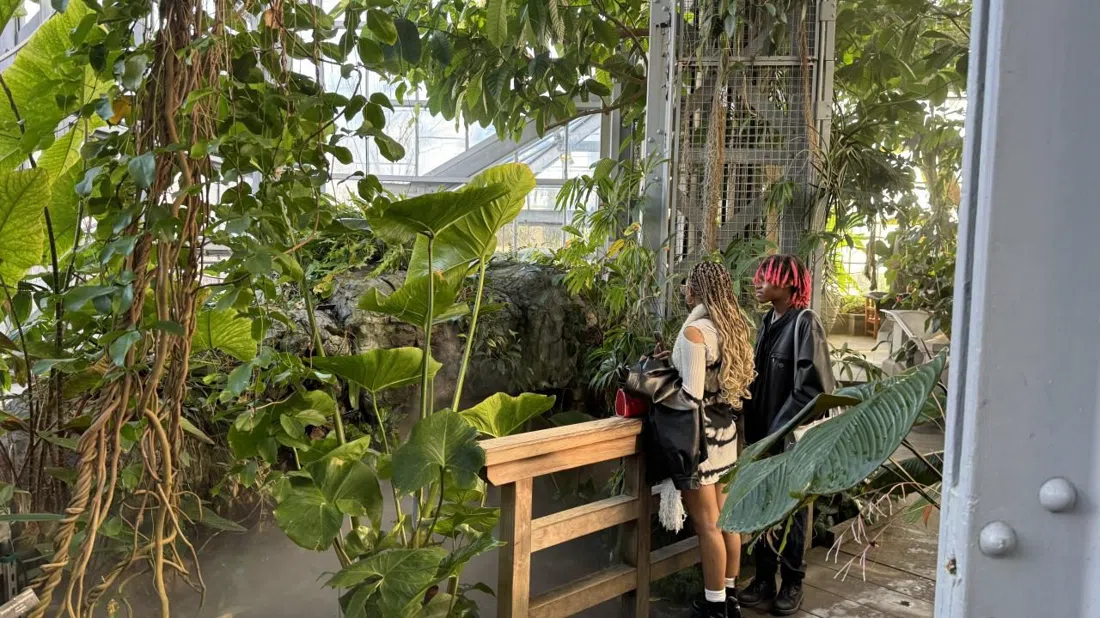
At the east end, behind the Capitol reflecting pool, the United States Botanic Garden (Capitol Hill) is free, untimed, 10am to 5pm, and a genuinely warm refuge in a Washington winter; most visitors miss it entirely. Its paths through the jungle room are narrow, so groups should go in loosely rather than as a column. The United States Capitol Visitor Center (Capitol Hill) is the other place with a real booking requirement and a security queue: free guided tours Monday to Saturday, 8.30am to 4.30pm, last tour 3.20pm, timed passes reserved online in advance and group bookings through the same system. Put it before the Gallery in the morning, because same-day passes run out and the building shuts hours before the museums do.
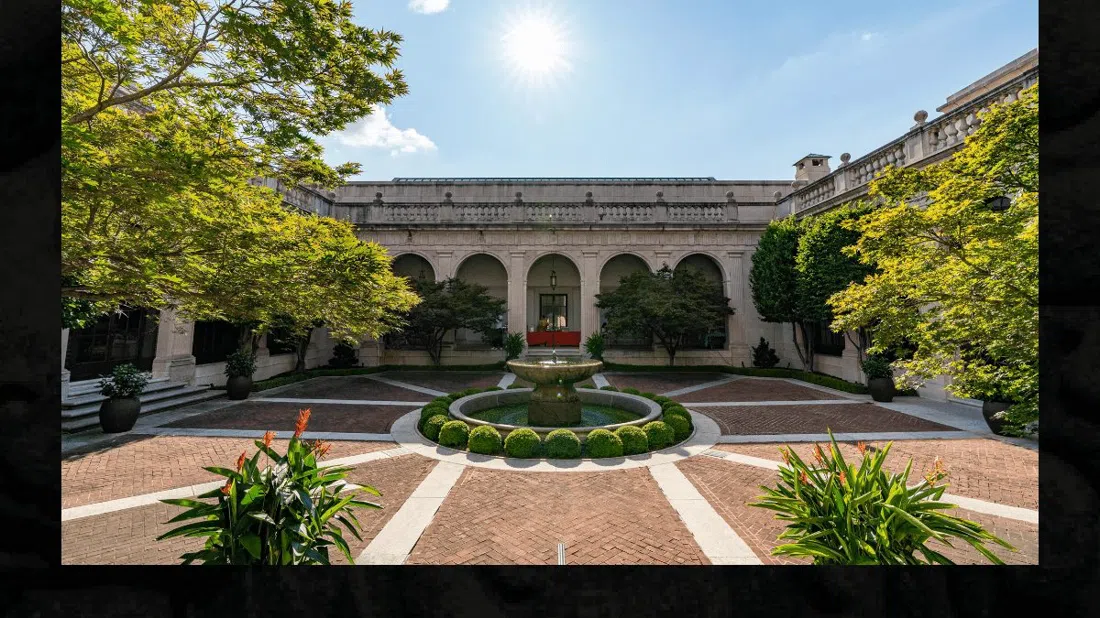
When the legs go, head eight minutes north to the Kogod Courtyard (Penn Quarter), the glass-canopied courtyard shared by the Smithsonian American Art Museum and the National Portrait Gallery. It is free, open 11.30am to 7pm, and the best indoor decompression point on any walk through this part of the city, and it stays open two hours after the Mall museums close.
Doors, queues and what a guided walk actually buys you
At the Gallery there is no ticket, no timed entry and no advance booking for general admission; the only real friction is the security line at the doors, which moves fastest before 11am and after 3pm. The queues on this route are at the Archives and the Capitol, both of which are free and both of which take slots online.
A guided option exists and is attached to this page as a card rather than named in the text. Prices start from 63 USD per person, tours run seven days a week, and across the bookable tours here there are 14,581 traveller reviews. A guide sells you narrative and route-planning across the Mall, not access: you can walk into the Gallery yourself for nothing, any day it is open. Take a guide if you want the surrounding city explained in one go. If your interest is the collection, skip it and take the free docent tour instead.
Best time to go
Weekday mid-mornings from 10am are calm inside the West Building and chaotic in Natural History; the school groups that fill the Concourse at midday have usually gone by three. The best single window for the whole route is a weekday from 10am to 12.30pm in the galleries, lunch at one of the two cafés, then the East Building and the roof terrace between 3pm and 4.30pm, when the light across Pennsylvania Avenue is at its best and the terrace has thinned out.
Seasonally, late November to early March gives you the ice rink in the Sculpture Garden and the Pavilion Café open to 6pm at weekends, which usefully extends a winter afternoon. Late May to mid-August brings the free Friday jazz evenings, allocated by weekly online lottery, worth entering but not worth planning a trip around. Spring and autumn are the pleasant walking months and also the busiest; October and early November are the sweet spot, with the Hirshhorn's rebuilt garden opening on 31 October 2026.
Is it worth it
Yes, without qualification, and not only because it is free. The Gallery is the one museum on the Mall where the architecture and the collection argue with each other productively (Pope's symmetry on one side, Pei's angles on the other, a light tunnel between them), and you can see all three in half a day without booking anything.
It suits couples and solo visitors best, who can move at their own pace and linger at the Leonardo. Families do well enough here, provided you use the Sculpture Garden as the release valve. Large groups need a plan: book docent tours ahead for ten or more, call the Garden Café rather than arriving with fifteen people, use the Pavilion Café or the Kogod Courtyard as your assembly points, and never take a big group into the Asian Art museum undivided. The one way to leave disappointed is to give the place a rushed hour between other sights.
Practical notes
Metro is the sane approach: Archives-Navy Memorial (Green and Yellow lines) puts you two minutes from the Sculpture Garden, Judiciary Square (Red) about six minutes north, and Smithsonian or L'Enfant Plaza serve the south side of the Mall. Driving is a poor idea; street parking around the Mall is scarce and metered.
Entry to everything named here is free apart from the ice rink. Cash is essentially unnecessary, since both cafés and the rink take cards, so a realistic day costs $12 to $20 at the Pavilion Café or $20 to $30 at the Garden Café, plus the optional $1 Archives booking fee. Budget four hours for the Gallery alone, six for the Gallery plus two neighbours. Wear shoes you can stand in for three hours on marble floors; the Mall's gravel paths and the Gallery's stone are both unforgiving. Note the hard stop: the Mall museums close at 5pm, so anything you want to do after that has to be the Kogod Courtyard or, in rink season, the Sculpture Garden.
For where to base yourself, Penn Quarter and the blocks north of the Mall put you within a ten-minute walk of every door in this article. Start with a Washington hotel search, and read the wider Washington guide for how the rest of the city connects to this stretch.