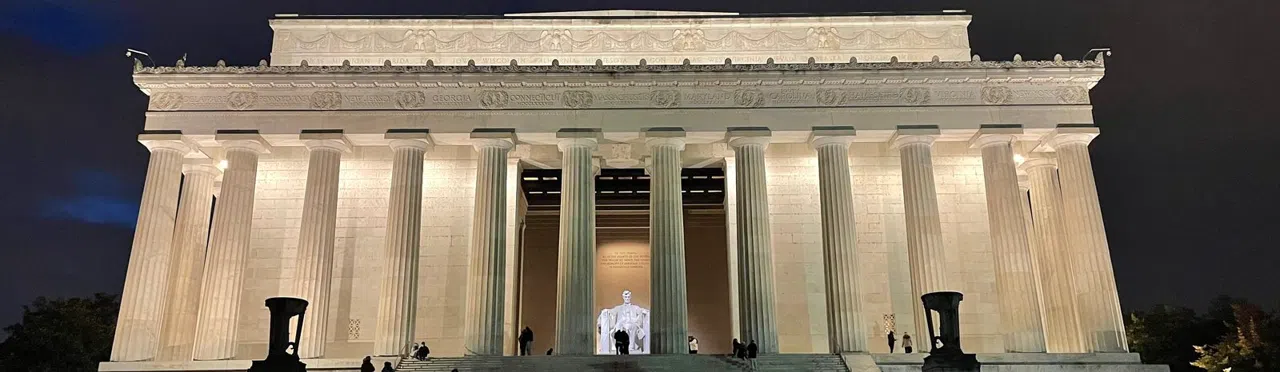

The Lincoln Memorial does something to children that is hard to predict from the outside: they go quiet. It is a stone box full of echo with an enormous seated man at the back of it, reached by a flight of steps long enough that kids count them aloud and never agree on a total. Turn round at the top and the city arranges itself in one straight line, still water, white obelisk, distant dome. And since June 2026 there has been a cave underneath the whole thing that you can walk into.
What you get at the top of the steps
The Lincoln Memorial (West Potomac Park, at the western end of the Mall) is free, unticketed and open 24 hours a day, 365 days a year. Construction began in 1914 and the memorial was dedicated in May 1922, which is the question most children ask second; the first is always how big he is. Henry Bacon designed the building as a Greek temple ringed by 36 Doric columns, one for each state in the Union at Lincoln's death, and Daniel Chester French's seated figure inside is roughly nineteen feet of Georgia marble, cut and assembled from dozens of separate blocks. Standing between those feet and looking up is, for a five-year-old, the entire trip.
Give them jobs and the visit doubles in length. Count the columns. Find the state names carved along the top. Put a palm flat on the marble and notice how cold it stays in August. Lincoln's two best-known speeches are carved into the side walls, the short 1863 address on one and the longer, much darker Second Inaugural on the other, and older children can be sent to find a single word in each. There is a persistent story that the statue's hands, one relaxed and one clenched, spell his initials in the manual alphabet; there is no evidence for it, and telling children that a famous story is probably untrue goes down better than you would expect. Eighteen steps below the chamber, an inscription in the stone marks where Martin Luther King, Jr. stood to speak in August 1963, and it is worth kneeling down to read it with them rather than pointing at it from above.
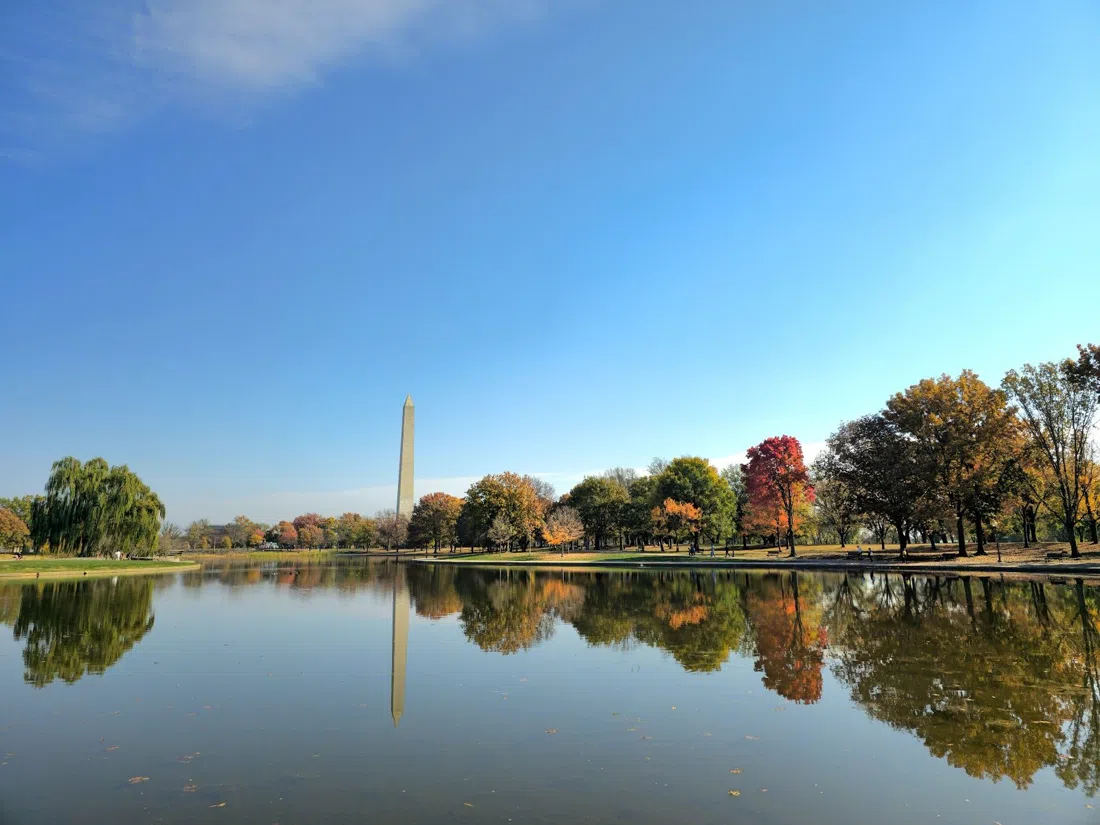
Then turn around. Below the plaza, the Lincoln Memorial Reflecting Pool (West Potomac Park) runs east toward the obelisk, and the mirror shot everyone comes for only works when the water is dead calm, which in practice means first light. By lunchtime, wind and crowds have broken the reflection and you are photographing a long grey rectangle. The pool's surrounding parkland is unrestricted and informal, which makes it the easiest place in Washington to park a school group, count heads and let children run off whatever the memorial made them hold in.
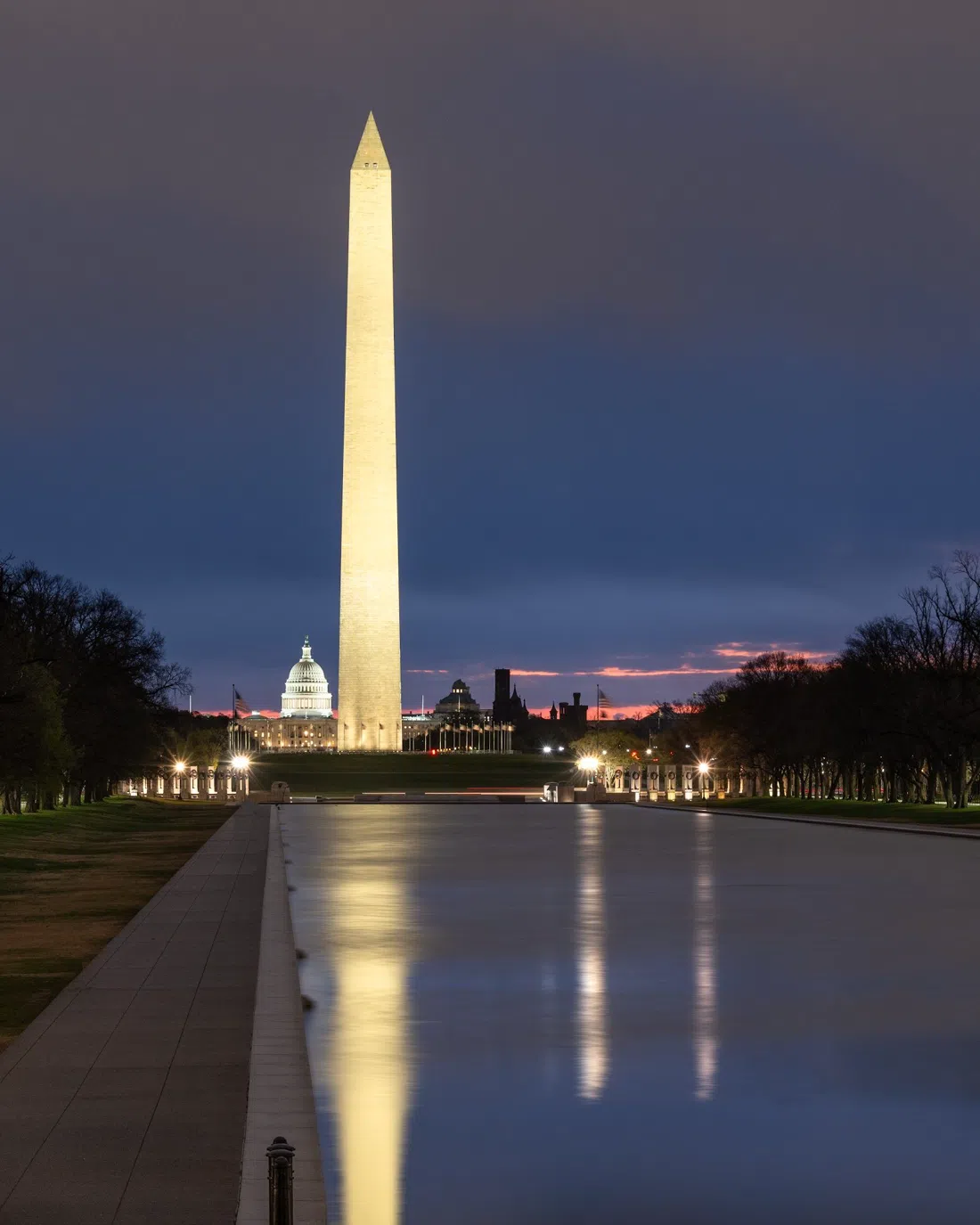
The honest downside is the flip side of free: no ticket and no cap on numbers. School and coach groups arrive constantly, and the chamber goes shoulder-to-shoulder through the middle of the day. Anyone travelling with a group, or with a child who dislikes crowds, is far better off between 07:00 and 09:00 or after 21:00.
The cave under the memorial
The Lincoln Memorial Undercroft (West Potomac Park) opened to the public on 25 June 2026 after a century sealed off, and it is the single biggest change to visiting here in a generation. It is a literal cave under the memorial, the foundation space that holds the building up, and the space itself is the exhibit rather than a polished gallery of display cases. Children who like tunnels, columns, dark corners and the question of what is underneath things will rate it above the statue. Children who want interactive screens may not.
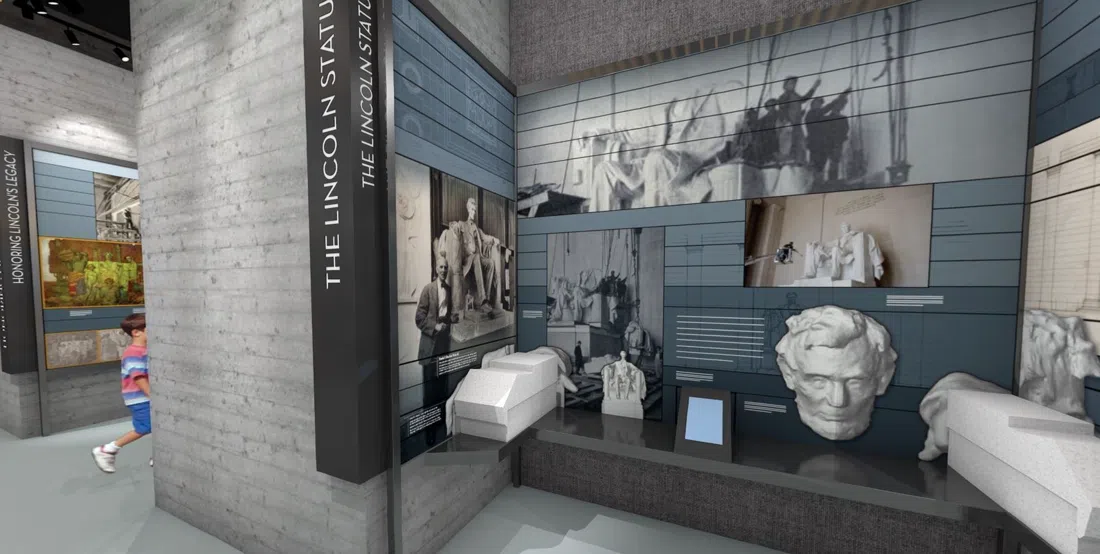
Entry is free but timed, with a $1.00 service fee per advance reservation, and every visitor aged 2 and over needs their own ticket, including the toddler you are carrying. Standard bookings run up to 6 tickets, and there is a separate large-group reservation of up to 50, which makes this one of the few ticketed things on the Mall that takes a school party properly. If you have not booked, same-day tickets are handed out from 08:45 at the information kiosk on Daniel French Drive; arriving at eleven to find the day's allocation gone is the fastest way to lose a morning.
How long the memorial actually takes
Steps and chamber: 20 to 30 minutes for adults, closer to 45 with small children who stop to count things. Add the Undercroft and you are at roughly an hour and a half including the ticket check and the queue to get back up into daylight. The memorial plus the two war memorials either side of it, plus a slow walk along the pool, is a comfortable 90 minutes to two hours. Add the fountains, the Tidal Basin and Einstein and you have a half day. Add a museum and you have a full one, and you will be carrying somebody by the end.
Timed tickets and what a guided tour adds
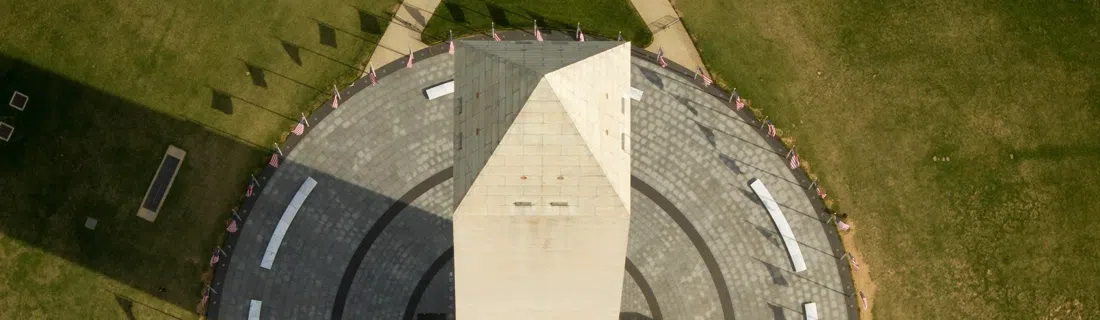
Three things in this corner of the Mall need a ticket, and only one of them is the Lincoln itself. The Undercroft is covered above. The Washington Monument (National Mall) runs timed lift tickets, up to 6 per reservation, released 30 days ahead at 10am ET. There are no walk-up reservations and no group bookings, so a large party has to book several separate transactions and hope the slots line up. The small same-day allocation at the 15th Street lodge goes to a queue that forms well before the 08:45 window opens. The National Air and Space Museum (National Mall) needs a free timed pass for every visitor regardless of age, so a group has to book a block in advance rather than turn up.

As for guided tours: you never need one to see the Lincoln Memorial. It is free, it is open all night, and nobody is checking anything at the door. What an evening monuments circuit actually buys you is transport and a narrative between sites at the hour the memorial looks best and children's legs have stopped working. Those tours run seven days a week and start from 58 USD per person, and the best-reviewed of them holds 4.7 out of 5 from 7,255 travellers. If you are staying within walking distance of the Mall, it is an easy skip. If you are out in the suburbs with a four-year-old and no car, it is the difference between seeing the memorials lit at night and not seeing them at all.
The memorials within a ten-minute walk
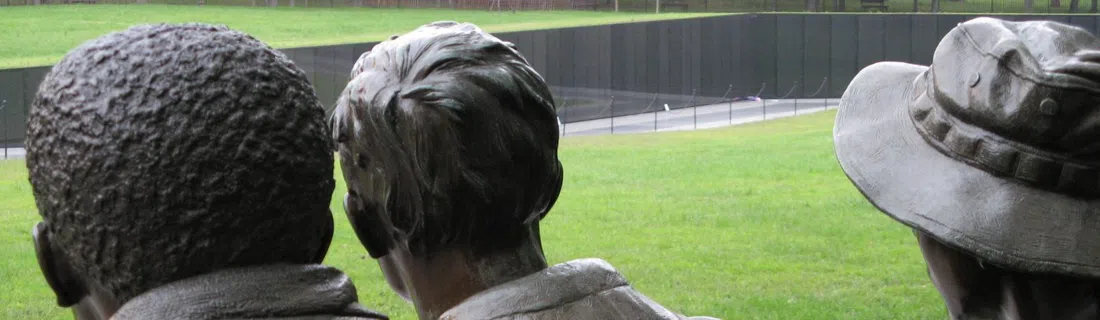
The Vietnam Veterans Memorial (Constitution Gardens) is a three-minute walk northeast of the Lincoln steps, free and unticketed, and the sunken path is narrow enough that large groups should walk it single-file rather than spreading out. Volunteers help visitors locate names on the wall, and the name-rubbing ritual (paper, pencil, a name someone in your party chooses) gives older children something to do rather than something to look at, which is the whole battle on a memorial walk.
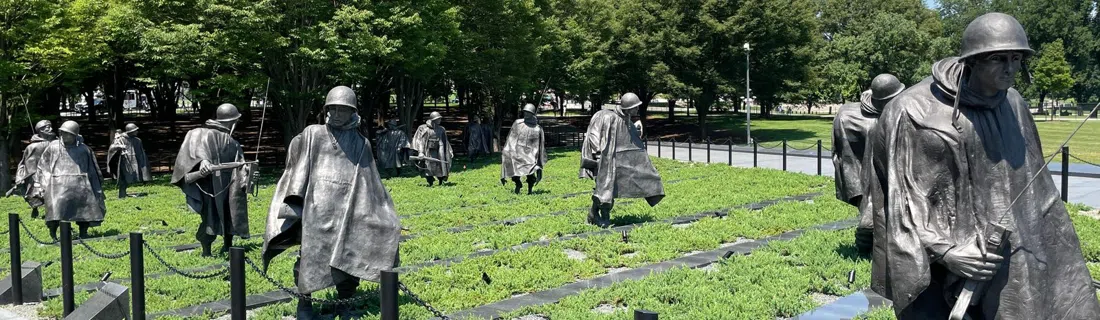
The Korean War Veterans Memorial (West Potomac Park) sits on the other side of the Lincoln steps, free and open round the clock, and its steel platoon moving through the scrub is the memorial that reliably stops children mid-sentence. Its information kiosk on Daniel French Drive doubles as the walk-up ticket desk for the Undercroft, so it is worth making this your first stop rather than your last.
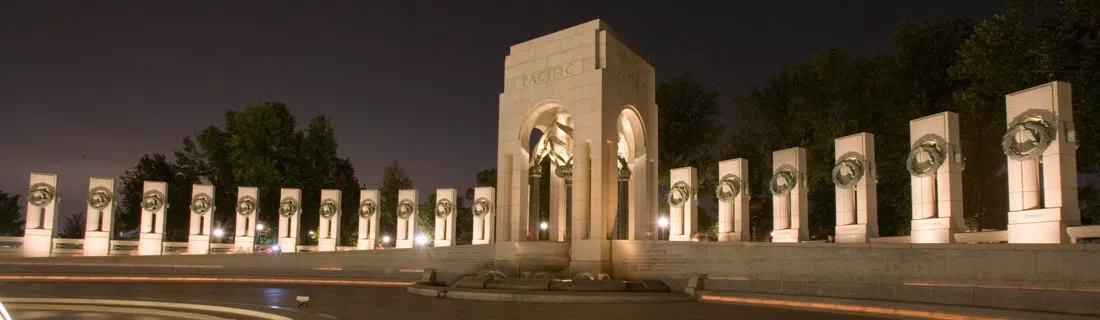
East along the pool, the World War II Memorial (National Mall, at 17th Street) closed in January 2026 for a $3.7m fountain and lighting overhaul and reopened in mid-May. Both the fountains and the new night lighting are running again, and on a hot afternoon the spray is a magnet no child walks past. It is an open plaza with generous bench and wall seating, which makes it the obvious place to regroup, hand out food and re-count everybody.
Between the two, Constitution Gardens (National Mall) is the decompression zone: shade, a pond, ducks, grass and almost no crowd. No permit is needed to walk a group through it or sit on the lawn. When a six-year-old is ten minutes from a meltdown, this is the place to spend those ten minutes.
South around the water, the Martin Luther King, Jr. Memorial (Tidal Basin) is free, unticketed and reached by a wide paved approach that is easy again: the Tidal Basin walkway reopened in April 2026 after the seawall rebuild, with hundreds of new cherry trees planted along it. There is a staffed park bookstore and, importantly for anyone travelling with children, restrooms on site.

Where to spend a child's patience
Five minutes north of the Lincoln Memorial, the Albert Einstein Memorial (Foggy Bottom, on the front lawn of the National Academy of Sciences) is the one memorial in Washington where climbing on the statue is actively encouraged. It is free, unfenced and accessible at any hour; groups are fine, though only a few children fit on the lap at once, so expect a short queue of parents with phones. It is consistently the stop children name first when you ask them afterwards what they liked.

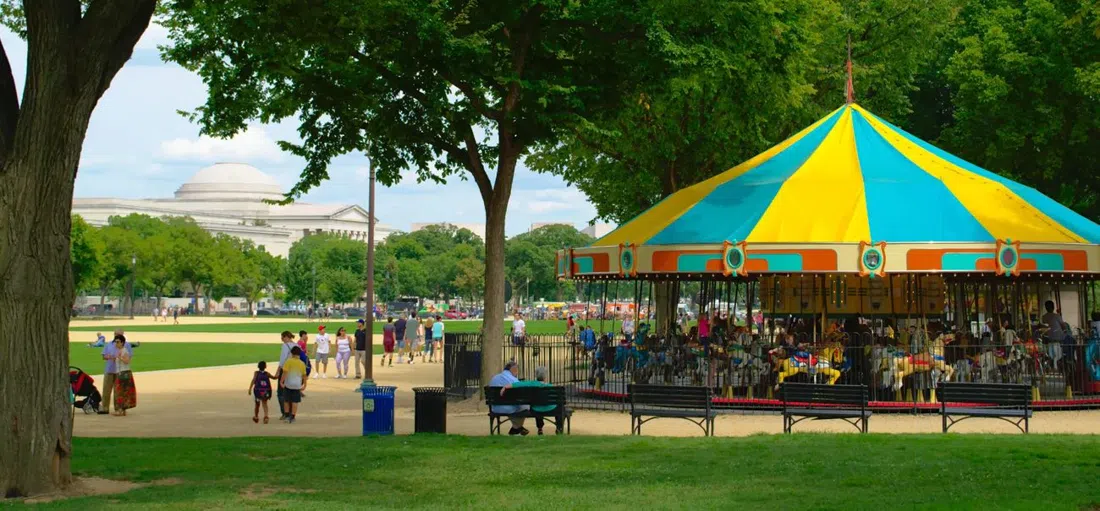
The Carousel on the National Mall (National Mall) came back on 24 April 2026 after a near-three-year restoration. It is $6 per rider at all ages, walk-up with no booking, card and contactless accepted, and it takes a whole group at once. It is the cheapest reliable bribe on the Mall and a civil-rights landmark in its own right, which is worth explaining while you queue.
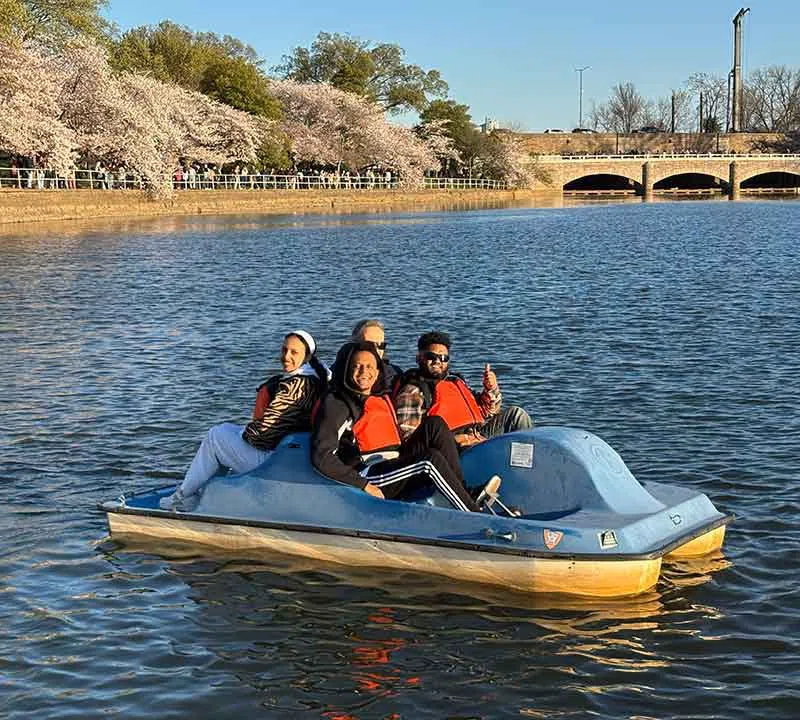
On the water, Tidal Basin Paddle Boats (Tidal Basin, operated by Boating in DC) run roughly mid-March to Columbus Day, typically 10:00 to 18:00 and later in high summer. Boats are about $38 an hour on weekdays and $40 at weekends and on holidays, the four-seaters take two adults and two children, and multiple boats can go out together. The shoreline here has been rebuilt and replanted as of 2026. For most children this is the most fun available on this side of the Mall, full stop.
For food, the Lincoln Memorial Refreshment Kiosks (West Potomac Park) are walk-up counters with outdoor seating, roughly $5 to $18 a head. Taste of History took over the Mall's food contract on 1 May 2026 and runs eight permanent kiosks between the Lincoln Memorial and Air and Space. Queues at midday in summer are slow, so eat early or late. The kiosk side of the memorial also has the restrooms and the gift stand, both usable without an Undercroft ticket.
When the weather turns
The National Museum of American History (National Mall) is the natural pairing with the memorial: Lincoln's actual top hat from the night of 14 April 1865 is here, and a child who has just stood at the statue's feet will look at that hat completely differently. Entry is free with no timed pass, and Wegmans Wonderplace, Wednesday to Sunday, 10:00 to 16:00, under-6s, is the best indoor bolt-hole on the Mall in bad weather. It is capacity-limited, so a big group has to split and take turns.

The National Museum of Natural History (National Mall) is open daily 10:00 to 17:30, free with no timed pass, and the Constitution Avenue door is usually the quieter one for a group. The dinosaurs deliver. Set expectations first, though: the Butterfly Pavilion closed permanently on 24 April 2026 and the Orkin Insect Zoo is shut through spring 2027, so promise neither.

Air and Space is very good and not yet complete. Five more galleries reopened on 28 July 2026 for the building's 50th anniversary; the last two, Modern Military Aviation and At Home in Space, are still due in autumn 2026. Hourly slots run 10:00 to 16:00 and nobody is admitted after 17:15.
All three sit roughly 2.5 km east of the Lincoln steps, about 30 minutes at adult pace and closer to 45 with short legs and a fountain in the way. Plan it as a separate half-day, not an add-on. The rest of what the city does well sits in our Washington guide.
Rules, rangers and moving a group
Rangers are on hand at the Lincoln Memorial roughly 09:30 to 22:00, which matters if you want someone to answer a child's question about the building; outside those hours the memorial is open but unstaffed. The chamber is a quiet space and rangers will say so to a loud group, kindly but clearly. There is no bag check, no ticket and no cap on numbers, which is why the midday crush happens at all.
For anyone herding more than six children: the Undercroft's 50-person group reservation and the carousel are the two places that take a whole party at once. Wonderplace and the Washington Monument are the two that will break you into pieces. Vietnam wants single file. The pool lawn and the World War II plaza are where you re-count heads.
Is it worth it
Yes, without hedging. The step-top view back down the Mall is the single best free thing in Washington with children, and the memorial rewards a family that arrives with a few small tasks in hand far more than one that arrives to look. The Undercroft is a genuine addition rather than a novelty, but book it or be at the kiosk at 08:45. Turning up hopeful at lunchtime is how families end up disappointed by the best new thing here. The stop suits every age: toddlers get scale and echo, primary-age children get the cave, the carousel and a statue they are allowed to climb, and teenagers get the speeches and the step where King stood. Couples and solo travellers get the same building without any of the logistics, and should simply come at dawn.
Best time to go
First light is the best hour of the day here and it is not close. The chamber is nearly empty, the reflection in the pool actually works, the light hits the statue's face, and you can walk the Vietnam path without waiting. Second best is after 21:00, when the memorial is lit, the coaches have gone and the walk down to the water is genuinely atmospheric. Bring a layer, as it is colder by the pool than it is in the city. Avoid 11:00 to 15:00 if you have any choice at all, especially in summer.
By season: spring gives you the new cherry trees along the rebuilt Tidal Basin walkway and the paddle boats from roughly mid-March; summer gives you the World War II fountains and the spray, plus the worst crowds and the slowest kiosk queues; autumn is the sweet spot, with boats running to Columbus Day and cool enough weather to walk the full loop; winter strips the crowds out entirely, and since the memorial never closes, a cold clear evening at the top of the steps is one of the quietest experiences in the city. Weekdays are cheaper on the water and calmer everywhere. Remember that ranger cover ends around 22:00, so a late visit is a visit to the building, not to a person who can explain it.
Practical notes
Transport. No Metro station sits at the Lincoln steps. The nearest are a 15 to 25 minute walk, which is fine with older children and a long way with a four-year-old at the end of a day. Rideshare and taxi drop-offs work best on the roads behind the memorial rather than on the plaza. The memorial-to-memorial distances are short (Vietnam three minutes, Einstein five, the World War II fountains about ten along the pool); it is the museum leg east that needs planning.
Cash and cards. Everything here takes cards, including the carousel, and nothing needs cash. The only fees on an otherwise free day are the $1 service fee per advance ticket for the Undercroft and the Washington Monument.
Budget. A family of four can do the Lincoln Memorial, the Undercroft, all five neighbouring memorials, Constitution Gardens and Einstein for the price of the booking fees alone. Add the carousel at $6 a rider, a paddle boat at about $38 on a weekday or $40 at weekends and holidays, and kiosk food at roughly $5 to $18 a head, and a full day with two children still lands well under most museum admissions elsewhere.
Timing. Two hours for the memorial and its immediate neighbours; half a day for the full memorial loop including the Tidal Basin; a separate half-day for the museums. Book the Undercroft first, plan everything else around that slot, and put the carousel at the end where it belongs.
Staying nearby. Walkable beds around the Mall are what turn this into a dawn visit rather than a midday one, so compare options with a Washington hotel search before you fix the morning.