
Washington was drawn as a set of sightlines: long avenues, low buildings, monuments placed to be seen from a distance and in sequence. That geometry is wasted at noon, when the marble goes flat and the coaches arrive. Before sunrise it works exactly as intended, the Potomac lying still, the memorials empty, the light crossing the core from east to west in an order you can walk. What follows is that walk, with the distances, the gate times and the caveats that decide how much of it you actually get.
Reading the clock before you leave the hotel
Sunrise here swings by more than an hour and a half across the year, from a shade before 05:45 at the summer solstice to around 07:25 in the first week of January, and every plan on this route hangs off that number rather than off any opening time. The usable light begins roughly forty minutes earlier, when the sky is still blue and the monuments read as silhouettes against it, and it is over, photographically, about an hour after the sun clears the horizon. That is the whole budget: ninety minutes, maybe a hundred.
Access falls into three tiers, and they matter more than the weather. The memorials on the DC bank never close, so blue hour is yours in any season at Lincoln, the Tidal Basin, King, Roosevelt, the Memorial Bridge, the Georgetown waterfront and Hains Point. A second tier unlocks at 06:00: the two Arlington Ridge monuments, Theodore Roosevelt Island, Gravelly Point, Jones Point. In November that gate still hands you a comfortable half-hour of dark; in late June it opens a quarter of an hour after the sun is already up, which takes those sites off a midsummer plan. The third tier is a single 07:00 gate out at Great Falls, and it is a winter proposition only.
One practical consequence follows: where you sleep decides which tier you can reach. First trains on the Metro run from about 05:00 on weekdays but considerably later at weekends, so confirm the day's first departure rather than assuming, because a Sunday dawn is a walking or taxi morning by default. Filtering a Washington hotel search by walking distance to the Mall rather than by nightly rate is the single change that makes this route work.
The east-facing core on foot
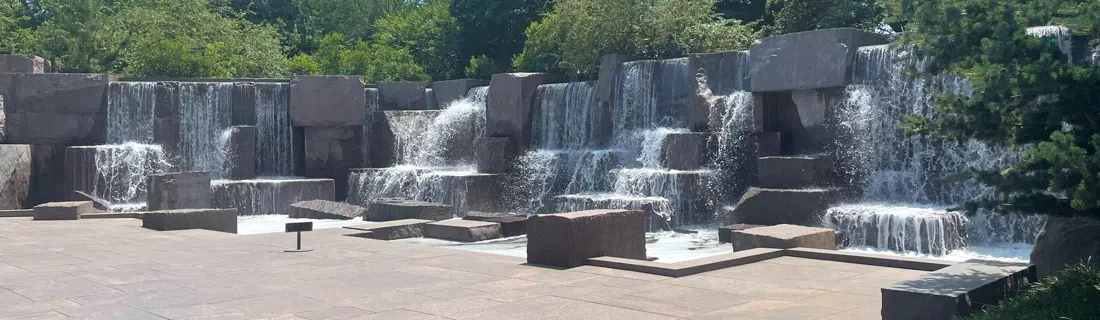
The Franklin Delano Roosevelt Memorial (West Potomac Park, on the Tidal Basin's western shore) is the contrarian opener and the right one. It faces west, and that is the point: at 05:15 it sits in flat, even, shadowless blue light, its four granite rooms running one into the next, and the waterfalls run all night. A tripod and a two-second exposure turn that water to smoke while the sky still has colour in it. It is also the most forgiving stop on this list for a group, deliberately spacious, step-free, wide enough that a dozen people with tripods are not queuing for the same angle. Give it thirty-five minutes. Free, no ticket, nobody to ask.
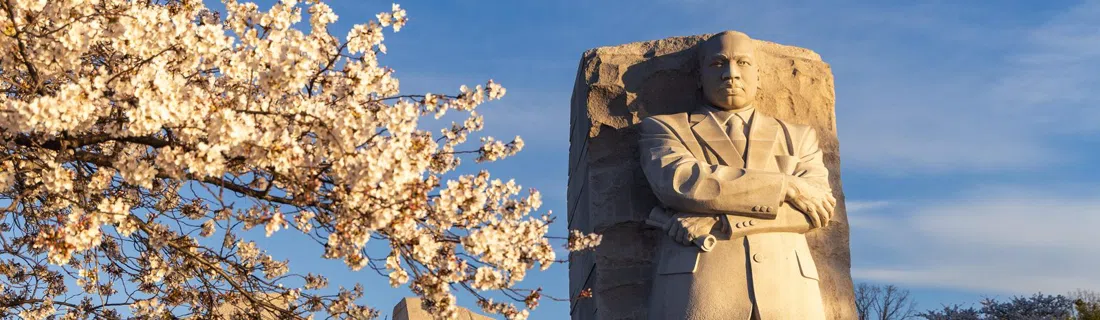
Five minutes and 400m north-east along the basin path is the Martin Luther King, Jr. Memorial (West Potomac Park). This is the best-lit stop of the entire morning and the window is short: the first ten minutes after sunrise, when low sun crosses the Stone of Hope at a raking angle. The granite is left unpolished and takes that light like sandpaper, so every tool mark reads. Across the water the Jefferson will already have people on its steps; here you will usually be alone. It never closes and there is no limit on group size, though the plaza narrows at the split boulder, so a large party is better working in shifts than crowding the gap.
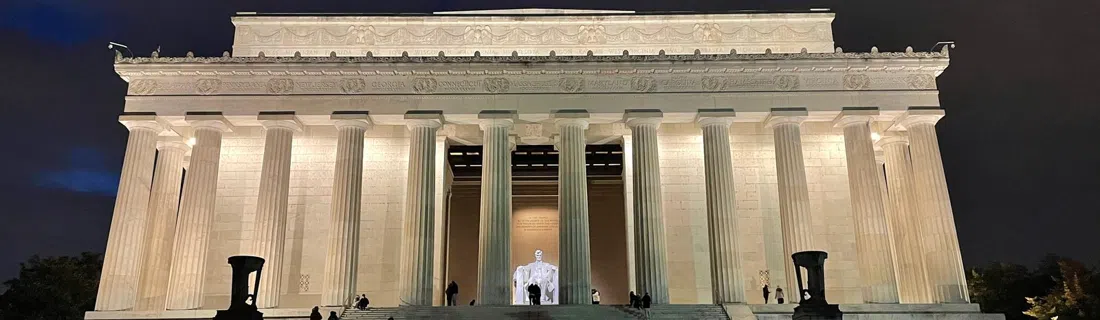
The Lincoln Memorial (west end of the National Mall, 700m and nine minutes north of King) is the anchor. Henry Bacon's Doric temple faces due east, so at sunrise the colonnade takes the light square on while the chamber behind stays black. That contrast makes the classic frame, and it is why you want to be standing on the steps before the sun rather than after. Open around the clock, no ticket, no door policy; a group of any size can set up at 05:00 without permission. The honest caveat is the Reflecting Pool. It was resurfaced with a blue sealant in 2026 and the Park Service was still flushing clogged supply pipes in August, so on any given morning the mirror shot may come out discoloured, or the pool may be partly drained. Have a plan B ready: the colonnade itself, or the long view back east down the Mall. The new Undercroft museum beneath the memorial also opened in 2026. It is free with timed entry and does not open at dawn, so treat it as an afternoon return rather than part of this walk.
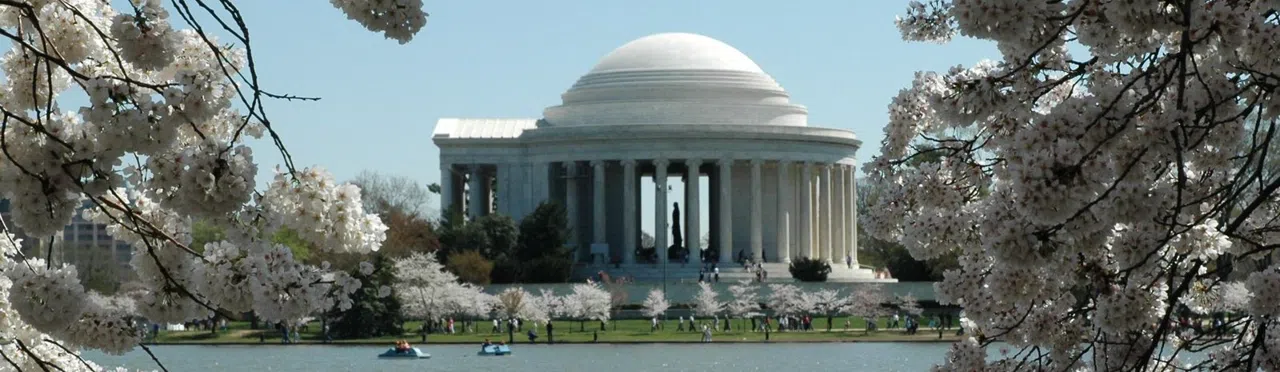
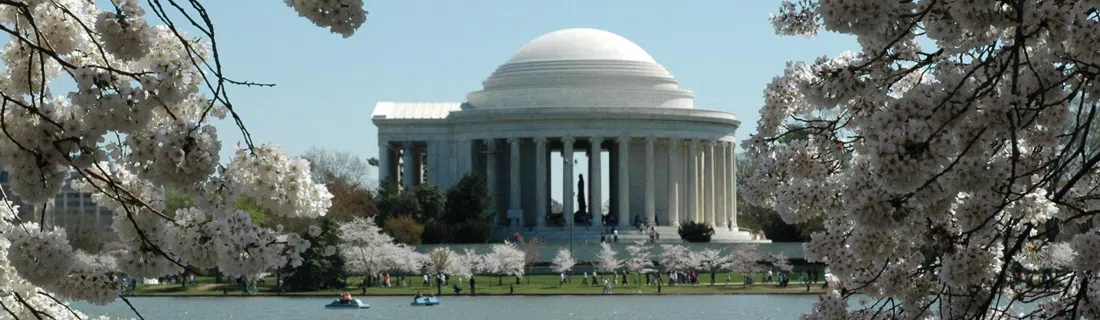
From there the Tidal Basin and the Thomas Jefferson Memorial (between West and East Potomac Park) close the loop, about 3.4km, or 2.1 miles, which takes forty-five minutes at a photographer's pace. For years this was the weak link, because the old seawall had settled far enough that a high tide put the path under a few inches of water most mornings. The $113m reconstruction finished eight months early and the basin fully reopened on 24 April 2026 with 12ft walkways and 353 replacement cherry trees. The difference is immediate: the promenade now takes tripods and a sizeable group without anyone stepping into the road or the water. Shoot the dome from the north-west shore while the sun is still behind it, then walk round and take the same building lit flat twenty minutes later. Free, open all hours.
Across the bridge to the Virginia rim
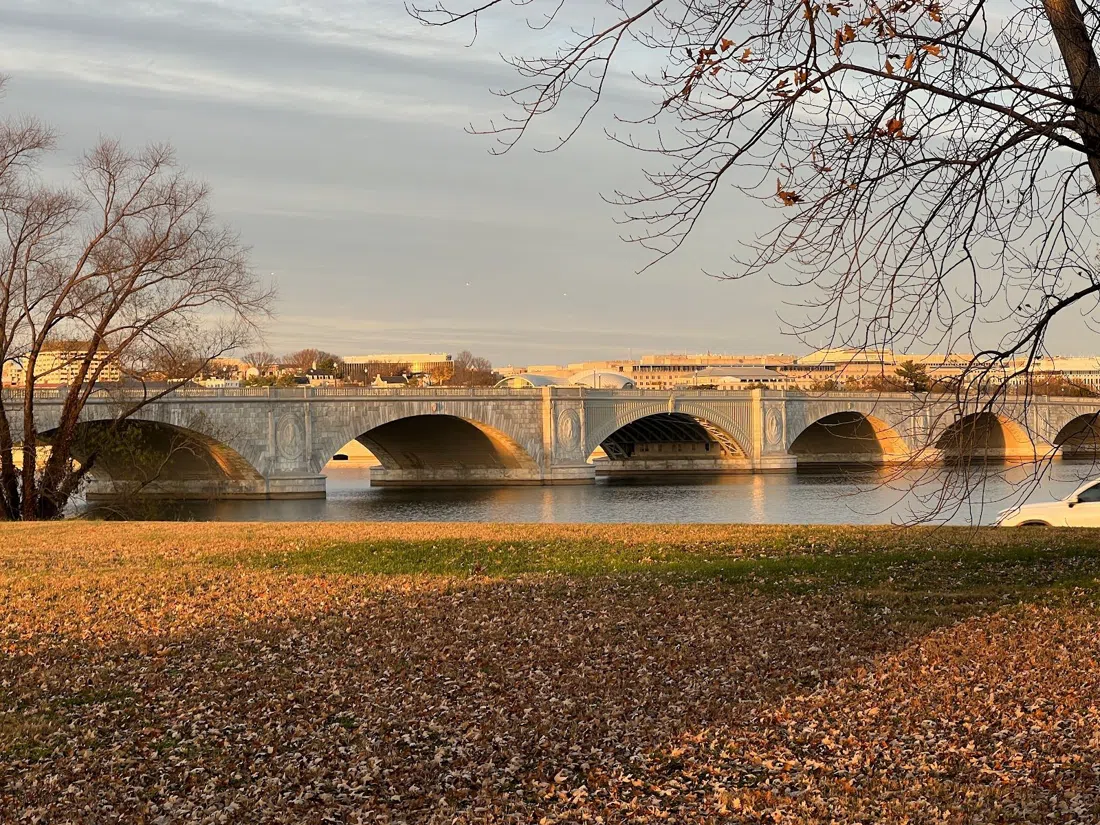
Arlington Memorial Bridge (from the Lincoln Memorial's western side) is the hinge of the morning. The span is roughly 650m and walks in ten minutes, and it carries the finest sightline in the capital: the axis runs from the Lincoln steps straight over the water and up the hill to Arlington House, which is exactly what the 1932 design intended. The deck was rebuilt entirely in 2020, so the surface and the railings are sound, and the sidewalks on both sides are wide enough for a group to spread out. Stay off the roadway. Commuter traffic builds fast from about 06:30, and the noise will break your concentration well before it becomes a safety question.
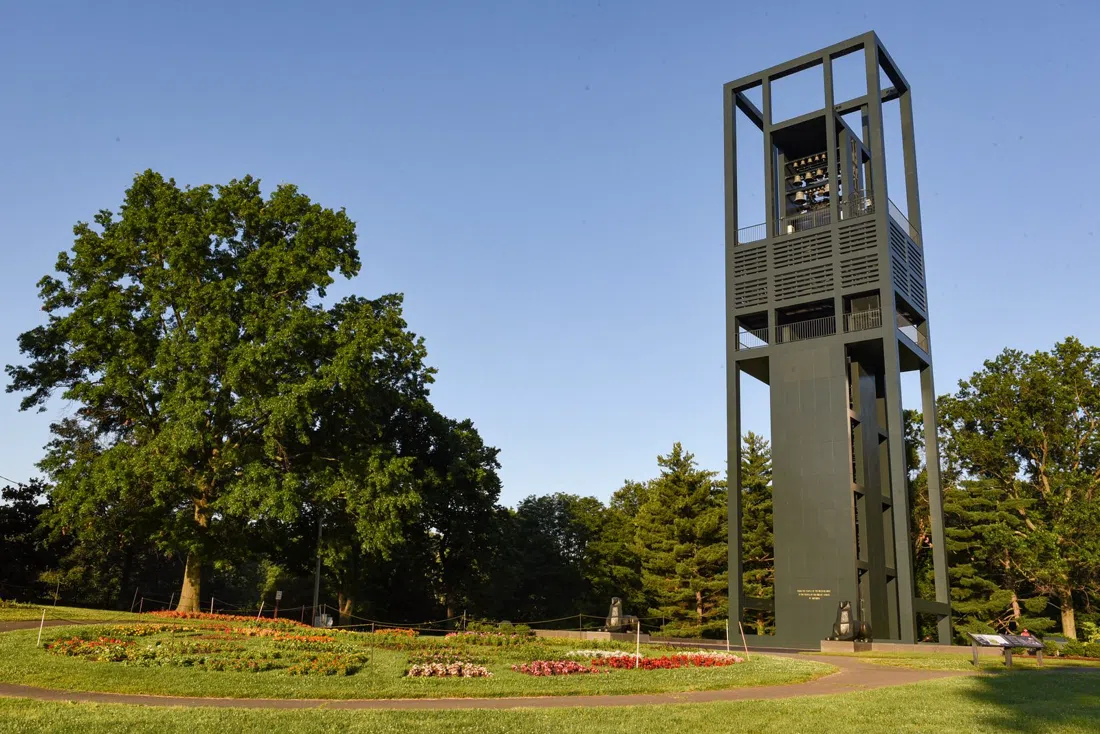
Uphill from the bridge's western end (1.2km, about twenty minutes, and a real climb) the Netherlands Carillon (Arlington Ridge) opens its grounds at 06:00. It is the only elevated vantage on this route that unlocks before sunrise, and from the lawn the whole monumental core lines up across the river in a single frame. The Air Force Memorial nearby does not open until 08:00 or 09:00, which is why it is not on this list at all. The lawn is large and unbarriered, so a coach party fits without anyone jostling for the edge. Free, open until midnight.
Two minutes' walk away, the U.S. Marine Corps War Memorial (Arlington Ridge) is the reason to arrive before the sun rather than after. The bronze faces the sunrise, so the picture is the pre-dawn silhouette, the raised flag against a colouring sky, and it is gone by 07:00, after which you are photographing a well-lit sculpture like everyone else. The flag flies twenty-four hours a day by presidential proclamation, so it is always in the frame. Large paved apron, plenty of open lawn, 06:00 to midnight, no restrictions and no charge.

Where the river is still a river
Georgetown Waterfront Park (Georgetown, on the DC bank west of the Kennedy Center) is where the Potomac stops being scenery and starts working. The Georgetown and university crews are on the water before sunrise most mornings, and the park's stepped landing puts you at their eye level rather than looking down from a railing, a rarer angle than it sounds. Broad diagonal paths and a long promenade make it comfortable for a group and for tripods, and it never closes. Come with a fast lens: the boats move, and at that hour you are working at the edge of your shutter speed.

Theodore Roosevelt Island (in the river off Rosslyn, reached by footbridge from the parkway car park) is the counterpoint to all the marble, and the memorial at its centre, a statue in a formal plaza set in woodland, is the only one on this route you have to earn on a trail. River mist hangs over the marsh at dawn and the herons are working well before the traffic starts. Two warnings, both real: sections of trail and boardwalk close when the tide floods them, so check conditions before you commit the morning, and the boardwalk is genuinely slick when wet. The car park is small, no bicycles are allowed on the island, and walkers arriving on the Metro from Rosslyn do best. Open 06:00 to 22:00, free.
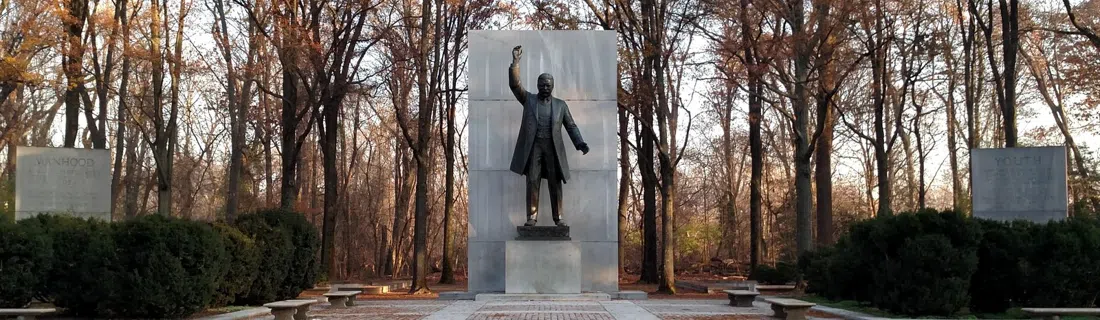
Gravelly Point Park (on the George Washington Memorial Parkway just north of the airport) offers a completely different dawn picture. The first arrivals of the day bank in over the river as the light turns, so you get an aircraft belly lit gold against the capital skyline. Bring a long lens and adjust your expectations, because this is noise rather than serenity, and the field is big and exposed. The car park is small and reachable only from the northbound carriageway, which catches out most first-timers. Open 06:00 to 22:00, free, easy for groups.
Clean horizons downstream
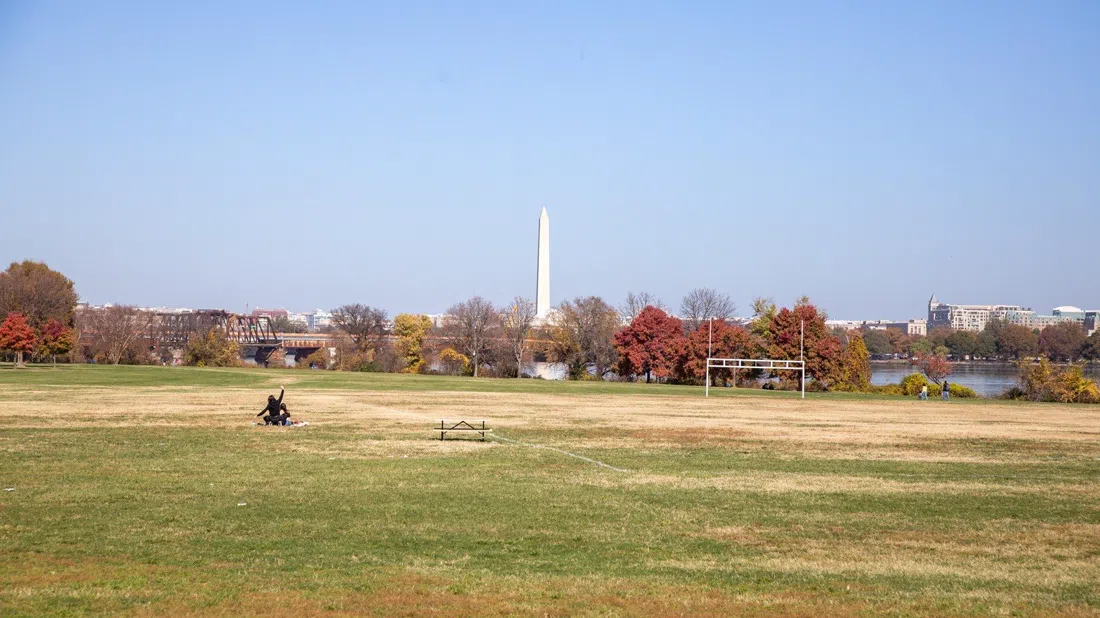
East Potomac Park (Hains Point), the peninsula running south from the Tidal Basin, is where the local photographers actually start, because it is the only place in central Washington with a clean, unobstructed eastern horizon over open water. A three-mile loop road and path run the length of it, parking is plentiful and free, and it is the least crowded of the central spots as well as the most group-friendly. It never closes. One caveat for the years ahead: later phases of the Park Service seawall programme will eventually reach this peninsula, so check for works before you commit a morning to it.
Jones Point Park (at the southern end of Old Town, beneath the interstate crossing) is the furthest-downstream stop and the most cinematic contrast on the route: the last riverine lighthouse in Virginia, small and white and domestic, sitting directly under a six-lane bridge, with the sun coming up straight over Maryland behind it. The lighthouse interior is not open to the public, so plan on exteriors only. Two fishing piers, a kayak launch and open fields make it comfortable for a group, and unlike most of this route it has real parking. Open 06:00 to 22:00, free.
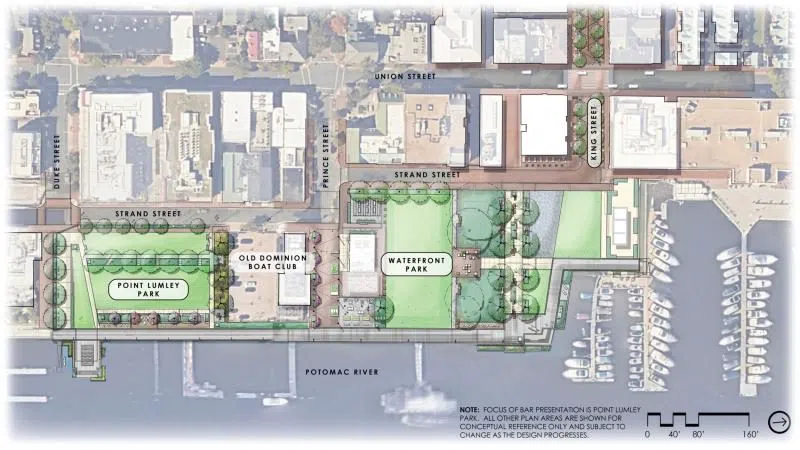
Waterfront Park, Old Town Alexandria (on the river a block from the foot of King Street) is the human-scale end of the marathon: eighteenth-century brick and cobblestone with the sun rising directly out of the water. The access detail matters. The park itself is open sunrise to sunset, so blue hour means shooting from the surrounding promenade and streets, which are public around the clock, then stepping onto the lawn once the sun is up. The city's flood-mitigation rebuild here is still only at design stage, with construction not due until 2027, so the park is fully usable now. Free.
The upstream bookend, and why it is a winter trip
Great Falls Park (15 miles upstream from the memorials) is the wild counterweight to everything above: a gorge, three overlooks, a large car park and no shortage of room for a group. Read the clock before you drive out, though, because the gate is the whole problem. It opens at 07:00 and closes thirty minutes after sunset, which makes it a sunrise destination only from roughly November until the switch to summer time, when the sun still comes up after the gate turns. In June you will arrive a full hour after the light has gone. Entry is $20 per vehicle or $10 on foot, valid seven days.

Three mornings that actually fit
The marble arc runs three and a half to four hours and about 6.5km on foot. Roosevelt at 05:15, King at sunrise, Lincoln fifteen minutes later, then the bridge, the Carillon and the Marine Corps memorial, reversing the last two if you are shooting between September and April and want the silhouette. It ends near Rosslyn for coffee and a train back.
The water morning takes two and a half to three hours. Georgetown Waterfront Park in the dark for the crews, Theodore Roosevelt Island as the mist lifts, Gravelly Point for the arrivals. The last leg needs a car or a rideshare; the first two are walkable if you are prepared to cover 3km along the river.
The downstream morning takes three hours. Jones Point for blue hour, the Old Town promenade for the sunrise itself, then breakfast in Old Town and Hains Point on the way back into the centre. This is the one to choose if you are travelling as a pair rather than a party, and the only one with a decent chance of an empty frame in high season.
Practicalities
Everything on the DC side of the river links on foot or by Metro from Foggy Bottom, Smithsonian or Rosslyn. Check the first train for your specific day, because weekend service starts materially later than weekday service and will not get you anywhere for blue hour. A single rideshare at 04:45 is often the difference between the plan and the compromise. If you are driving, Ohio Drive and Hains Point have free parking at that hour, Gravelly Point is reachable northbound only, and Great Falls is the only stop on this list that charges for anything.
Every venue here is free except Great Falls, at $20 per vehicle or $10 per person on foot, with a seven-day pass. Budget instead for the things that make a 05:00 start survivable: a room within walking distance, one taxi, and breakfast somewhere that opens early. Prices are in US dollars and card is accepted essentially everywhere, including park entry.
Work backwards from sunrise, not forwards from your alarm. Be in position forty minutes before, and accept that by an hour after, you are done. Tripods for personal photography are fine at these open-air sites as long as you keep paths clear; organised commercial or model shoots need a Park Service permit arranged well in advance. Large groups should split rather than mass at the tight spots, the King plaza and the Lincoln steps in particular. Dress for a river: it is several degrees colder on the water than at your hotel door, and the Roosevelt Island boardwalk does not forgive smooth soles.
Afterwards, the core empties again around 10:00 only in the worst weather, so treat the rest of the day as a different city, with museums, the Undercroft and lunch, and read the Washington guide for what fills the hours between one dawn and the next.