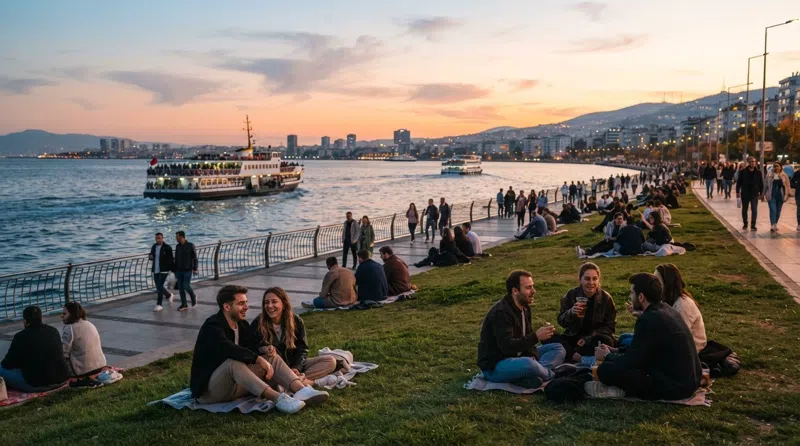

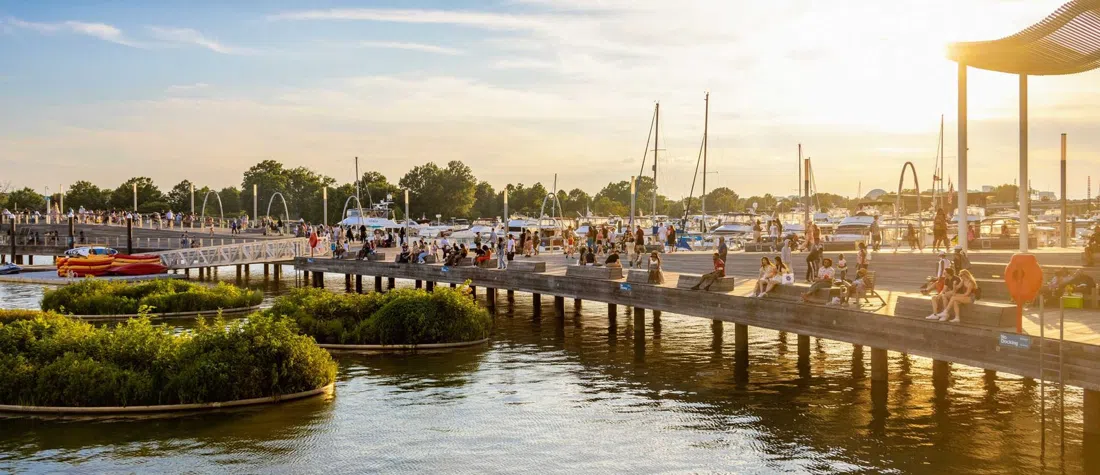
For most of the twentieth century, Washington turned its back on this bend of the Potomac — a working waterfront of parking lots and fish stalls, cut off from the rest of the city by a six-lane freeway and a general civic indifference. Then, over about a decade, someone built an entire mile of city on top of it: concert halls, a fish market three centuries old, rooftop bars stacked over Michelin-recognized dining rooms, and a boardwalk that finally lets you walk the river without losing sight of it. In 2026, that mile is arguably the most complete new district in the city.
The route sketched in this guide runs, loosely, from the Watergate complex — the Nixon-era office-and-apartment tower on the river in Foggy Bottom, permanently attached now to the word "scandal" — south past the old Southwest waterfront that urban-renewal planners sealed off behind a freeway in the 1960s, down to the strip of new boardwalk, market stalls, and concert halls now known simply as the Wharf. It's a stretch of the Potomac that spent half a century as an afterthought and is now one of the most-discussed pieces of urban redevelopment in the country. Everything below sits on or immediately around that boardwalk.
The Fish Market That Started It All
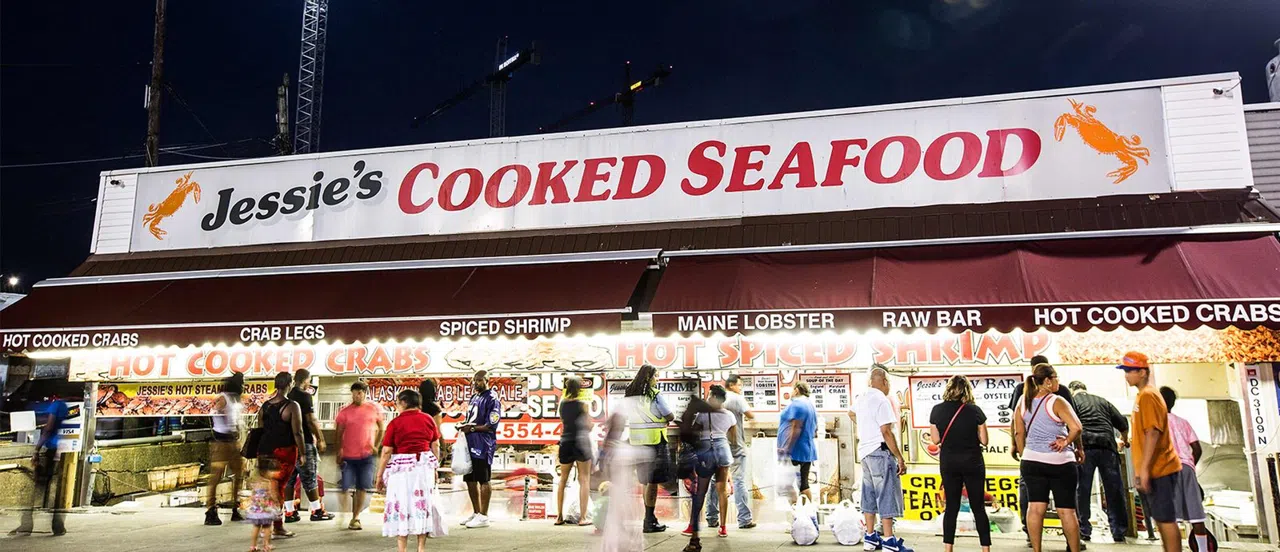
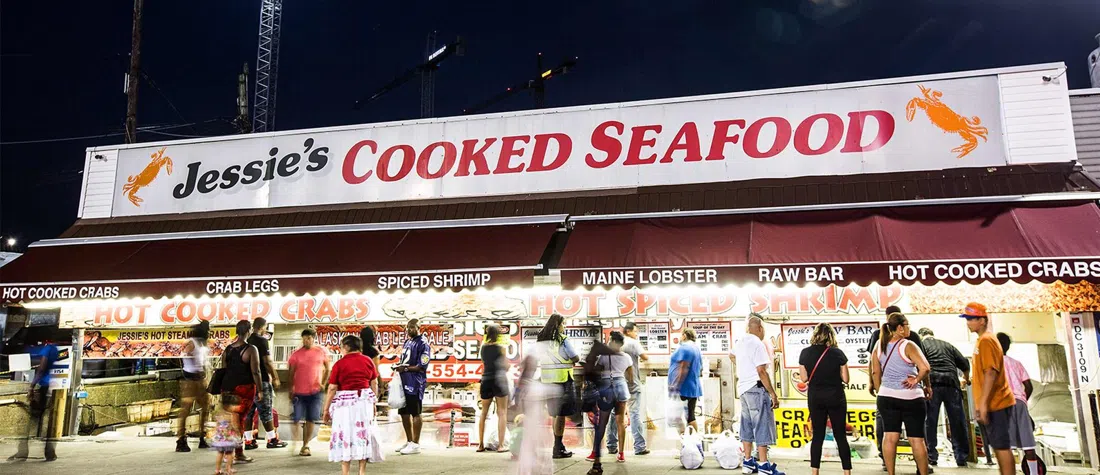
Before any of the glass towers, before The Anthem's marquee, there was the fish. Municipal Fish Market at The Wharf (Southwest Waterfront) has been selling the day's catch off the same stretch of dock since 1805, making it the oldest continuously operating open-air fish market in the United States — and, not incidentally, the reason this waterfront was worth redeveloping at all. Every plan for the Wharf had to work around it, because it never closed. It's walk-up only, no reservations, no fuss: you point at the crab, the oysters, the soft-shell, and either take it home or eat it curbside at one of the plastic tables with the gulls circling. Prices run market rate, so figure $-$$ depending on what's in season and how much crab you're willing to buy by the pound. Groups are easier here than anywhere else on this list — there's no door, no wait list, just more people crowding around the same steaming bags of blue crab. Go early on a weekend morning for the best selection, or at sunset if you just want the scene and a dozen oysters on a bench.
Music on the River
The single biggest change the Wharf brought to Washington's nightlife wasn't a restaurant — it was a room built specifically to hold thousands of people who wanted to see live music by the water. The Anthem (District Wharf) is that room: a purpose-built, 2,500-to-6,000-capacity standing/GA hall run by the team behind the 9:30 Club, and it's the first major concert venue DC has built from the ground up rather than converted from something older. Group tickets go through the I.M.P. box office directly, which is worth arranging ahead of a big show rather than hoping the door has room. Pricing is ticketed and swings hard with the act, so call it $$-$$$.
A few minutes' walk away, Union Stage (District Wharf) fills the gap between arena scale and club scale — a mid-size standing room that's good for catching an act on the way up, before they're playing rooms three times the size. It offers private buyouts for groups who want the whole space to themselves, and tickets run $$.
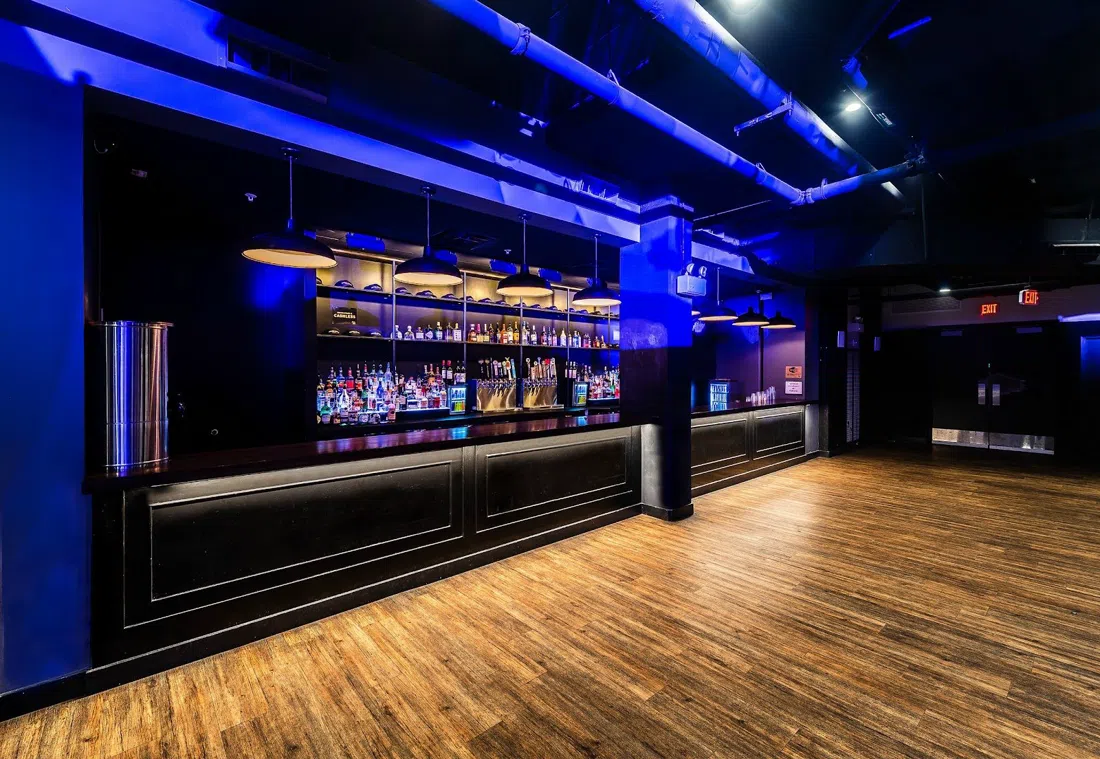
The smallest and, honestly, the most charming of the three is Pearl Street Warehouse (District Wharf), a songwriter-focused room where the point is proximity to the stage rather than production scale. Small groups fit easily whether they want to stand up front or grab seats near the back, and the venue offers full buyouts for private events. It's the room to pick if The Anthem sounds like too much noise and you'd rather actually hear the lyrics — tickets are $$.

Together the three venues cover arena, mid-size, and listening-room scale within a fifteen-minute walk of each other along the same boardwalk. No other stretch of the city offers that range in one night out.
Dinner With a View
This is where the Wharf made its loudest statement, and where the "reinvented" part of the mile's story is easiest to see. A decade ago there was no fine dining on this stretch of river; now there's a Michelin-recognized flagship, a rooftop-to-market vertical concept, and a fine-dining room reachable only by footbridge that made national best-new-restaurant lists in 2025.
Del Mar (District Wharf) is chef Fabio Trabocchi's Spanish seafood flagship, and it's the clearest single marker of how fast this waterfront climbed the culinary ranks — the kind of restaurant that would anchor any dining scene in any city, sitting on what used to be a parking lot. Private dining rooms and large-party bookings are available, but reservations are strongly recommended for groups; this isn't a walk-in room. Expect $$$.
Officina (District Wharf) is chef Nicholas Stefanelli's answer to what a single building can hold: an Italian market on the ground floor, two full dining floors above it, and a rooftop bar on top. It's the best single stop for showing a visitor the Wharf's entire vertical range without leaving one address — groups can genuinely split across levels depending on what they're after, from a quick market bite to a full sit-down dinner to rooftop drinks. Private events are bookable. Budget $$$.
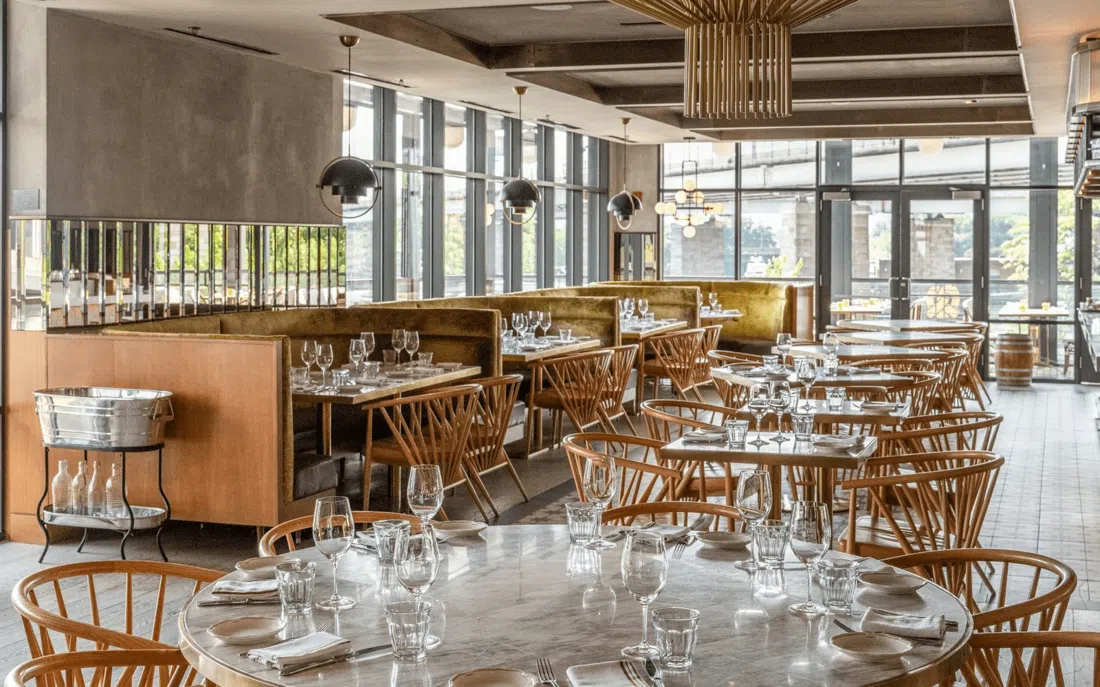
Across the footbridge, technically just outside the Wharf's own footprint but functionally part of the same waterfront story, Dōgon by Kwame Onwuachi (Southwest Waterfront) is Afro-Caribbean fine dining that landed on multiple 2025 best-new-restaurant lists. It's reservation-based, with private dining available for groups, and at $$$$ it's the priciest thing on this list — book ahead, this is not a room you wander into on a whim.
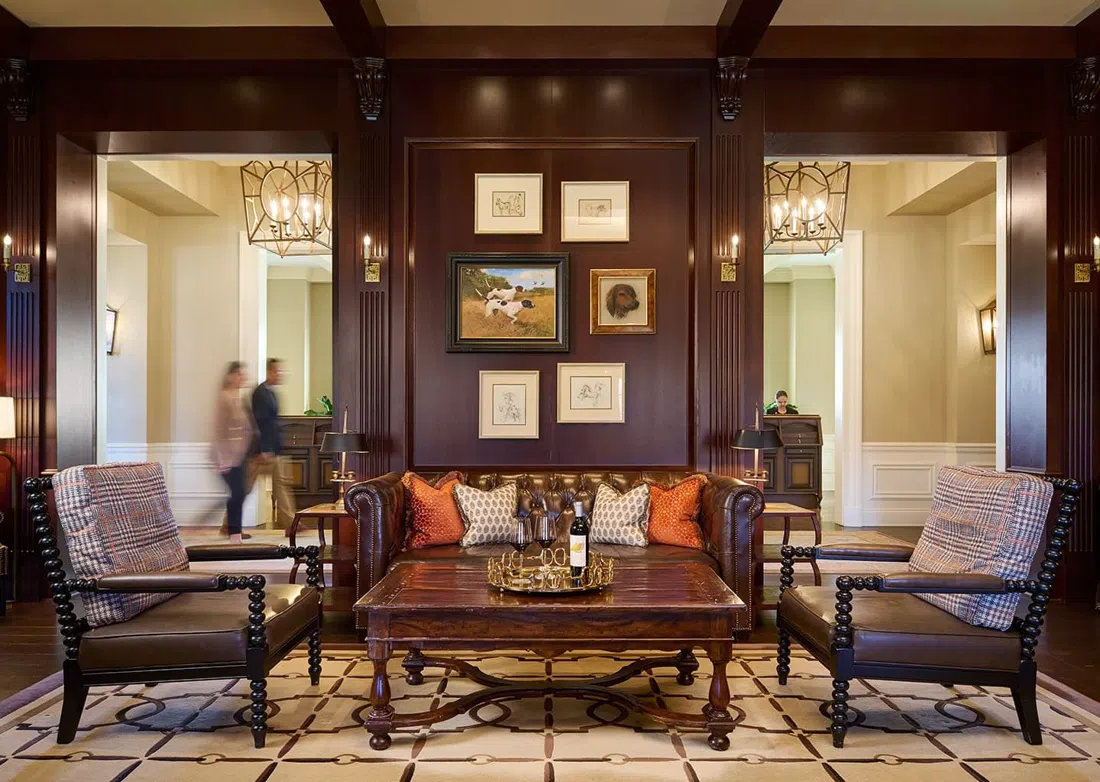
For something bigger and livelier, Mi Vida (District Wharf) is KNEAD Hospitality's largest Wharf restaurant, a Mexican concept with a floor plan built to handle groups and unobstructed water views that make it one of the better spots for a lively group dinner rather than a quiet date. Private event space is available. $$$.
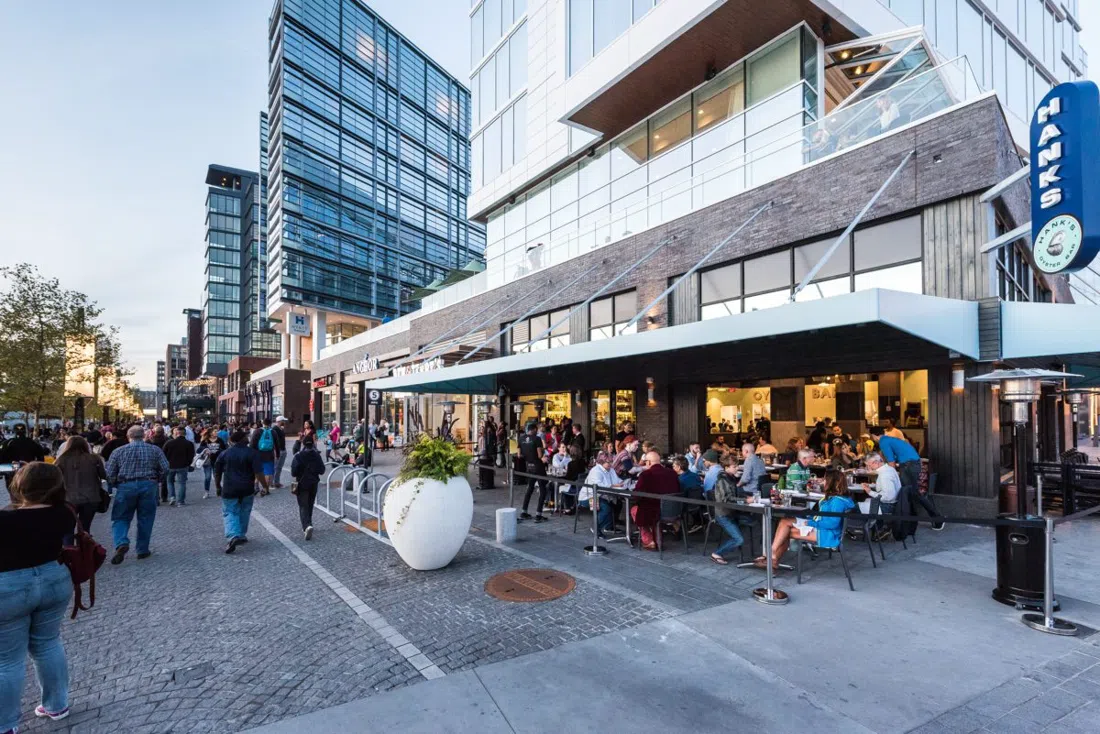
And for the counterpoint to all of the above — the reminder that not everything at the Wharf requires a jacket — Hank's Oyster Bar on the Wharf (District Wharf) is the fourth location of a genuine DC institution, casual, easy to seat as a group, and one of the few places on this stretch where walk-ins at the bar are common rather than the exception. It's the most reliable casual seafood stop on the promenade, and at $$ it's also one of the better-value dinners here.
Rooftops, Pubs, and the Casual End
Not every good evening at the Wharf needs a reservation weeks out. Moonraker (District Wharf) is the highest vantage point directly over the water — the rooftop bar where you get the postcard shot of the whole Southwest Waterfront from above. Lounge seating and a standing bar area both work, but groups wanting a table should book ahead; this is $$$ and it fills fast at golden hour.
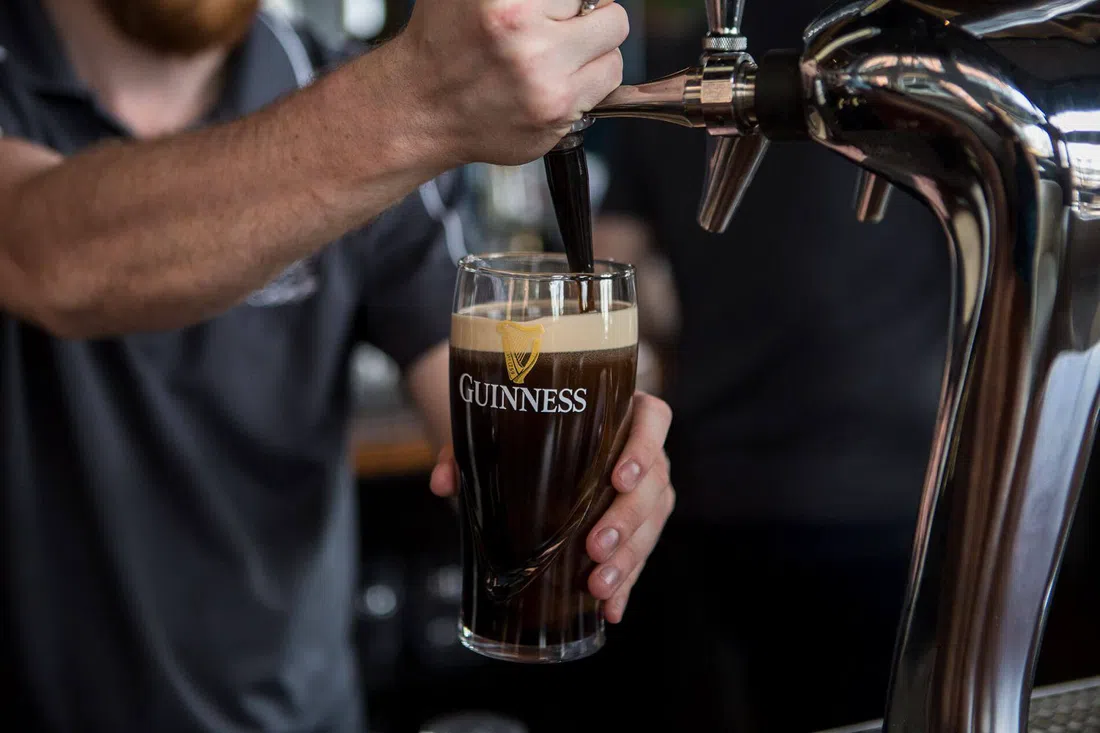
Kirwan's Irish Pub (District Wharf) exists, essentially, because a waterfront full of seafood-and-cocktail concepts needed one proper pub — and it's run by an actual former Guinness employee, which shows in the pour. Multiple rooms and two patios make it genuinely strong for groups, and private parties can be booked by email ahead of time. It's $$, and it's the closest thing on this list to a low-stakes, order-another-round kind of night.
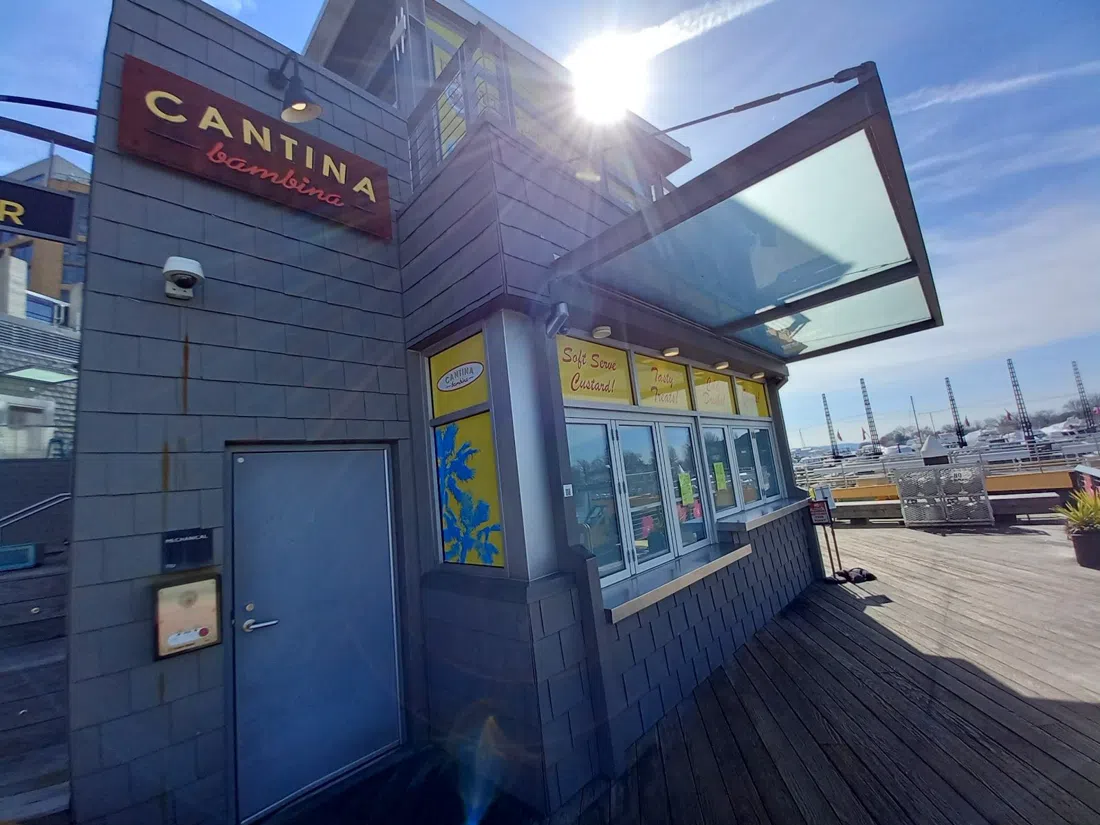
Cantina Bambina (District Wharf) is the pier's no-reservation option: a casual walk-up waterfront bar good for informal gatherings, watch parties, or just landing somewhere with a drink in hand after wandering the boardwalk. $$, and the closest thing here to spontaneity.
On the Water
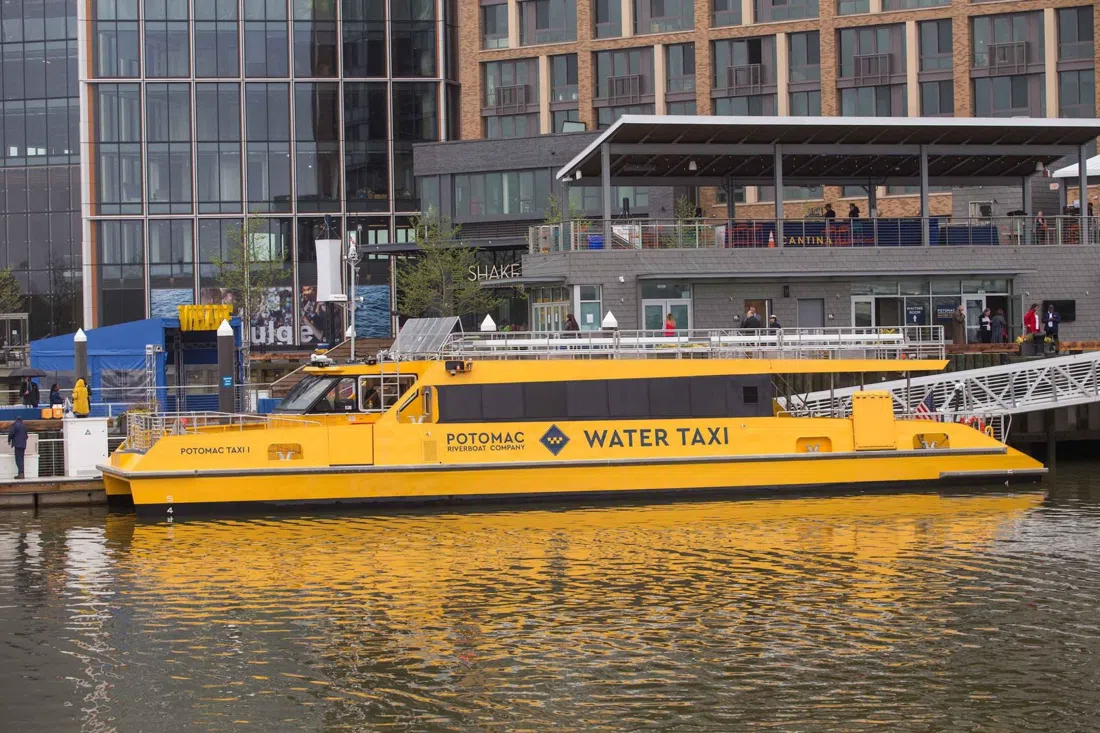
Because this is a waterfront redevelopment, the water itself is part of the offering, not an afterthought. Potomac Water Taxi, run by City Cruises, operates as a scheduled shuttle rather than a novelty ride, which means any size group can simply buy tickets and board — no charter arrangement needed. It runs March through December only, resuming with the season each spring, and season passes are available for regulars. At $$ per ride it's genuinely useful transport between the Wharf and other points on the river, not just a sightseeing trip.
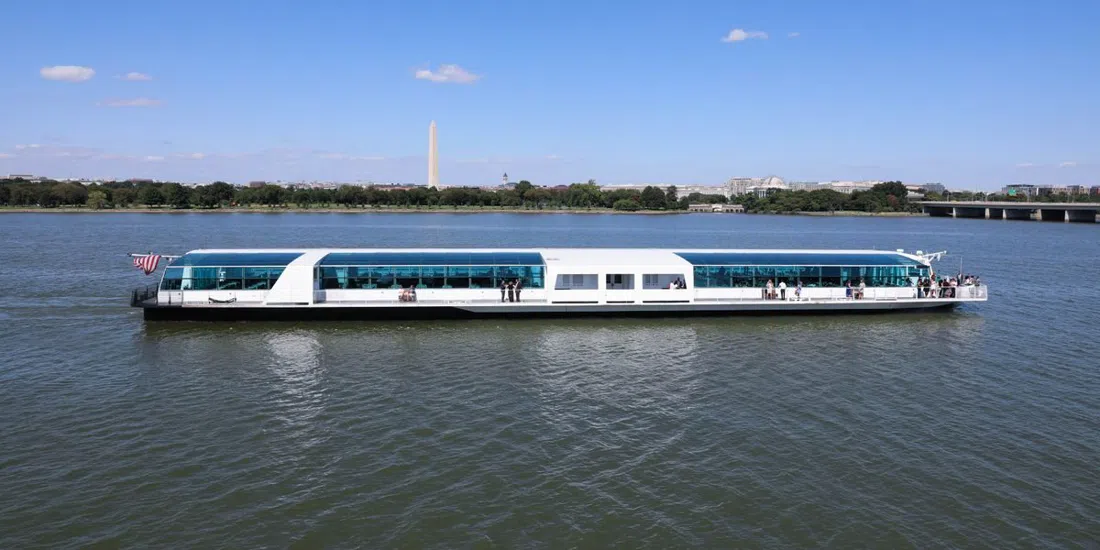
For something more purpose-built as an evening out, Odyssey DC, also under the City Cruises banner, is a year-round dinner, lunch, and brunch cruise built for groups and private charters of up to 500-plus guests. It's the classic "see the monuments from the water" experience — now consolidated under City Cruises after some ownership changes to the Odyssey brand over the years — and it's priced accordingly at $$$$, starting around $136 per person for a weeknight dinner sailing.
Free and Seasonal
Not everything here costs $150 a head, and it's worth saying so plainly. 7th Street Park Splash Fountain (District Wharf) is an open public park with a splash fountain, no booking required, and it's one of the genuinely free things to do on this entire stretch — a good meeting point for families or groups before or after dinner elsewhere.
The Wharf Ice Rink (District Wharf) is the seasonal flip side: open only November through February, closed through the summer months, so don't plan on skating if you're visiting in July. Through the 2026-27 winter season, when it is running, it's rentable in blocks for groups and private events from 2 to 120 people, at $$.

Getting There, and What to Budget
The Wharf sits in Southwest DC, walkable from L'Enfant Plaza Metro (about ten minutes on foot) and reachable by water taxi from Georgetown and other points on the river via Potomac Water Taxi. If you're staying elsewhere in the city, a Washington hotel search turns up options closer to the National Mall or Capitol Hill if you'd rather Metro or cab in for an evening than base yourself on the waterfront itself.
Cash isn't really necessary anywhere on this list — everything from the fish market to the pier bars runs on card — but bring some anyway if you're buying crab by the pound and want to move fast through a crowded stall. Timing-wise, weekday evenings are noticeably calmer than weekend nights, when a show at The Anthem or Union Stage can flood the whole boardwalk at once. For budget, a realistic day here ranges from completely free (the fish market as spectacle, the splash fountain, a walk along the promenade) to well over $200 a head if you're doing Dōgon or an Odyssey dinner cruise — most of what's listed here sits comfortably in the $$-$$$ range for a normal night out. For more on how this one mile fits into a wider trip, the full Washington guide covers the rest of the city beyond the waterfront.