Washington-nummeret
Washington's Wall of Honor and the museum across the street
Free galleries fill a 1920s schoolhouse, and the plaza across the street carries more than 185,000 names. A single walk through Shaw takes in both.
Af Noa BergströmThe District, one neighbourhood at a time

The curved panels on the plaza opposite the museum door carry more than 185,000 names, every one a soldier or sailor of the United States Colored Troops. The museum facing them reopened on 30 September 2026 after a five-year rebuild. Entry is free, with a suggested $10 donation.
The galleries in the Grimke School
The African American Civil War Museum (Vermont Avenue NW) fills the 1920s red-brick Grimke School, a schoolhouse with tall arched windows. The rebuild put 16,000 square feet of new galleries behind that facade, holding USCT uniforms and muskets, with a genealogy lab walled in glass.

The galleries open Monday to Saturday, 10 a.m. to 5 p.m., and close on Sundays. There is no ticket to buy and nobody takes bookings at the door.
Leave the genealogy lab for the end of your time inside. If you arrive with a surname, a regiment or a family story, that is the room where it gets checked against records instead of memory.
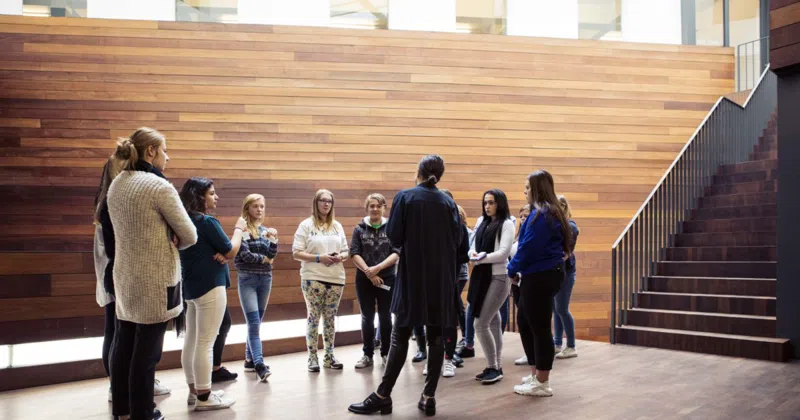
School and coach parties book through the museum office under its field trips and groups arrangement, and an email ahead of the date gets a docent on shift.
Planlæg din rejse til Washington
Aktuelle priser fra vores bookingpartnere.
Gratis afbestilling på mange værelser. Vi kan modtage provision, når du booker.
The plaza across the street
The African American Civil War Memorial stands directly across from the museum door, free and open 24 hours. Its bronze, Spirit of Freedom, sets three infantrymen and a sailor on a granite plaza, with the curved Wall of Honor panels behind them. A Metro entrance sits beside it.

This is the only national memorial to the United States Colored Troops, and it is the piece most visitors come for. National Park Service rangers run occasional walks and bike tours from here for organised groups.
On a Sunday, with the galleries shut, the plaza is the whole visit at this address.
At the door or with a guide
Nothing needs arranging in advance. Turn up inside opening hours and read the galleries at your own pace, then cross the road and find a name on the panels.
A private history tour that includes reserved museum entry starts at $415 per person and runs seven days a week. It suits a visitor who wants one guide to join the plaza, the galleries and the surrounding Shaw buildings into a single morning, with the walking worked out for them.
Best time to go
Tuesday to Saturday is the overlap between the museum's week and the Carter G. Woodson Home National Historic Site (1538 9th St NW), which reopened to the public on 7 November 2026 and from 10 November keeps Tuesday to Saturday hours of 9 a.m. to 5 p.m. Two stops, 10 minutes' walk apart, one afternoon.

For the hours before the galleries open, Colada Shop (1405 T St NW) starts serving at 7:30 a.m. daily and sits five minutes from the museum. The room is a pastel Cuban-styled café with a patterned tile floor and a pastry case.

Walking on into Shaw
The Woodson house is a narrow three-storey Victorian rowhouse with a bay window and stone steps. Woodson invented Black History Week, and his restored study holds a period desk and bookshelves. Ranger-led tours run hourly and drop-ins are welcome.
The True Reformer Building (12th and U) is a two-minute walk from the museum, a 1903 red-brick corner block with an enormous gold-framed Duke Ellington mural and piano keys painted on the side wall. It was the first building in post-Reconstruction America designed, financed, built and owned by Black Americans, and Ellington played his first public gig inside. The interior opens only during public events, so most of the time what you get is the pavement view, free.

The Thurgood Marshall Center for Service and Heritage (1816 12th St NW) was the Twelfth Street YMCA, the nation's first Black YMCA, built in 1908 in brick and limestone to a W. Sidney Pittman design. Marshall worked on Brown v. Board here. The ground-floor Shaw history exhibit is free, though access to it depends on the building's event schedule. It is a working community centre, so phone before you walk over. Hours are Monday to Friday, 8:30 a.m. to 8 p.m., and Saturday, 10 a.m. to 3 p.m.

Theatres on U Street and T Street
Lincoln Theatre (1215 U St NW) is 400m down the street from the museum, the survivor of the Black Broadway years, built in 1922 and restored in 1994. A vertical neon LINCOLN blade sign runs over the marquee, and the 1,200-seat house keeps its gilded plasterwork and chandelier. Programming continues through 2026, and the box office opens 11:30 a.m. to 6 p.m., Monday to Friday. $$

The Howard Theatre (620 T St NW) has a white terracotta 1910 facade under a curved glass canopy. It was restored and reopened in 2012 and now runs as a mid-size music hall with a full 2026 calendar. Shows mix standing and seated, so check the format of yours before you buy. The bronze Duke Ellington statue seated at a piano on the plaza outside costs nothing and is there at any hour. $$

Eating and drinking around U Street
Ben's Chili Bowl (1213 U St NW) has traded from this narrow 1958 diner through the 1968 unrest, under red-and-yellow signage, with a long Formica counter and red stools and a mural of Black icons on the exterior side wall. It opens daily until 11 p.m., and until 4 a.m. on Friday and Saturday. No reservations are taken and the lunch queue is long.


Oohh's & Aahh's (1005 U St NW) keeps steam trays of fried chicken, mac and cheese and candied yams in foil containers behind a hand-painted sign, and opens late daily. The U Street site is takeaway and delivery only now, with no dining room, so order ahead and carry it.

Busboys and Poets (2021 14th St NW) is the flagship branch at 14th and V, named for Langston Hughes's years as a busboy. Shelves of political and Black-history books run beside the dining tables, and a small stage sits under open-mic lighting. It trades 6 a.m. to 11 p.m. with poetry and open-mic nights, takes reservations, and has private event space. Of everything near the museum, this is the easiest all-day base. $$
Urban Garden Brewhouse (624 T St NW) opened on Juneteenth 2026 as the city's first Black woman-owned brewery, in a converted 1920s pool house beside the Howard Theatre. Steel brewing tanks stand behind the bar, botanical and herb motifs run through the room, and go-go plays on the speakers. The beers are botanical and the non-alcoholic list is a real one. Open Tuesday to Saturday. $$

Colada Shop's small rooftop terrace, striped awnings above 14th Street, keeps separate hours from the café downstairs.
Archives and the reading afterwards
Sankofa Video Books & Café (2714 Georgia Ave NW) faces Howard University, founded by the filmmakers Haile Gerima and Shirikiana Aina. Pan-African film posters fill the window, the shelves are dense with Black-diaspora books, and a café counter sits at the back. It opens daily and hosts talks and screenings. It is the shop for the deeper reading the museum's exhibits send you looking for. The floor is tight for more than a handful of people.

Founders Library (Howard University main quad) is a red-brick Georgian building under a tall white clock tower, recently reopened after refurbishment, and home to the Moorland-Spingarn Research Center, one of the world's largest Black-history archives. The long reading room keeps green-shaded lamps over the desks. The general public can enter with valid government photo ID and a sign-in, and notable spaces are self-guided. Arrange archive access in advance. Come here after the genealogy lab, with a name you now want papers for.
The Mall and across the river
The National Museum of African American History and Culture (National Mall) carries a bronze-filigree three-tiered corona and a perforated lattice skin, and its ramped History Galleries begin below ground level. Entry is free. Every visitor of any age needs a free timed-entry pass, and one booking covers up to nine people. Advance passes drop 30 days out, and same-day passes go online by 8:15 a.m. Last entry is 4 p.m. It opens Tuesday to Sunday, 10 a.m. to 5:30 p.m., and Mondays from noon. On a Sunday, this is where to go.

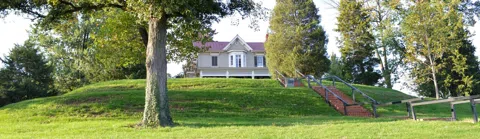
Frederick Douglass National Historic Site (Cedar Hill, Anacostia) connects back to the galleries' story, because Douglass recruited for the USCT. The white hilltop house has a long columned porch, a lawn sloping toward a view of the Capitol dome, and a book-lined study inside. Interior access is by ranger-led guided tour only, at set daily times with limited places, and you cannot get in without a booked slot.

Is it worth it
Yes, on the strength of the names and the records. It suits a visitor who wants the Wall of Honor explained and who can give the genealogy lab an unhurried hour, and it asks for a weekday and ideally a surname to start from.
Planning notes
Book the Douglass tour and the Mall pass before you travel, and phone the Thurgood Marshall Center before you count on its exhibit. A Sunday in the city leaves you the plaza and the Mall.
See the Washington guide and the Washington hotel search.
Før du rejser
Is the African American Civil War Museum free, and do I need a ticket?
Entry is free, with a suggested $10 donation, and you do not need a ticket or an advance booking. The galleries open Monday to Saturday, 10 a.m. to 5 p.m.
Can I visit on a Sunday?
The galleries close on Sundays. The memorial plaza across the street is free and open 24 hours. The National Museum of African American History and Culture, on the National Mall, opens Tuesday to Sunday and needs a free timed-entry pass.
How many names are on the Wall of Honor?
The curved panels list more than 185,000 names of United States Colored Troops soldiers and sailors. The plaza also has the Spirit of Freedom bronze, three infantrymen and a sailor, and it is the only national memorial to the USCT.
Is a guided tour worth paying for?
You need no guide and no booking for the museum itself. A private history tour with reserved museum entry starts at $415 per person and runs seven days a week, and it links the plaza, the galleries and the surrounding Shaw buildings in one visit.
Can I research a Civil War ancestor at the museum?
Yes. The rebuilt galleries include a glass-walled genealogy lab. For deeper archive work, the Moorland-Spingarn Research Center at Howard's Founders Library admits the general public on a valid government photo ID and a sign-in, though you arrange archive access in advance.