The Washington issue
Three Thousand Reasons a City of Policy Looks Up: Washington's Cherry Blossom Reckoning
For four weeks each spring the capital of memos and marble surrenders to a gift of three thousand trees — here is how to meet the bloom honestly, crowds and closures and quieter corners included.

By Noa BergströmThe District, one neighbourhood at a time
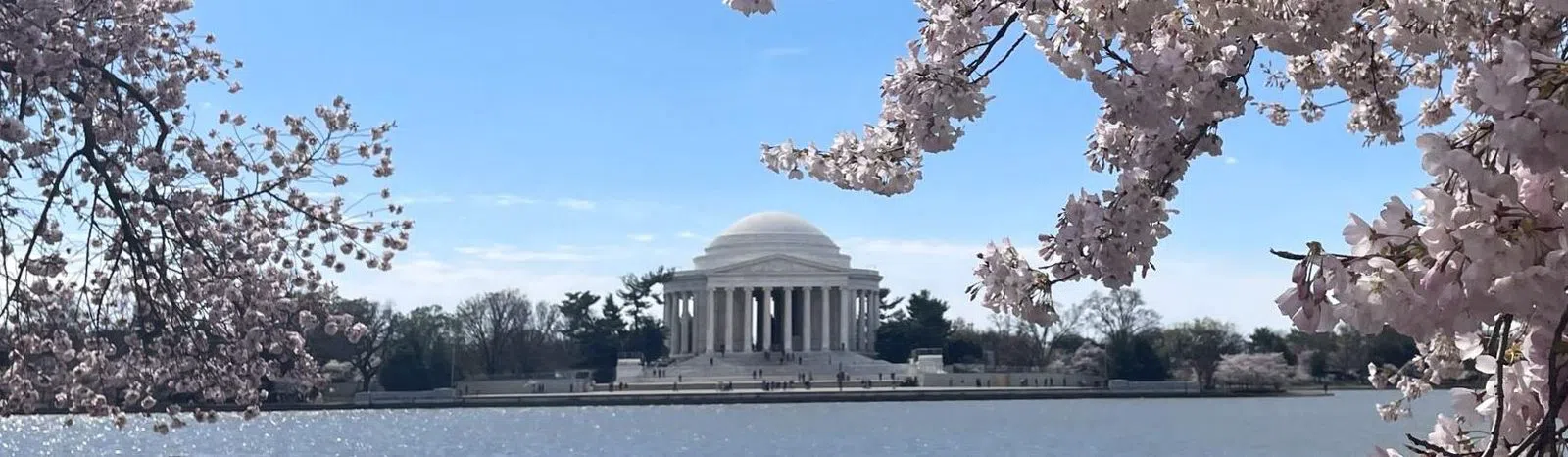
There is a fortnight in spring when the most self-serious city on earth forgets itself. The corridors of policy empty toward the water, the marble goes soft behind a haze of pink, and a place built to look permanent spends a few weeks looking fragile instead. The trees are the reason — roughly three thousand of them, a diplomatic gift that took root more than a century ago and now dictates the rhythm of an entire season. This is a guide to meeting that bloom on honest terms: where it is genuinely worth the crush, where it is not, and where the same flowers wait with almost nobody watching.
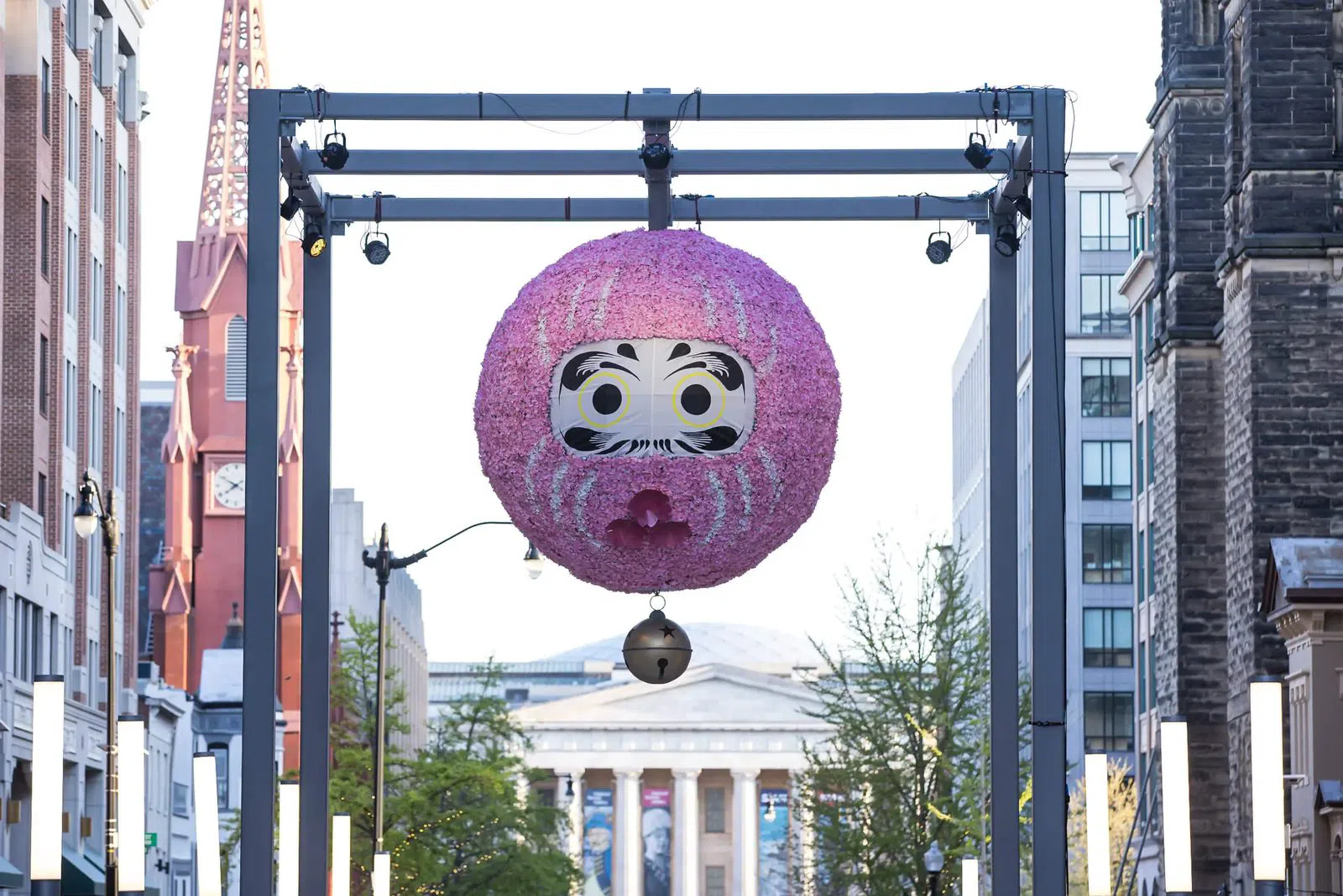
A word on timing before anything else. Peak bloom is a forecast, not a booking, and it swings by a week or more each year, so treat any date as provisional and build slack into the trip. The National Cherry Blossom Festival — the four-week umbrella that runs 20 March to 12 April 2026 — is the frame to plan around rather than a single day to chase. Most of its headline events cost nothing: the Kite Festival on the grounds near the Washington Monument, the parade you can watch free from the street, and Petalpalooza down on the waterfront. A handful of indoor events are ticketed and need advance reservation, but the spine of the festival is open to everyone, which is the right instinct for a bloom that belongs to no one.
The original, and the discipline it demands
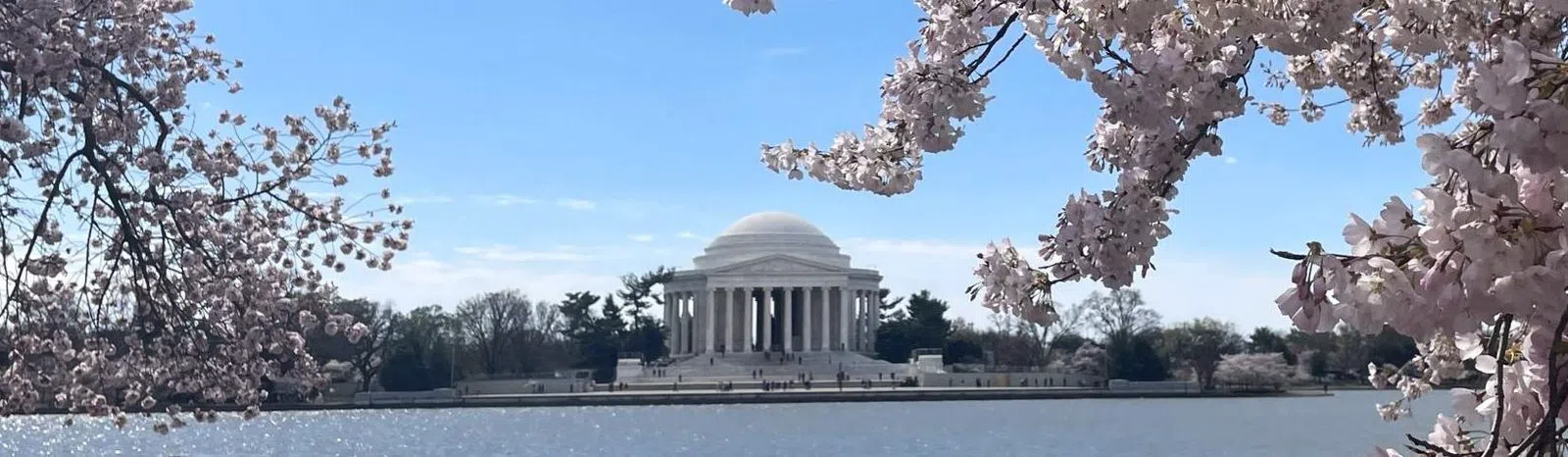
Everything starts at the Tidal Basin (the monumental core, southwest of the Mall). This is the gift-from-Japan planting, the water-ringed walk beneath the Jefferson Memorial that every photograph you have ever seen was taken from, and it remains the definitive version of the thing. It is free, it needs no booking, and it will take any size of crowd — which is precisely the problem, because at peak week it takes all of them at once. Expect shoulder-to-shoulder paths, and expect a change in 2026: a section of the northwest shoreline stays fenced off for seawall reconstruction, so a stretch of the classic loop is simply unavailable this year. None of that is a reason to skip it. It is a reason to arrive at first light. The trees hold their best colour in the low sun anyway, and the hour after dawn is the only time the Basin feels like a garden rather than a turnstile.
Walk the loop with the Jefferson Memorial as your anchor and the whole circuit is a little over three kilometres — an unhurried hour on foot, longer if you stop, which you will. If you can time your visit to the front of the bloom rather than the exact peak, do; the crowd curve is steeper than the flower curve, and the difference between a Tuesday and a Saturday is the difference between a walk and a scrum.
Plan your Washington trip
Live prices from our booking partners.
Free cancellation on many rooms. We may earn a commission when you book.
Where the crowd thins, five minutes away
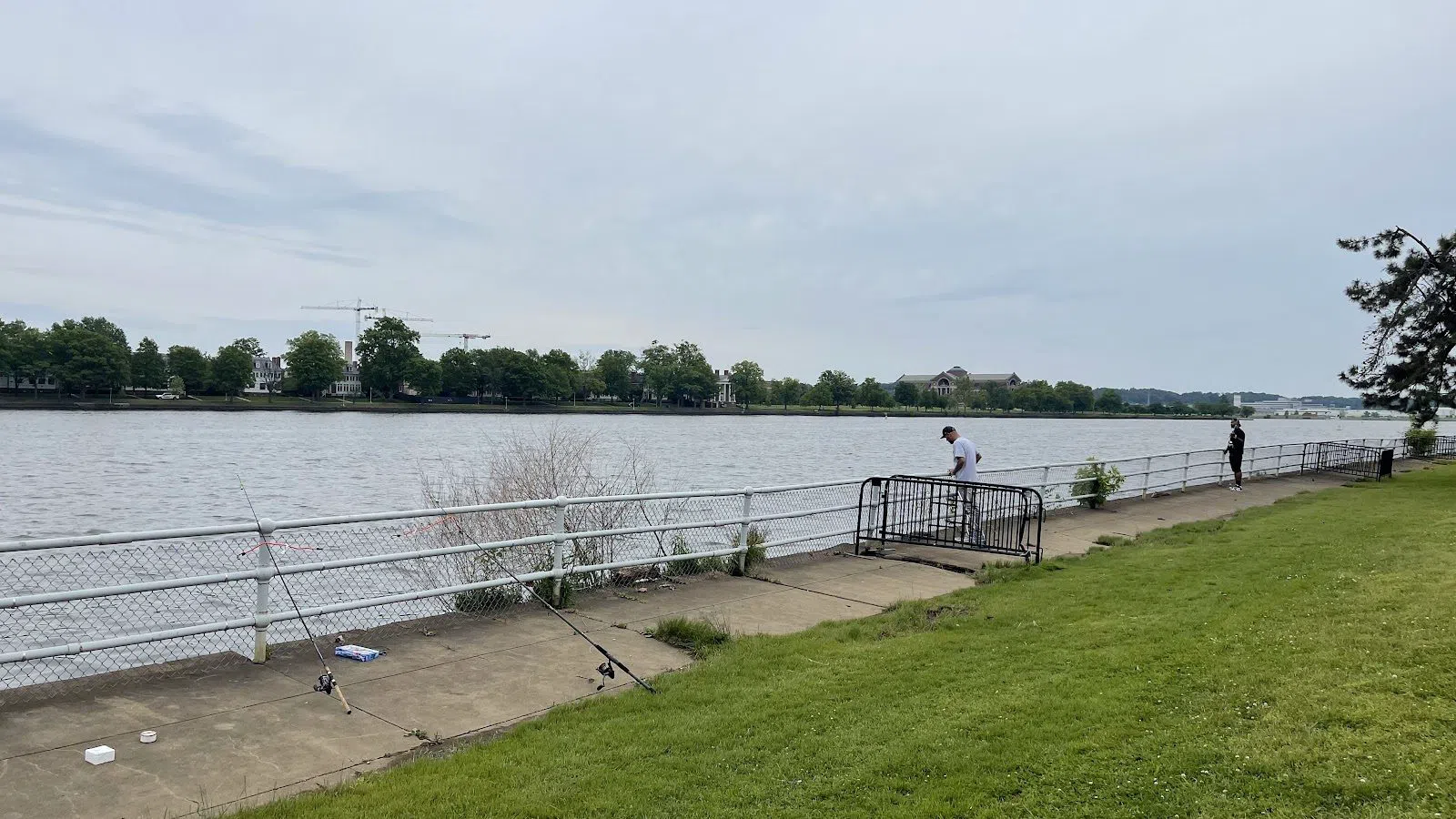
The locals' worst-kept secret is that you can escape most of that pressure without leaving the blossoms behind. Cross the bridge at the southern end of the Basin and you reach East Potomac Park, the open peninsula that ends at Hains Point (the spit of parkland just south of the monumental core). It is free, open-access, and has room to breathe — a genuinely better bet for a group that wants the flowers without the gridlock. It blooms a touch later than the Basin proper and runs on into the Kwanzan season, which quietly extends your window: if you have mistimed the main event by a few days, the peninsula often rescues the trip. The trade for the calm is distance and exposure — it is a long, flat, wind-scoured finger of land, so dress for the water and be ready to walk.
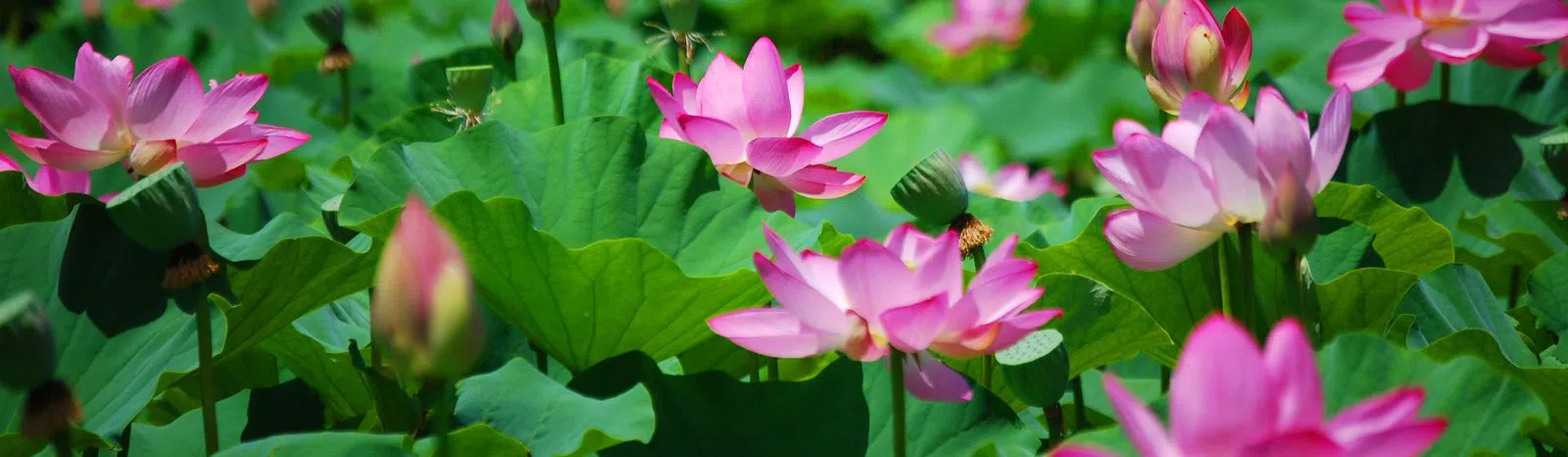
For the quietest bloom inside the District itself, go east to Kenilworth Park & Aquatic Gardens (Anacostia, northeast DC). This is a free National Park Service site, walkable and unhurried, and it pairs its cherries with something you will find nowhere else in the city: a working aquatic garden of ponds and lilies. It is the antidote to the monument crush — a place for readers who came for nature more than for marble, and who don't mind that it sits well off the tourist spine. Groups manage it easily; there is simply space, and rarely a queue.
For the collectors: gardens that outlast the peak
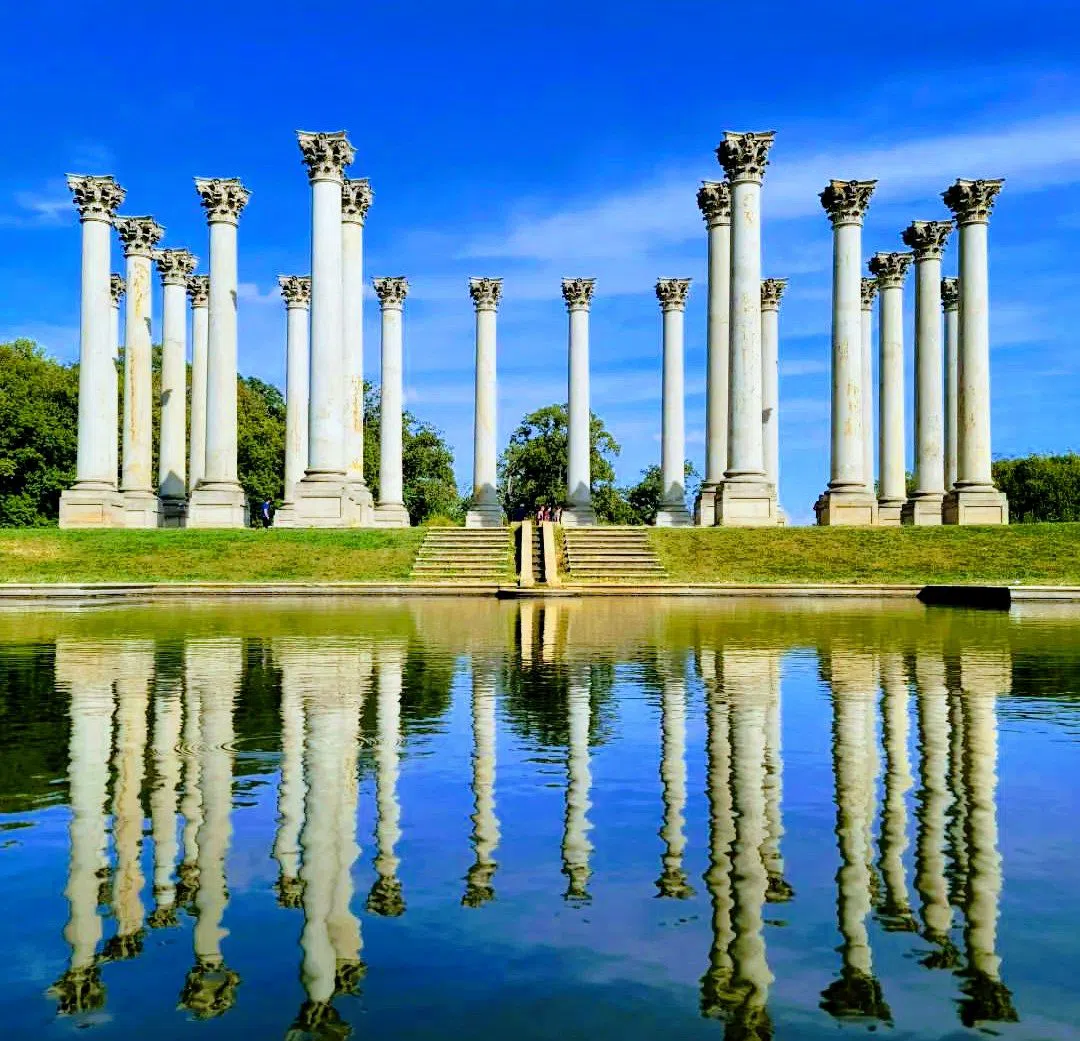
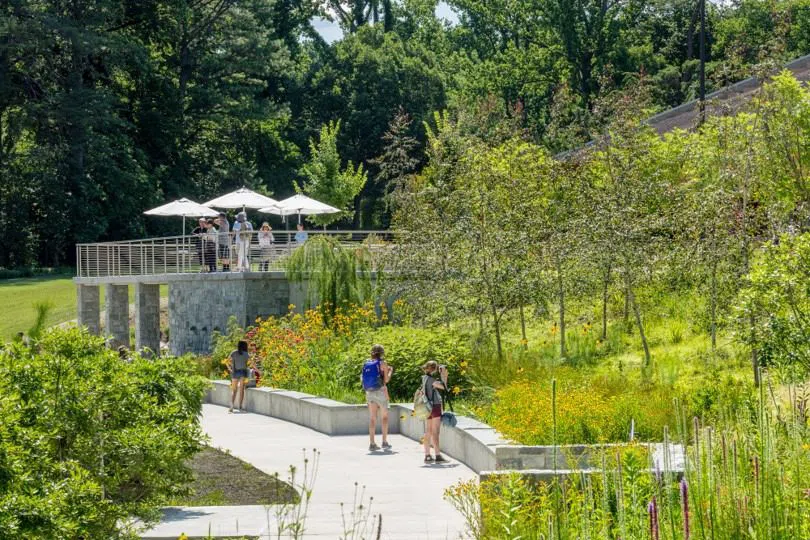
If the Tidal Basin is the icon, the U.S. National Arboretum (northeast DC, off New York Avenue) is the connoisseur's answer. It is free, vast, and the only option here that genuinely suits a coach: two entrances, real parking, and grounds big enough to absorb a crowd whole. The reward for the trek is variety — many more cherry cultivars than the Basin's single famous type — and, crucially, a longer clock. The Arboretum's bloom starts around two weeks earlier and can run into May, which makes it the one place that rescues both the early arrival and the late one. Open 8am to 5pm daily; give it half a day, not an hour, because the distances inside are real and the plantings are spread.
For elegance rather than spectacle, Dumbarton Oaks Gardens (Georgetown, northwest DC) is the curated counterpoint. This is a designed historic garden of terraces and hedged rooms, timed-entry and ticketed at roughly $12, open Tuesday to Sunday from 2 to 6pm. It is crowd-free by design — and by rule, because advance timed tickets are mandatory and there are no sales at the gate. Peak-bloom slots sell out and the season passes are already gone for 2026, so book the moment you fix your dates. Small groups are fine; a coach party is not the spirit of the place. Come here for the quiet and the craftsmanship, not for the postcard.
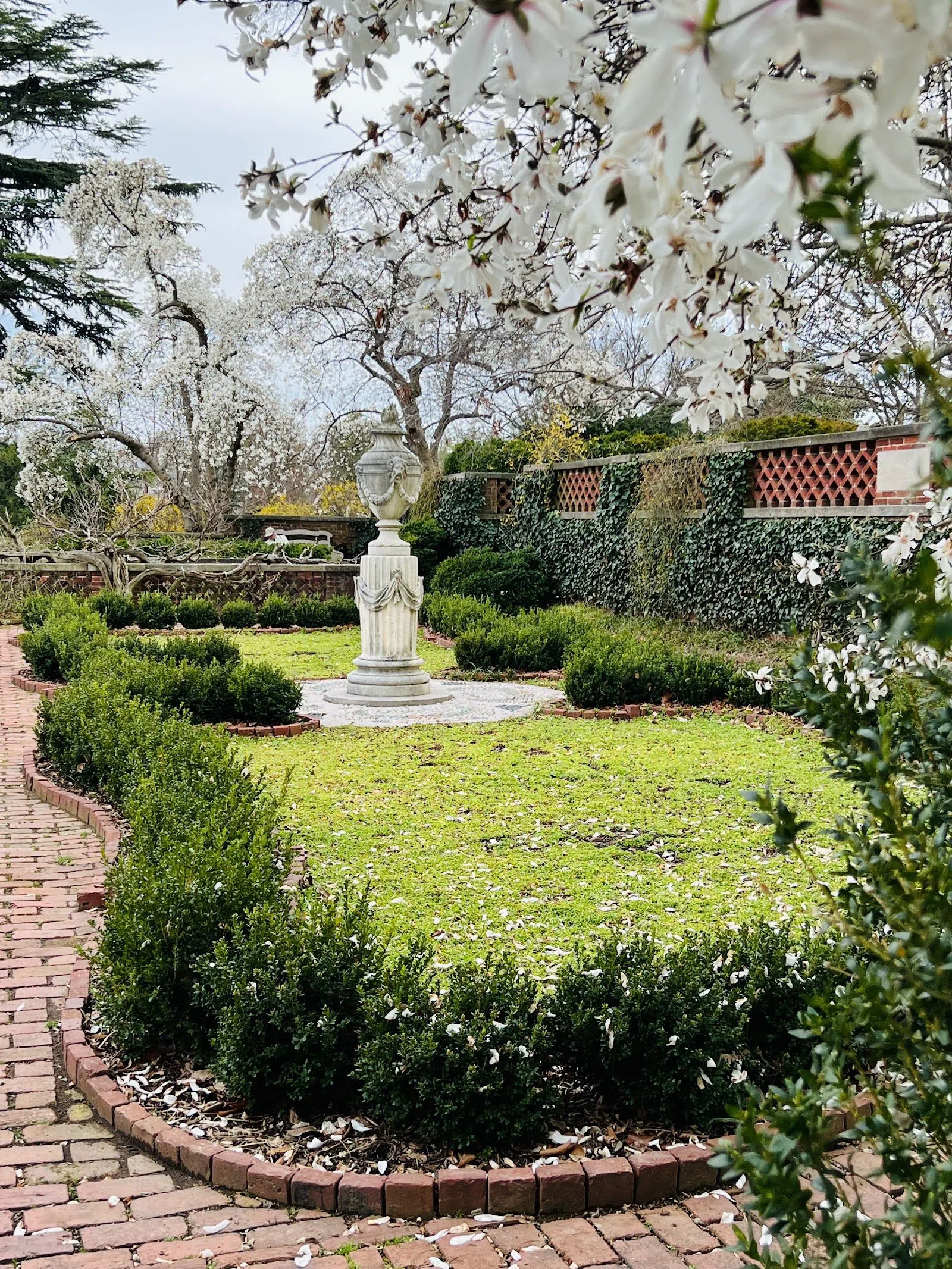
Bookending the season on the late side is Brookside Gardens (inside Wheaton Regional Park, Maryland). It is free, open sunrise to sunset, with parking on site, and it is comfortable for families and groups in a way the Tidal Basin never is. Its polished Japanese-garden setting blooms slightly later — early April in 2026 — so it is the natural plan for anyone who arrives after the Basin has already dropped its petals. Think of it as insurance: if the forecast has run away from you, the season is often still alive out here.
The tunnel worth a train ride
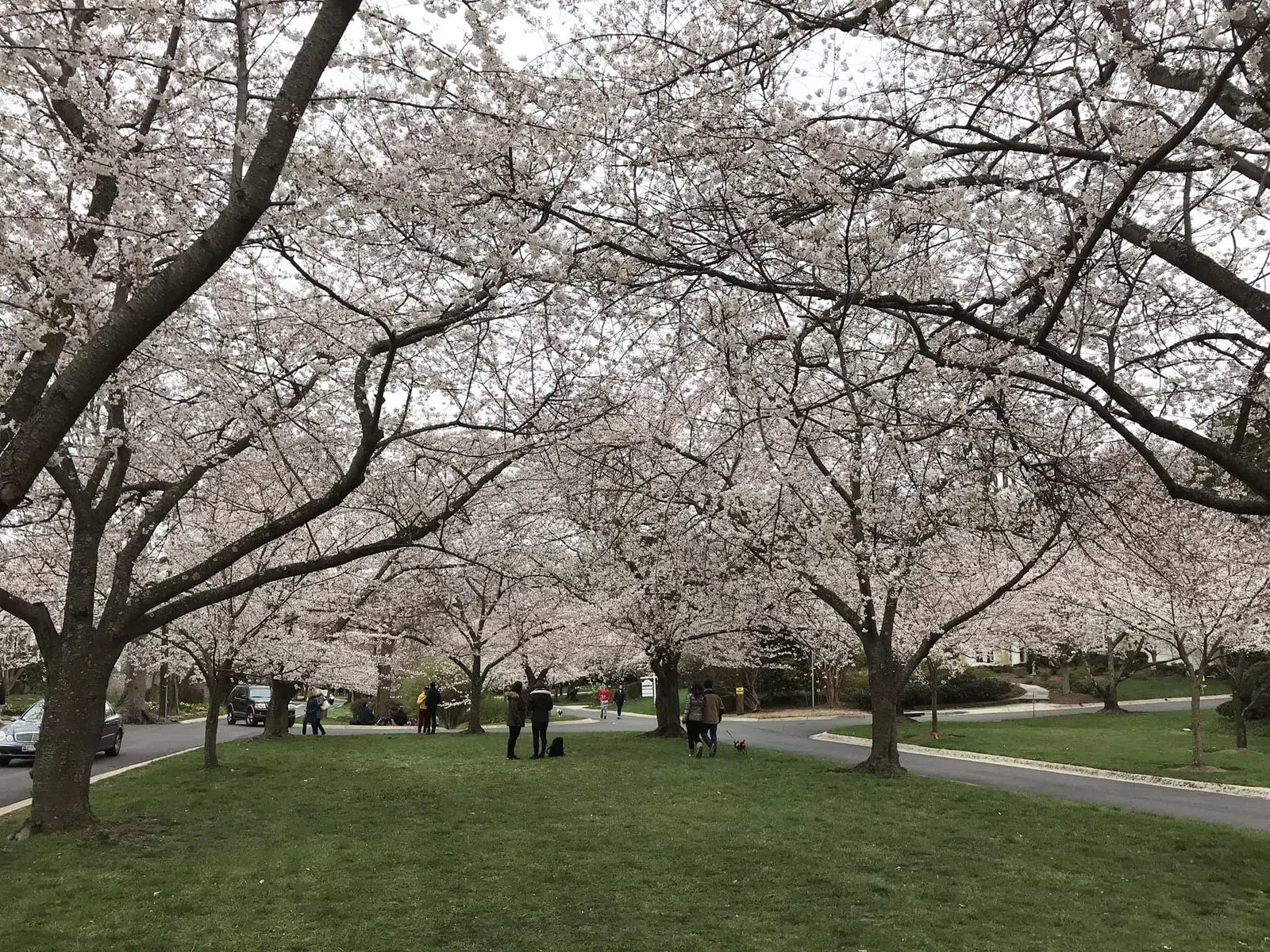
There is one suburban planting that many locals rate above the Tidal Basin on pure visual force. Kenwood (Bethesda, Maryland) is a residential neighbourhood whose streets close over into an unbroken canopy — a blossom tunnel rather than a shoreline — and it peaks a few days after the Basin, which makes it another useful backup date. It is free to walk, and here the honesty matters most: this is not group-friendly by car. It is a lived-in neighbourhood that restricts parking, and turning up with vehicles is both futile and unwelcome. Do it the right way — Metro to the Bethesda station, then in on foot along the Capital Crescent Trail — and you arrive as a respectful guest rather than an intrusion. Tread lightly; people live here, and the bloom is theirs to lend, not to overrun.
Meeting the bloom from the water
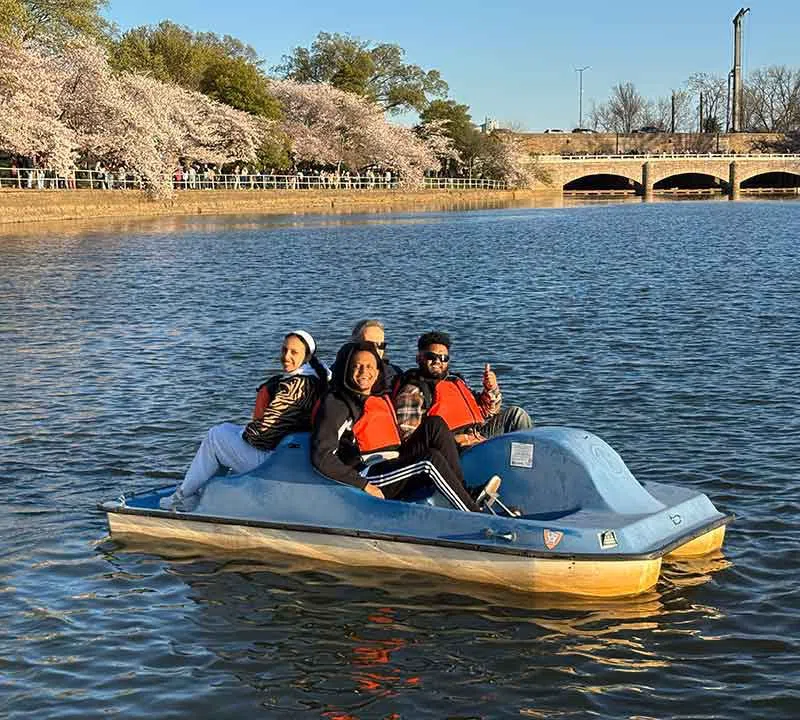
Some of the best angles on the flowers are not on land at all. The most photogenic active experience of the festival is the Tidal Basin Paddle Boats, run by Boating in DC and the only craft permitted on the Basin itself. They give you a 360-degree, on-water view of the trees for $38–40 an hour, seating up to four — fine for a couple or a small group. Note the realities: it is walk-up only during the festival, there are no reservations, and at peak you should expect a queue. Boats open at 10am; get there near opening or accept the wait.
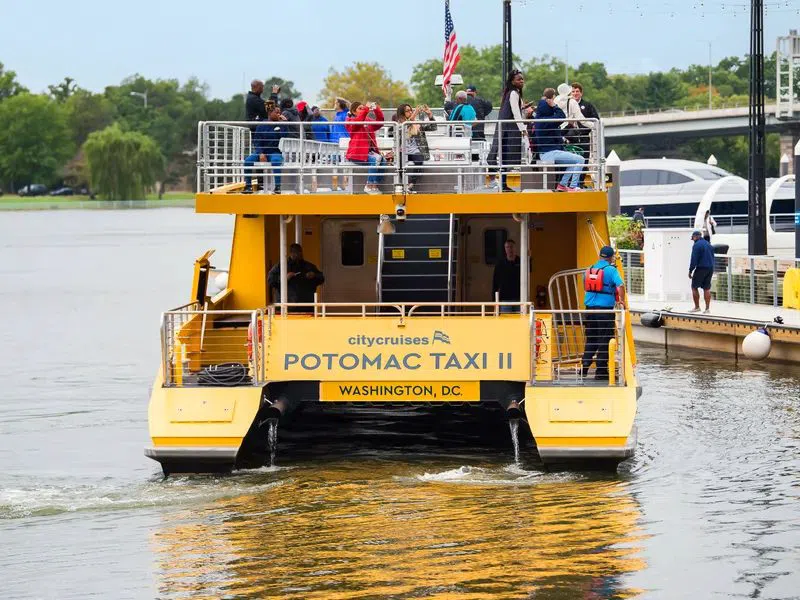
For a calmer, narrated version, the Potomac Riverboat Company (City Experiences) runs scheduled sailings from Georgetown's Washington Harbour and from the waterfront, taking in the monuments and blossoms from the river without a single step of walking. Tickets are around $45 per adult, it handles groups well, and advance booking is sensible in season. There are several departure times through the day; pick one that suits your itinerary rather than trying to build the day around the boat.
And then the outlier. DC Hot Tub Boats (run by Sea the City) are exactly what they sound like — small private craft with a warm tub aboard, seating around six, rented per boat at roughly $70–90 a head. This is not a serious way to see the trees; it is a novelty that reliably delights a younger group or a celebration. Slots are limited and advance booking is essential. Frame it correctly and it is a good time; treat it as your blossom viewing and you will be disappointed. It is the fun aside, not the main event.

Covering ground on two wheels
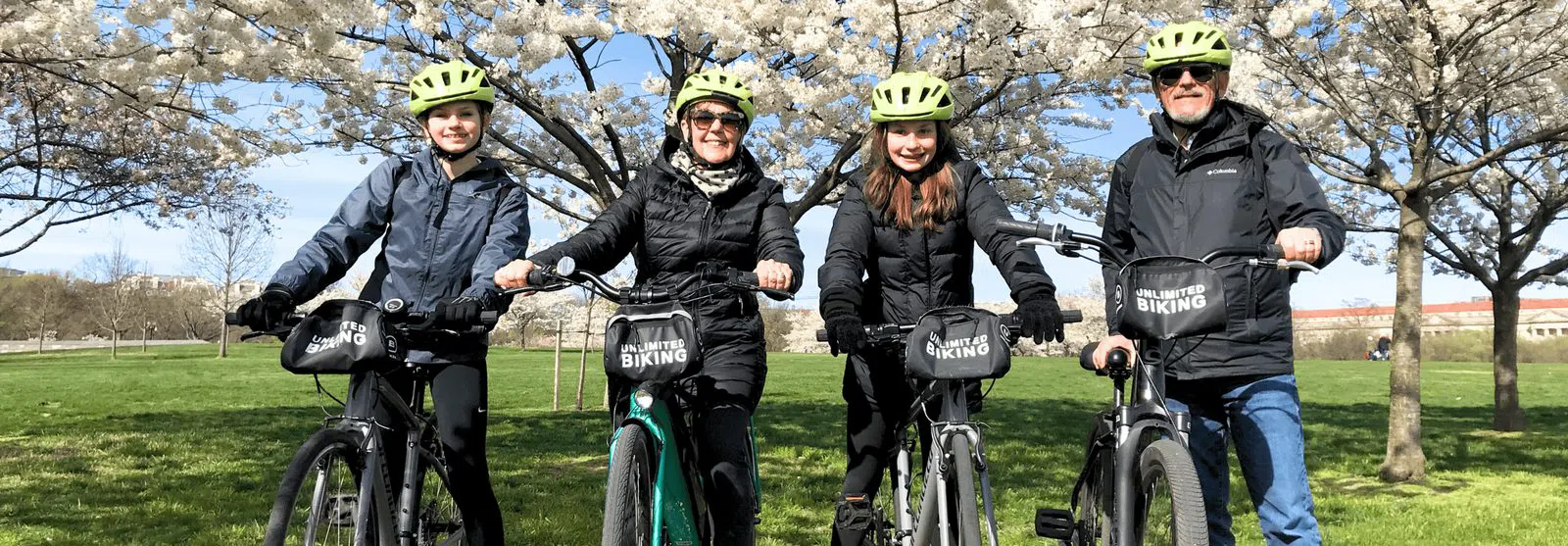
If you would rather cover the monuments, the Mall and the memorials efficiently with someone explaining what you are looking at, the Unlimited Biking Cherry Blossoms by Bike Tour is billed as the festival's only official bike tour. It runs daily through the festival window, around fifteen riders to a guide, at $65 for adults and $55 for children, and it packs the Tidal Basin and the surrounding memorials into a narrated two hours. It is well suited to an organised group and worth booking ahead. For anyone short on time or unsure of the geography, it is the most efficient single way to stitch the core sights together.
Somewhere to land afterwards
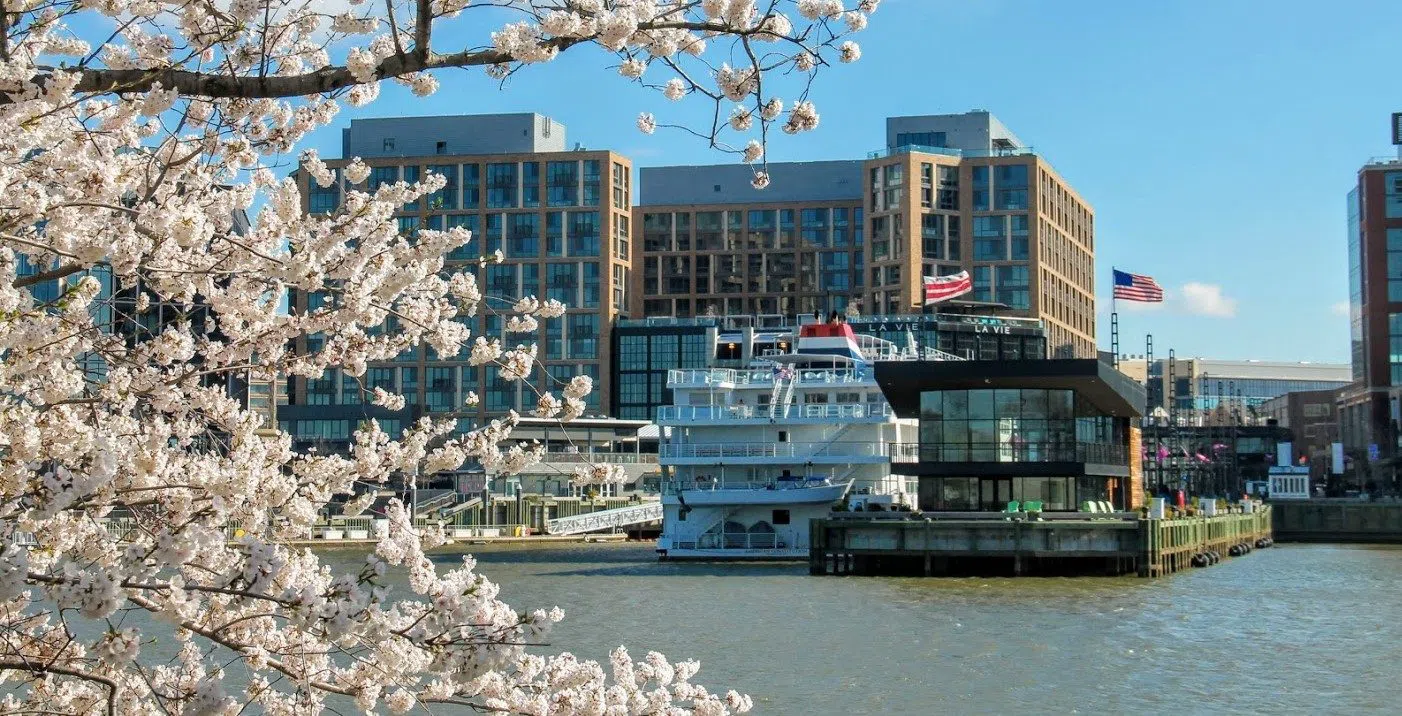
The blossoms are a morning discipline; the afternoon needs a base. The Wharf (the southwest waterfront, a short walk from the Tidal Basin) is the season's natural social hub — free to wander, lined with bars, restaurants and boat docks, and easy to host a group in with a booking or two. It runs its own themed events through blossom season, and its water taxis and dining give international visitors somewhere lively to decompress once the trees are behind them. After a dawn start and a long loop, a reserved table here is the sensible reward.
For where to sleep, the monumental core and the southwest waterfront put you within walking distance of the bloom and are worth prioritising over a cheaper bed far out; start a Washington hotel search early, because the festival weeks are the tightest of the city's year. For everything beyond the blossoms — the museums, the neighbourhoods, the food — the wider Washington guide picks up where this leaves off.
Practicalities
Getting around. Lean on Metro, not a car. Parking near the Tidal Basin during the festival is effectively hopeless, and the two backups that reward you most — Kenwood and Brookside Gardens — are best or only reached by train and foot. The Arboretum and Kenilworth are the exceptions where driving genuinely helps, thanks to their own parking. Otherwise, a rail day pass plus your own two feet is the winning combination.
Cash and cards. Prices here are in US dollars, and cards work everywhere — the free sites need nothing, while the paid experiences run from Dumbarton Oaks' ~$12 timed ticket up to the hot tub boats near $70–90 a head. The paddle boats are the notable cash-flow catch: walk-up only, no booking, so build a queue into your morning rather than a reservation.
Timing. Peak bloom is a moving target; the festival frame is 20 March to 12 April 2026, but the flowers keep their own calendar. Stagger your bets — the Arboretum runs early and late, Hains Point and Kenwood run a few days behind the Basin, and Brookside carries the season into early April — so that whenever you land, something is open. Mornings beat afternoons everywhere, and weekdays beat weekends at the Tidal Basin by a wide margin.
Budget. You can do this beautifully for nothing: the Tidal Basin, Hains Point, the Arboretum, Kenilworth, Kenwood, Brookside and most festival events are all free. Spend only where it buys something the free options can't — a boat, a bike guide, or the curated quiet of Dumbarton Oaks. In a city built to impress at great expense, the best of spring asks for little more than an early alarm.
Before you go
When is peak cherry blossom bloom in Washington in 2026?
Peak bloom is a forecast that shifts by a week or more each year, so treat any date as provisional. Plan around the National Cherry Blossom Festival's 20 March to 12 April 2026 window, and hedge your bets: the U.S. National Arboretum blooms about two weeks earlier and into May, while Hains Point, Kenwood and Brookside Gardens run a few days to a couple of weeks later than the Tidal Basin.
How do I avoid the Tidal Basin crowds?
Arrive at first light on a weekday — the crowd curve is far steeper than the bloom curve. For genuine space, cross the bridge to East Potomac Park and Hains Point, or head to Kenilworth Park & Aquatic Gardens for the quietest blossoms inside the District. The U.S. National Arboretum is large enough to absorb crowds whole.
Is a section of the Tidal Basin closed in 2026?
Yes. A stretch of the northwest shoreline is fenced off through 2026 for seawall reconstruction, so part of the classic loop is unavailable this year. The rest of the walk beneath the Jefferson Memorial remains open, and Hains Point makes a strong nearby alternative.
What are the best ways to see the blossoms from the water?
The Tidal Basin Paddle Boats are the only craft allowed on the Basin, giving a 360-degree view for $38–40 an hour (walk-up only, expect a queue). The Potomac Riverboat Company runs narrated sailings from around $45 with several departure times. DC Hot Tub Boats are a fun novelty at roughly $70–90 a head, but not a serious way to see the trees.
Do I need a car to see Washington's cherry blossoms?
No — and it's usually a hindrance. Parking near the Tidal Basin is effectively hopeless in season, and Kenwood in Bethesda restricts parking entirely, so reach it by Metro and the Capital Crescent Trail on foot. The U.S. National Arboretum and Kenilworth are the exceptions with their own parking; everywhere else, rely on Metro and walking.