The Washington issue
Washington After Dark: The Monuments at Night When the Crowds Clear
After the coaches leave and the last ranger folds up, the floodlit National Mall belongs to almost nobody — here is how to walk it, monument by monument, in the quiet hours.

By Noa BergströmThe District, one neighbourhood at a time
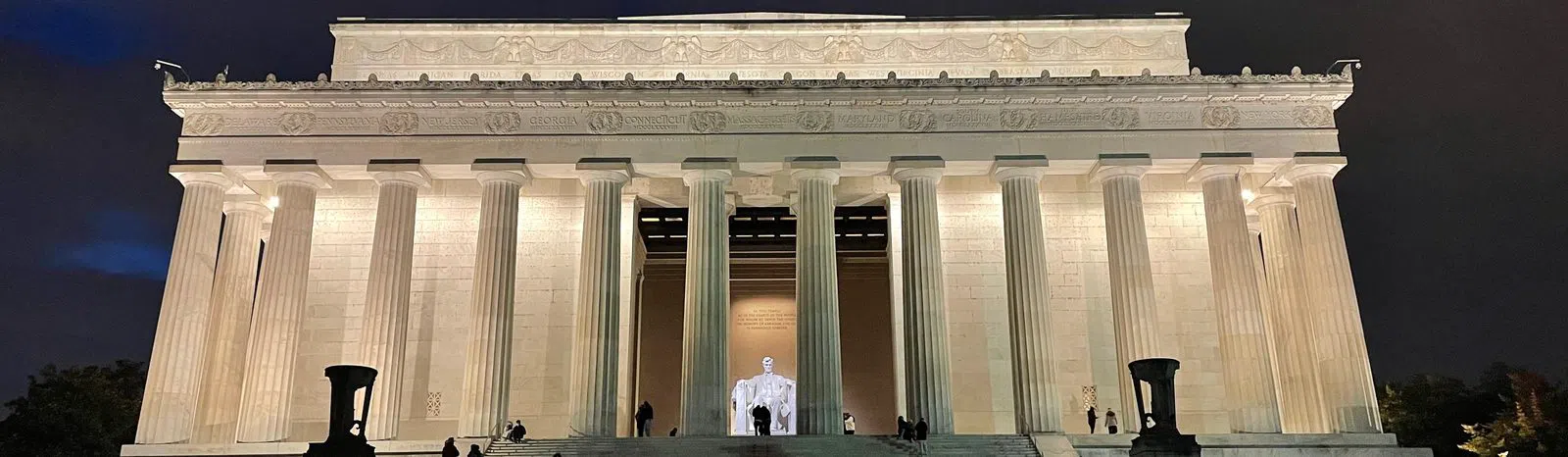
There is a particular hour in Washington — somewhere after nine, before the Mall's paths empty entirely — when the city stops performing for the daytime crowds and simply glows. The tour buses have pulled away from the curb on Independence Avenue, the souvenir carts are shuttered, and a two-mile ribbon of floodlit marble lies reflected in still, black water. This is when the monuments finally do what their architects intended: they hush you. Almost everything here is free, most of it never closes, and the after-dark version is, without exaggeration, the better version. What follows is a walkable night route — with real distances, honest timings, and a clear sense of which stops suit a quiet couple and which can absorb a coach-load of forty.
Start at the Lincoln end: the Mall's western anchor
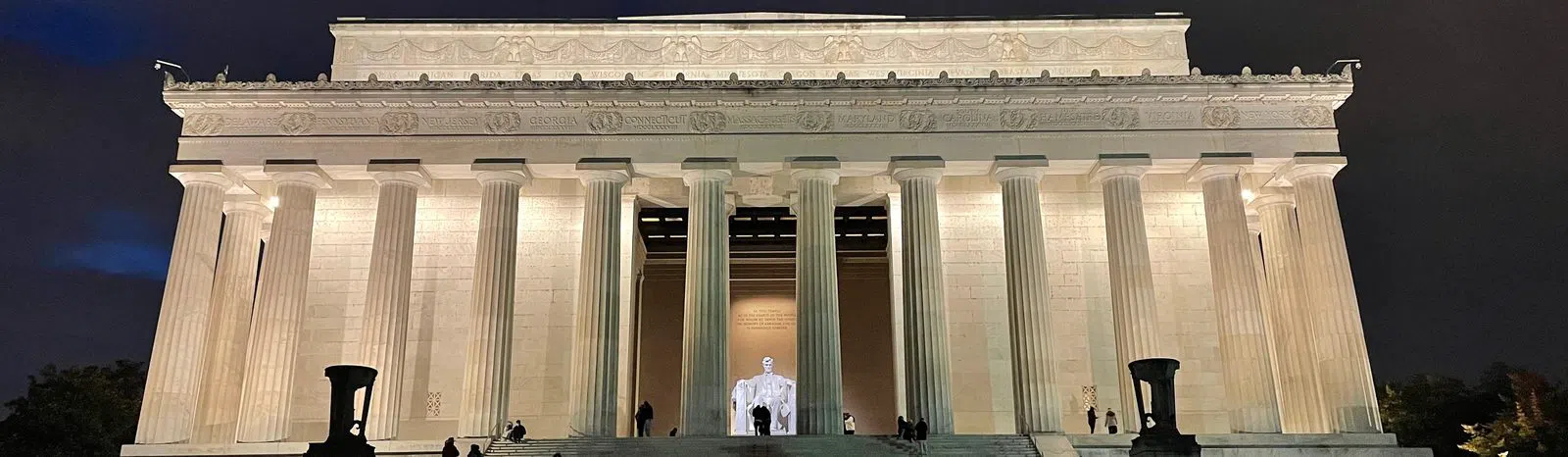
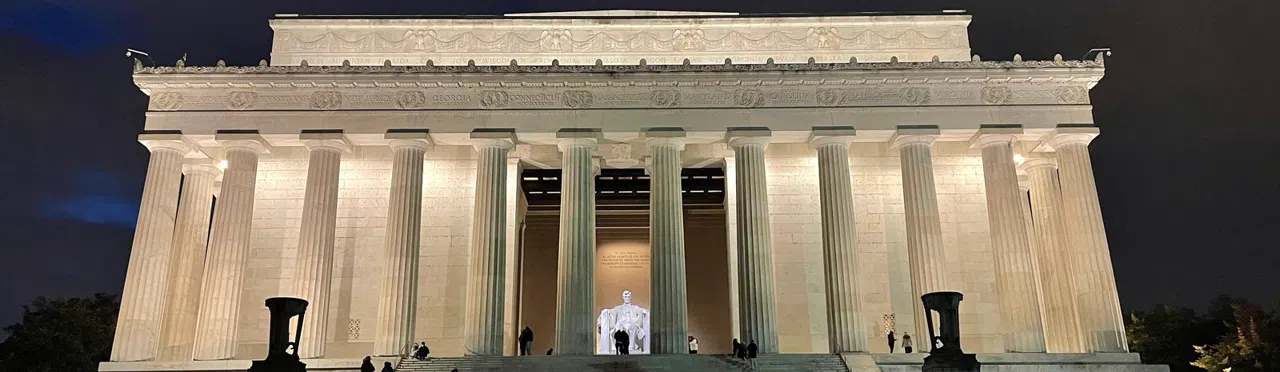
Begin where the light is strongest. The Lincoln Memorial, at the western head of the Mall on the edge of Foggy Bottom, is the single most atmospheric night stop in the city. By day it is a scrum; after dark the crowds thin, the up-lit seated statue reads far more powerfully than it ever does in flat afternoon sun, and the marble seems to hold its own quiet. It is an open public monument — free, no ticket — and it takes groups of any size around the clock, though rangers are on hand only until about 10pm. Climb the steps slowly, look back east down the Reflecting Pool toward the obelisk, and give yourself a few minutes before moving on; this is the view the whole walk is built around.
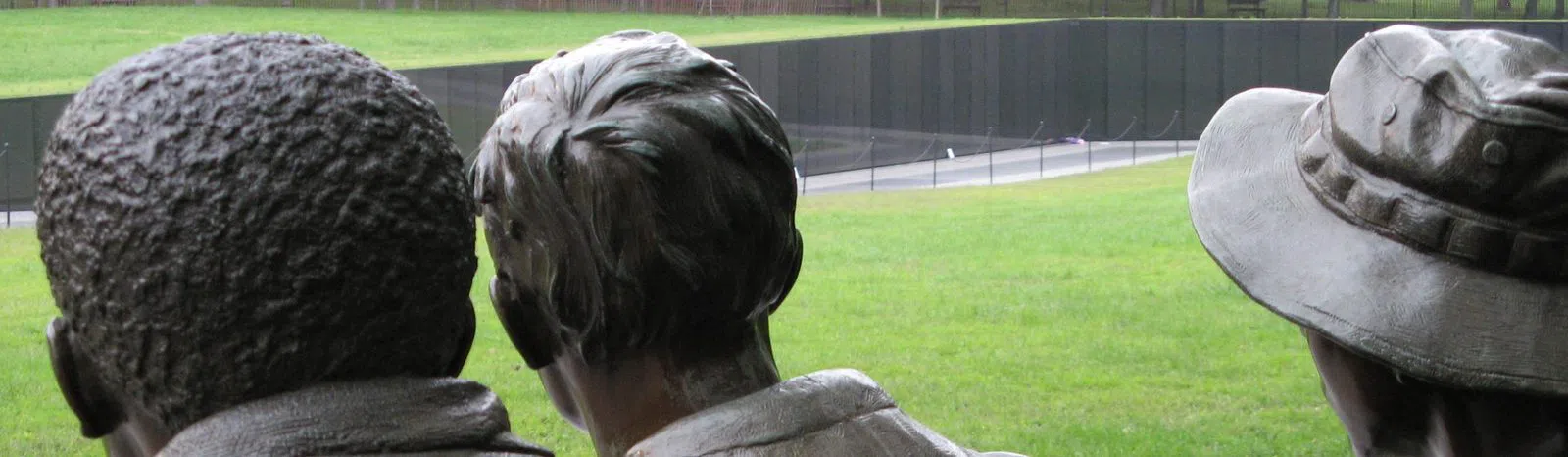
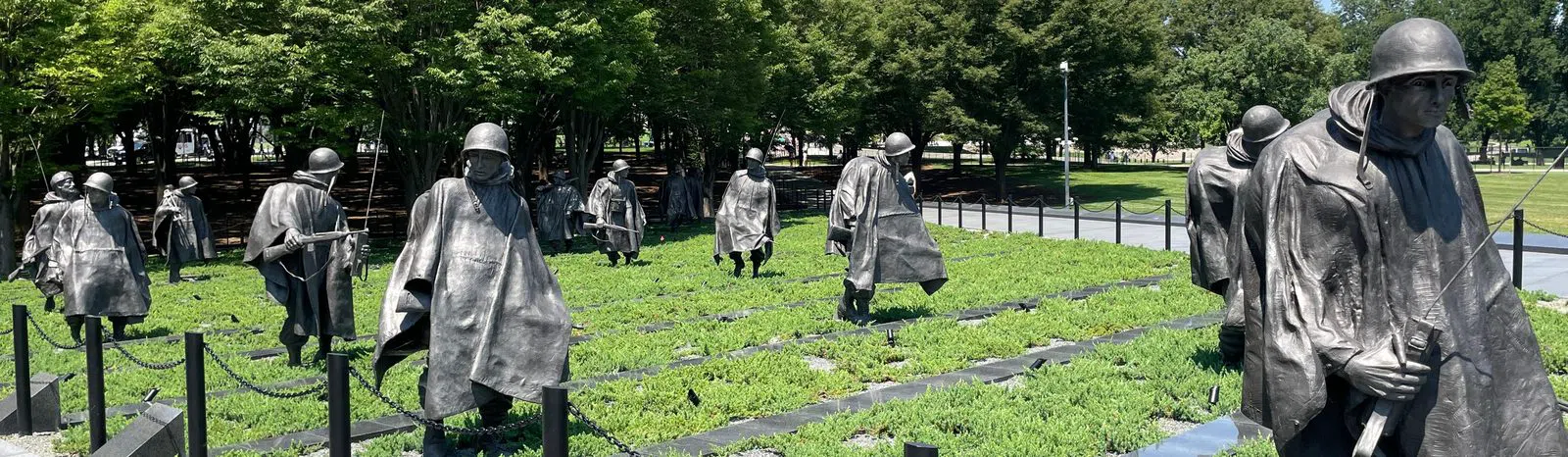
A short, deliberate descent from Lincoln's right shoulder brings you to two memorials that ask for a different register entirely. The Korean War Veterans Memorial is, to my mind, the most genuinely eerie thing on the Mall at night. Its field of nineteen steel soldiers on patrol is lit from the ground, and the effect on the ponchoed figures — half-emerging from the dark — is unlike anything else in the city. It is open 24/7 and free, and rangers staff it to 10pm, so it can handle a group; but it is best felt quietly, in ones and twos, and the Wall of Remembrance completed in 2022 rewards a slow read. A minute's walk away, the Vietnam Veterans Memorial sinks below the lawn as a low, mirrored wall of names. Warm, restrained path lighting makes the engraved names extraordinarily moving after dark, when your own reflection surfaces faintly in the polished granite. It too is open around the clock and free, with an accessible path that suits groups — but keep any group hushed and respectful here; this is a place people come to grieve, not to photograph loudly.
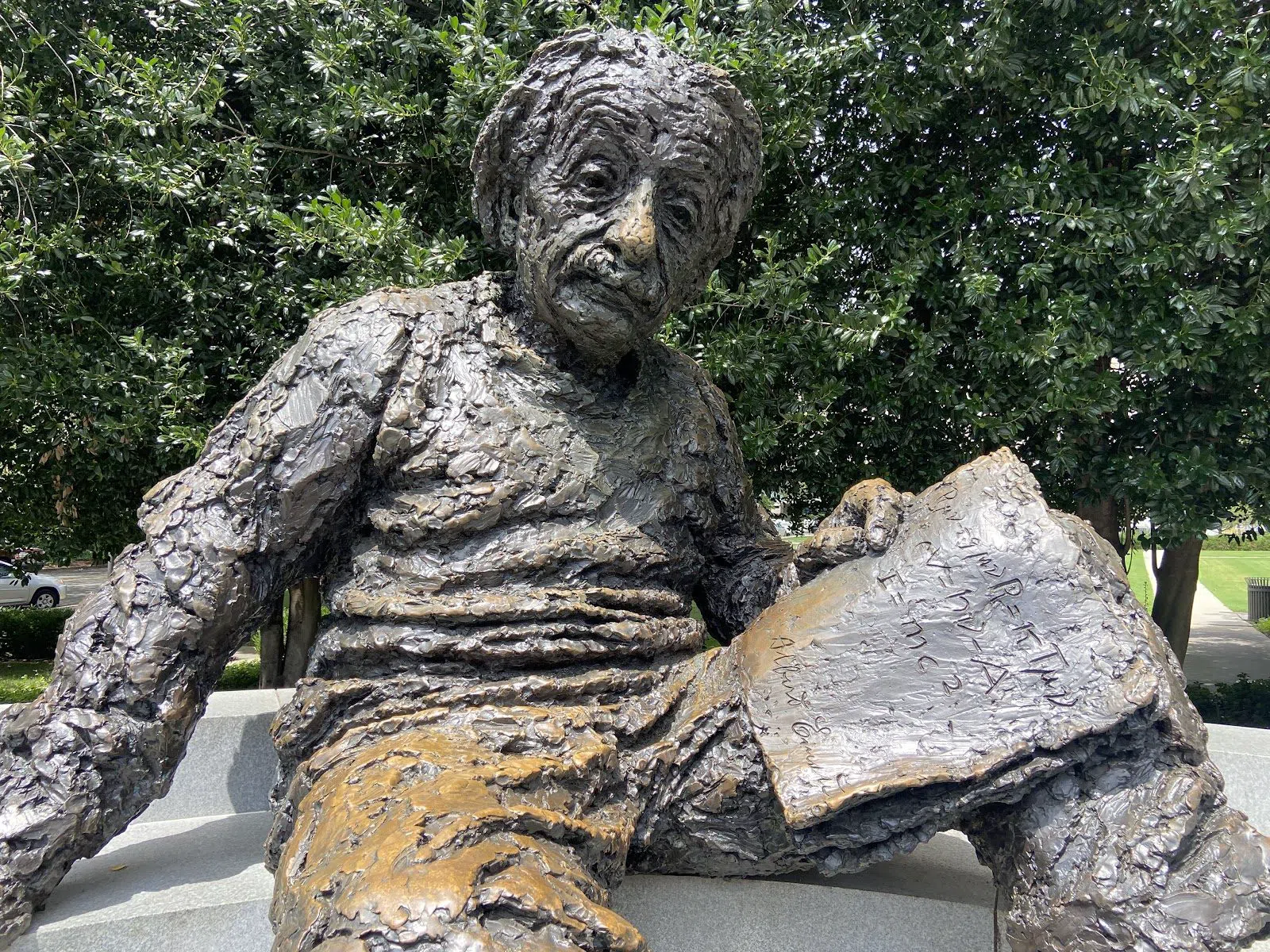
Before you leave the western cluster, walk five minutes north to the front lawn of the National Academy of Sciences for the Albert Einstein Memorial, just off the Mall near Constitution Avenue. It is a charming, deliberately playful counterpoint to all that solemn marble: a bronze Einstein you can literally climb into and sit beside, freely accessible any time and free. Groups love it precisely because it breaks the reverent mood, and its closeness to Lincoln makes it an easy detour rather than a diversion.
Plan your Washington trip
Live prices from our booking partners.
Free cancellation on many rooms. We may earn a commission when you book.
Along the Reflecting Pool to the obelisk
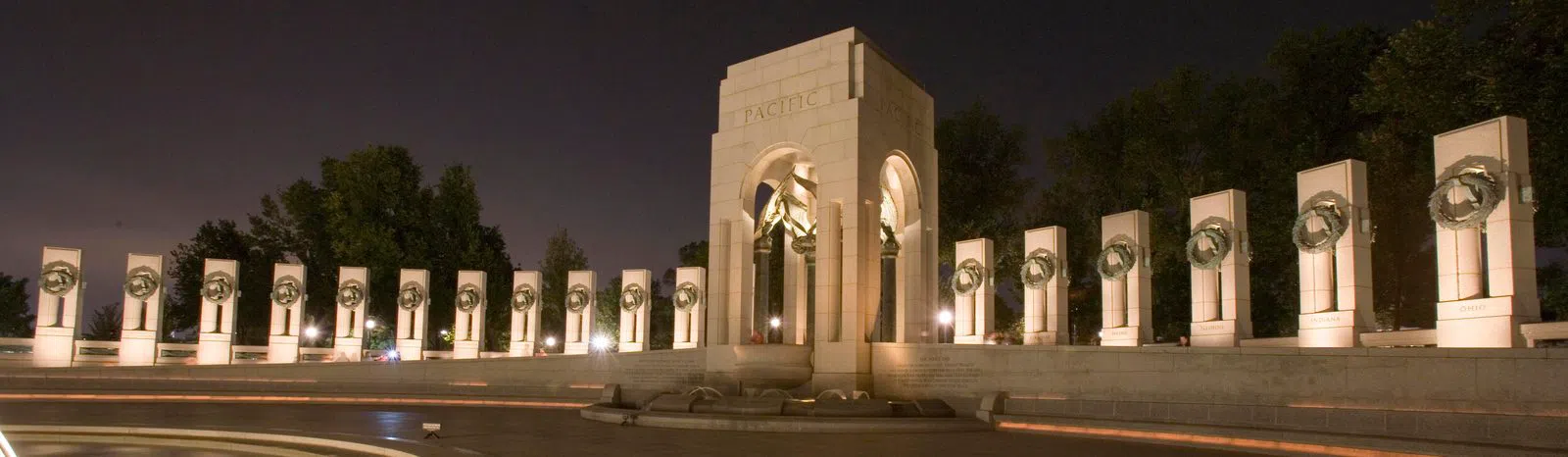
Walk east along the Reflecting Pool — roughly half a mile, ten unhurried minutes — and the World War II Memorial opens at its far end, at the foot of the Rideout lawn between Lincoln and the obelisk. This is the best pure arrival point on the whole loop: a sunken oval plaza of lit fountains and a ring of state pillars, with a triumphal arch at each end. It is fully open, free, and paved flat and level, which makes it the most comfortable large-group stop of the night — rangers are present to 10pm, and there is room for everyone to spread out. Time your arrival here for the 'wow' factor; the illuminated water and the pillar arch reliably draw the first real gasp of the evening.
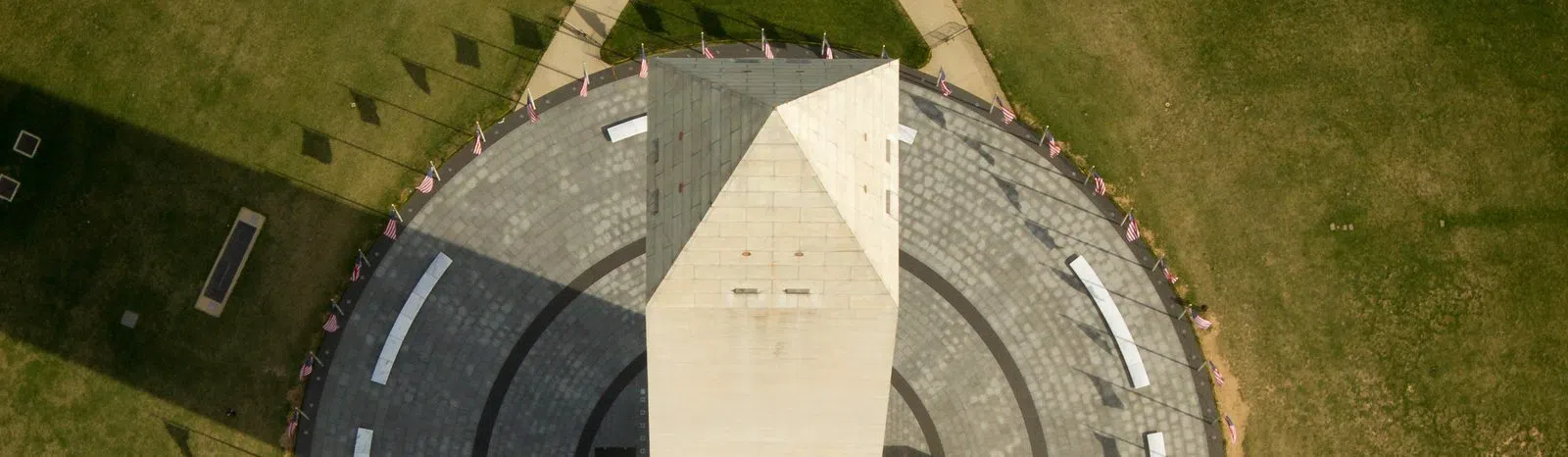
From the memorial's eastern arch, the Washington Monument stands floodlit on its low hill, a short walk up the grass. Be clear about what this stop is: the grounds are open to groups 24/7 for the exterior, but the interior elevator runs 9am to 5pm only, so at night this is purely a landmark to stand beneath and photograph, not a climb. The best frame is actually from below — shoot the lit obelisk from the World War II Memorial's edge, or later from across the Tidal Basin, where it doubles in the water. If your group is set on going up, that is a daytime plan for another day (tickets carry only a nominal $1 fee); after dark, treat the monument as the tallest candle on the Mall and keep moving.
Around the Tidal Basin
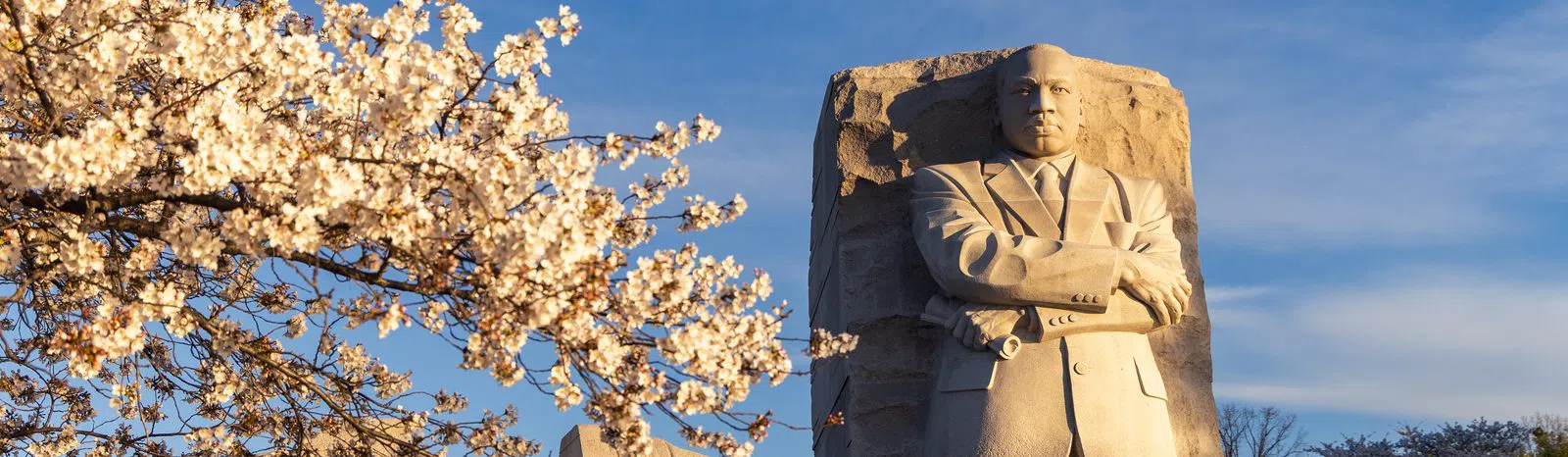
South and west of the obelisk, the Tidal Basin holds three of the finest night memorials in the city, strung around a roughly two-mile shoreline walk. Head first to the Martin Luther King, Jr. Memorial, on the basin's northwest bank. The floodlighting on the pale granite 'Stone of Hope' is frankly theatrical after dark, and the broad paved plaza is excellent for large groups — open 24/7, free, ranger-staffed to 10pm. Stand back toward the water and you get the classic Washington skyline behind Dr King's figure, the kind of frame that means something to visitors arriving from anywhere in the world.
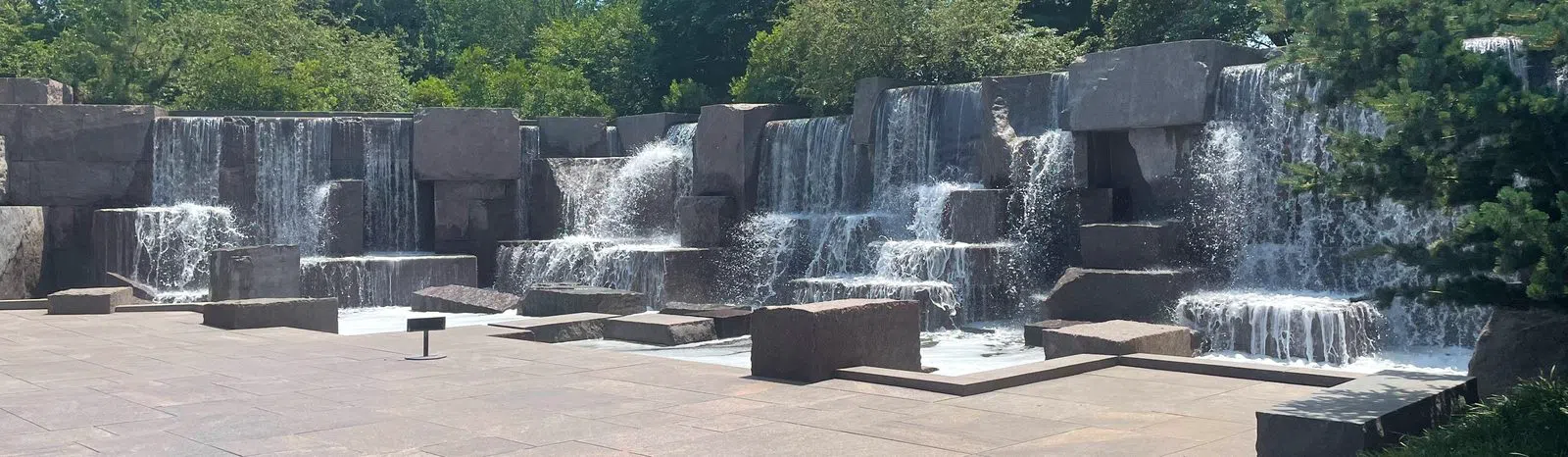
Continue clockwise around the shore, perhaps ten minutes on flat ground, to the Franklin Delano Roosevelt Memorial, a long open-air sequence of granite rooms, quotations, and lit waterfalls set in a small park. It is one of the best group-friendly night walks anywhere in the city precisely because it is not a single statue you circle and leave — it is an immersive corridor you move through, fully accessible and flat, with the falling water turning it into a rare multi-sensory monument. Give it fifteen minutes; rushing it defeats the point.
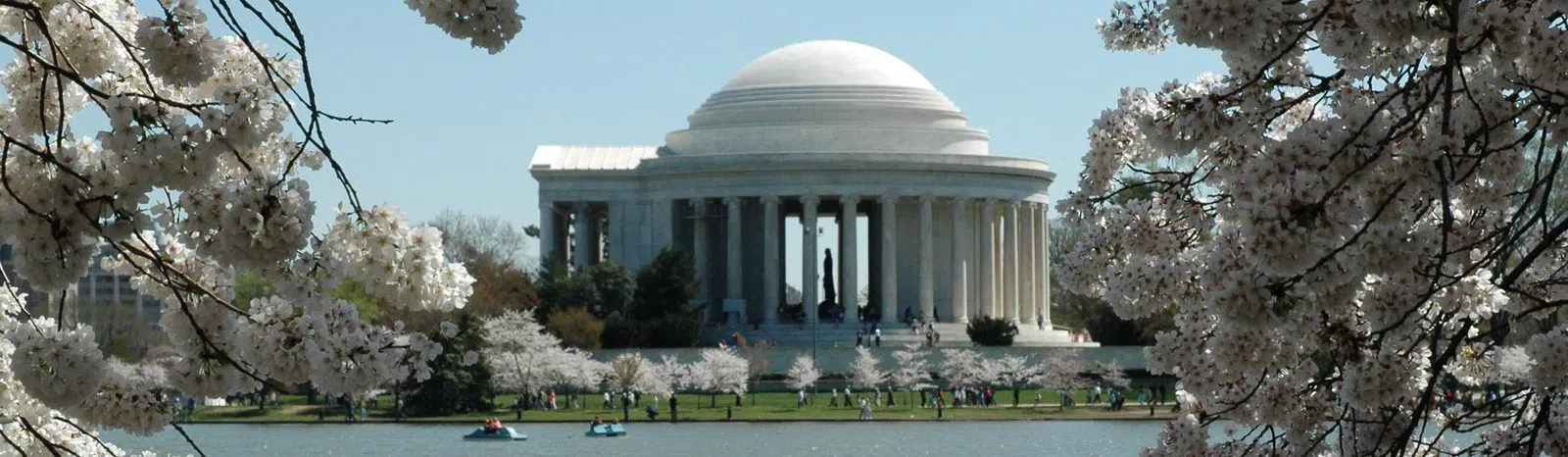
Round the water to the basin's south shore for the Thomas Jefferson Memorial, whose domed rotunda is arguably the source of Washington's single best night photograph — the whole lit temple mirrored across the Tidal Basin, obelisk often in the same frame. There are steps up to the rotunda, but the plaza has plenty of room for a group, and it is open 24/7 and free. If you are lucky enough to be here during the late-March cherry blossom bloom, the reflection through the pale petals is unforgettable, and worth planning a whole trip around. Rangers here also wind down around 10pm.
The eastern end, and the city's newest arrival
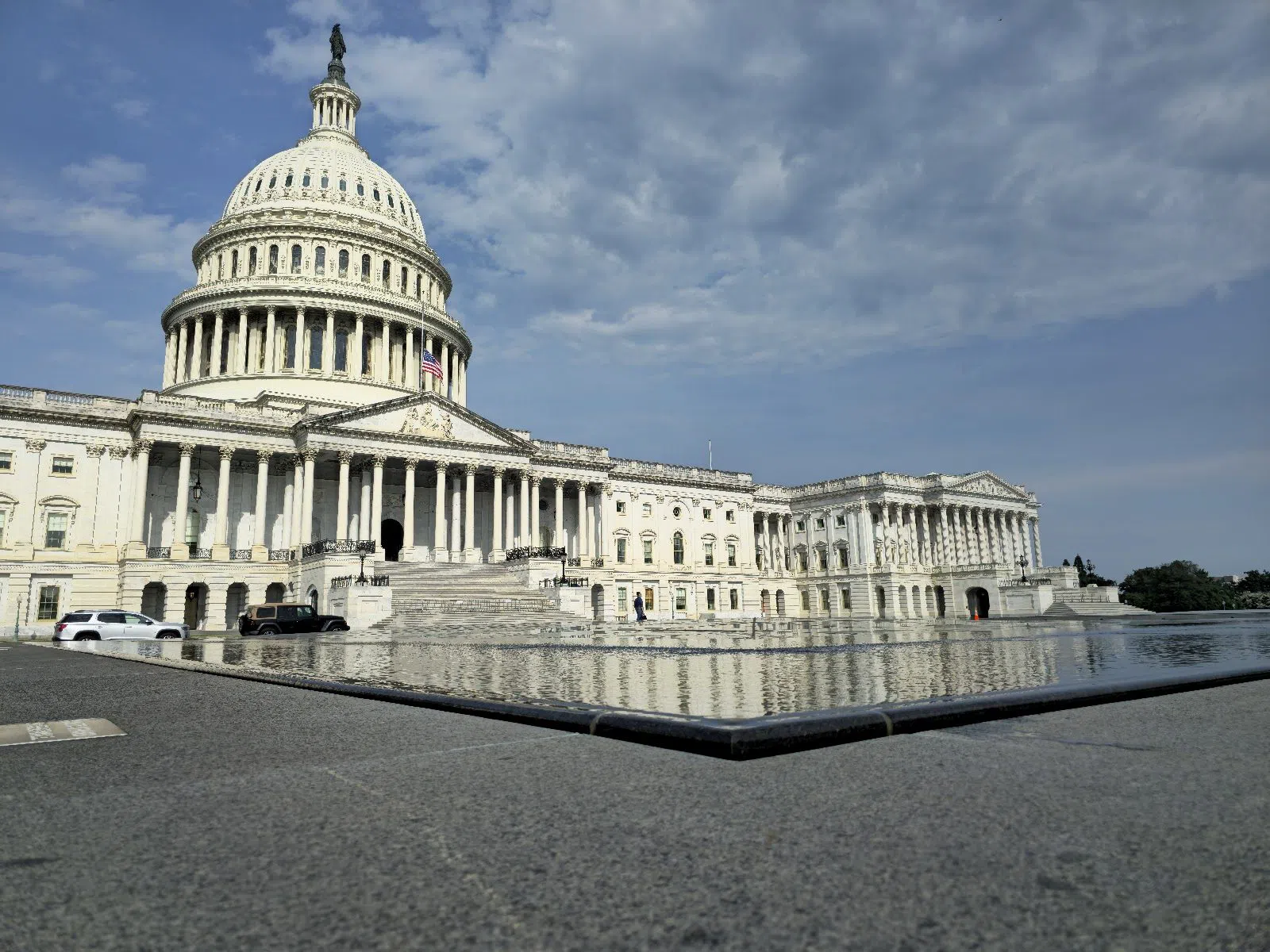
The Mall's long eastern axis ends at the United States Capitol, roughly a mile and a half from the obelisk — a genuine walk, not a stroll, so factor it in or hop the Metro. As a night subject the Capitol anchors the whole composition: the floodlit dome mirrored in the reflecting pool on its west front is one of the great civic photographs in the country. Be clear on the distinction, though — the grounds and exterior are open to groups after dark for photos, but any interior visit is a separate, daytime affair, ticketed (though free) and booked in advance. At night, admire it from outside and let the dome do the work.
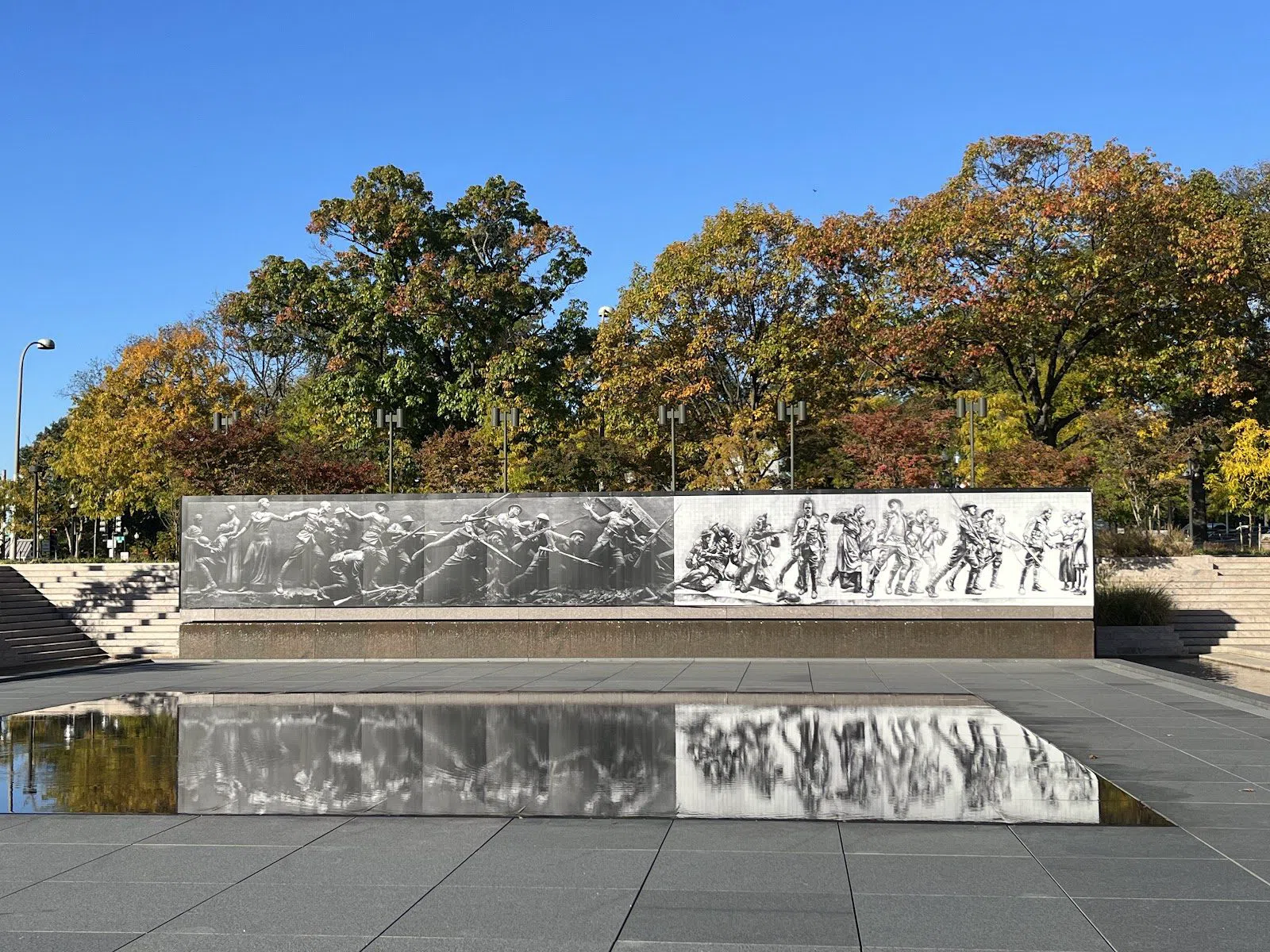
A little off the Mall proper, in Pershing Park along Pennsylvania Avenue between the Capitol and the White House, is the stop most repeat visitors have never seen: the National World War I Memorial, with its long bronze relief 'A Soldier's Journey' unveiled in September 2024. It is the newest monument in Washington, purpose-lit for night viewing, and set in a small, walkable urban park comfortable for a modest group. For anyone who thinks they already know the Mall, it is the freshest thing to add to a night route — open 24/7 and free like the rest.
Cross the river to Arlington
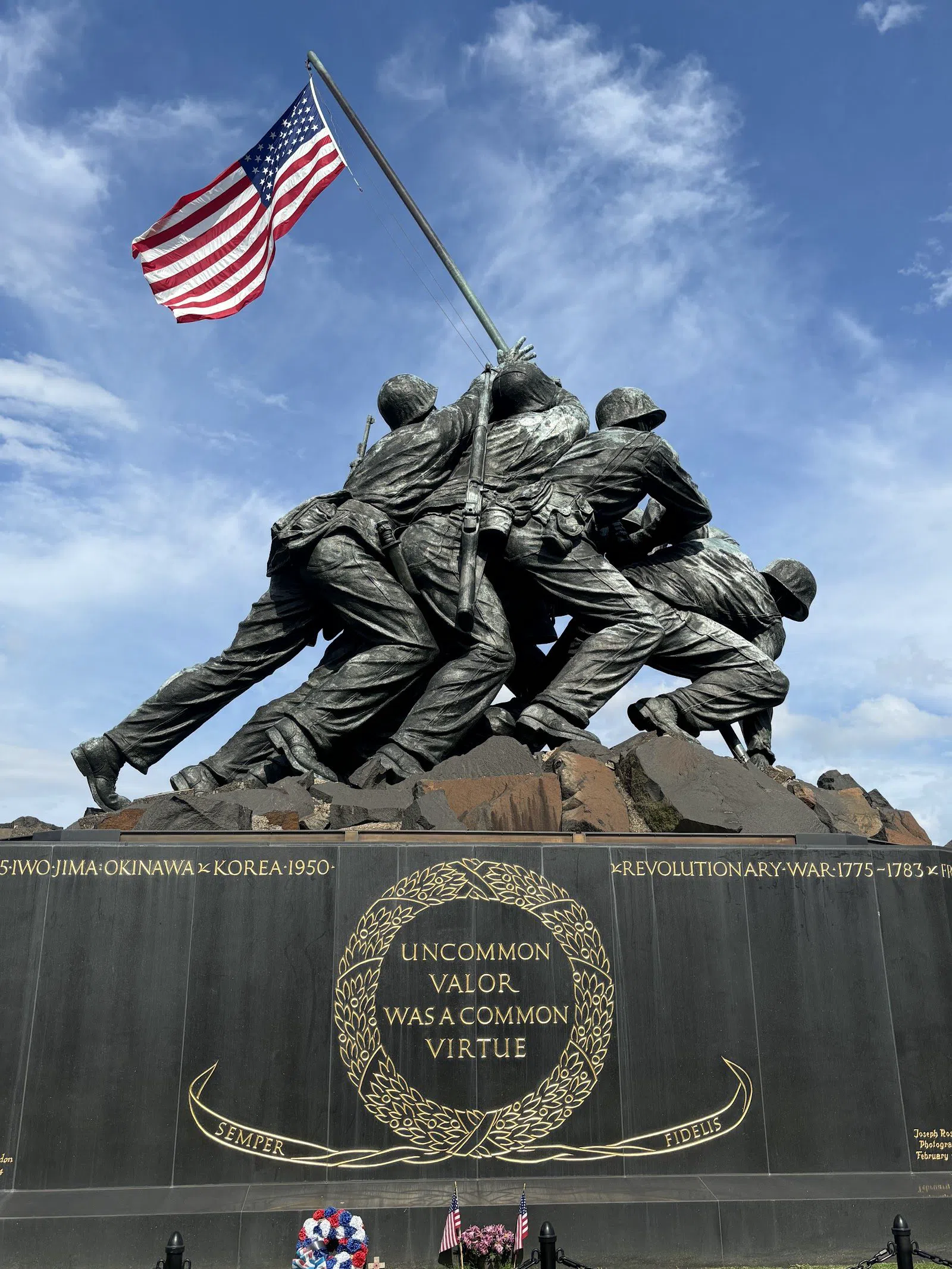
Two of the most rewarding night stops sit just over the Potomac, a fifteen-to-twenty-minute walk across Memorial Bridge from Lincoln (or a short taxi if the group is tired). The U.S. Marine Corps War Memorial — the Iwo Jima statue — stands on a wide, 360-degree open lawn in Arlington that easily swallows large groups and coaches. It is open 6am to midnight and free, and the combination of night floodlighting on the raising of the flag with the lit Washington skyline behind it is a standout group photograph; the openness of the site means everyone gets a clear line without jostling.
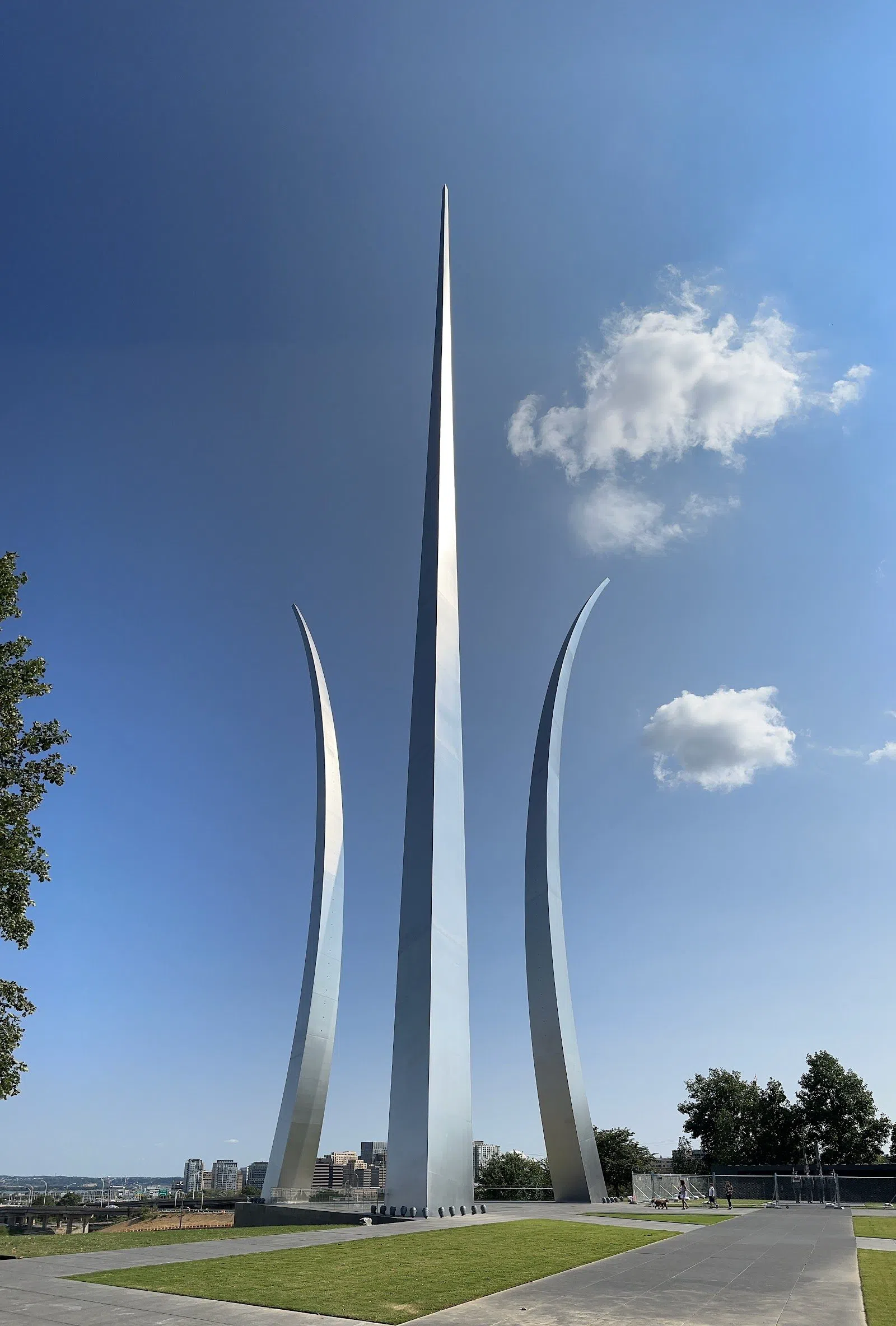
A short way on is the United States Air Force Memorial, whose three soaring stainless spires are dramatically, deliberately modern against all the classical marble across the river. Its open plaza is good for groups, but note the difference from the Mall's monuments: this one keeps shorter hours, open daily only until 9pm (a little later in high summer) and closed overnight, so make it an earlier stop or pair it directly with the Iwo Jima memorial while the light is still on. Together they make a natural Arlington-side coda to a Mall-focused evening.
Practical notes: transport, cash, timing, budget
Budget. This is the rare world-class night out that costs nothing to enter. Every monument on this route is free; the only fee anywhere is the nominal $1 to ride to the top of the Washington Monument, and that is daytime-only, so it does not touch a night plan. Your spend for the evening is transport and whatever you eat before or after.
Cash and cards. You will not need cash at the monuments themselves. Keep a card and a phone with a ride-hailing app for the longer hops — Mall to Capitol, or over the river to Arlington — and small bills only if you plan to grab food from a late vendor.
Transport. The core western cluster — Lincoln, the two war memorials, World War II, the Tidal Basin trio — is entirely walkable and best done on foot; budget around two miles for the Tidal Basin loop alone and wear real shoes, as paths are dark and uneven in places. The Metro is the sensible way to reach the Capitol end and to get home, but check the last-train times before you set out, as service ends earlier than a big-city visitor might expect. For Arlington, walk the bridge if your group is fit or take a short cab.
Timing. Aim to be at Lincoln by around 9pm. Rangers staff most Mall monuments until roughly 10pm, and while the memorials stay open and lit long after, having staff present early makes the first hour easier with a group. Do the Air Force Memorial before 9pm if you want it, since it closes overnight, and the Iwo Jima side before midnight. Allow two to three hours for a relaxed western-and-Tidal-Basin loop; add the Capitol and Arlington and you have a full, satisfying evening.
Groups versus couples. Level, open sites — World War II, the FDR and King memorials, Iwo Jima — absorb large groups comfortably. The Vietnam and Korean memorials are open to all but ask for quiet; treat them as places for hushed respect rather than group photos.
For where to stay within walking or a short ride of the Mall, browse the Washington hotel search; for daytime plans, neighbourhoods, and food to fill the rest of your trip, see the full Washington guide.
Before you go
Are the Washington monuments open at night, and is it free?
Yes. Most National Mall memorials — including the Lincoln, World War II, Vietnam, Korean, Jefferson, FDR and Martin Luther King Jr. memorials — are open 24/7 and free, with rangers on hand until about 10pm. The Air Force Memorial closes at 9pm and the Iwo Jima memorial at midnight, so plan those earlier.
Can you go up the Washington Monument at night?
No. The interior elevator runs 9am to 5pm only, so after dark the Washington Monument is purely an outdoor, floodlit landmark to stand beneath and photograph — best framed from the World War II Memorial or across the Tidal Basin. Top-of-monument tickets ($1) are daytime-only.
Is it safe to walk the National Mall after dark?
The core Mall and Tidal Basin route is popular and generally fine in the earlier hours, especially before rangers leave around 10pm, but paths are dark and uneven in places. Wear proper shoes, keep to lit routes, stay in a group where you can, and check last-train times if you rely on the Metro.
Which monuments are best for large groups versus couples?
Level, open sites — the World War II, FDR, Martin Luther King Jr. and Iwo Jima memorials — absorb large groups comfortably. The Vietnam and Korean War memorials are open to everyone but ask for quiet and respect, so they suit couples or hushed small groups rather than loud photo stops.
What's the best night route to see the most monuments on foot?
Start at the Lincoln Memorial, take in the Korean and Vietnam memorials and the nearby Einstein statue, walk the Reflecting Pool to the World War II Memorial and Washington Monument, then loop the Tidal Basin for the King, FDR and Jefferson memorials. Add the Capitol at the east end and Arlington's Iwo Jima and Air Force memorials across the river if time allows.